White or yellow markings fading to plain green
A variegated plant reverting is a plant economising in poor light. Why the new leaves come out green, and what to do about the stem that is winning.
What it usually is
1 Not enough light
| How to tell | New leaves come out with less pattern than the ones below them, and the plant is further from a window than it was, or the season has turned. Older leaves keep their markings, because a leaf cannot change once it has been made. |
|---|---|
| The fix | Move it to the brightest position that suits the species, out of harsh midday sun for the forest plants. New growth will come back patterned within a few leaves; the plain leaves already made will stay plain. |
2 A reverted shoot outcompeting the rest
| How to tell | One stem or branch is entirely green while the rest of the plant is patterned, and that stem is growing noticeably faster and larger than the others. |
|---|---|
| The fix | Cut it out at its origin. A green shoot has more chlorophyll than a variegated one, grows faster, and will take the plant over in a season if it is left. Cutting it back to a patterned leaf joint keeps the balance. |
3 Too much nitrogen
| How to tell | A generally greener, softer, larger plant across all its new growth, on a feeding routine that is more generous than the bottle recommends. |
|---|---|
| The fix | Stop feeding for two months and then feed at the label strength. Nitrogen pushes leafy green growth, and a plant given plenty of it makes more chlorophyll and less pattern. |
Through the year. Reversion is a winter and early spring complaint indoors, when the day is short and the plant is economising. Growth made from late spring in a bright spot usually comes back patterned on its own.
Variegation is a plant giving something up. The white or cream parts of a leaf have little or no chlorophyll, which means they do no photosynthesis and are carried by the green parts. In a greenhouse with plenty of light that is an affordable extravagance. In a corner of a British living room in January it is not, and the plant responds the only way it can, by making its next leaves greener.
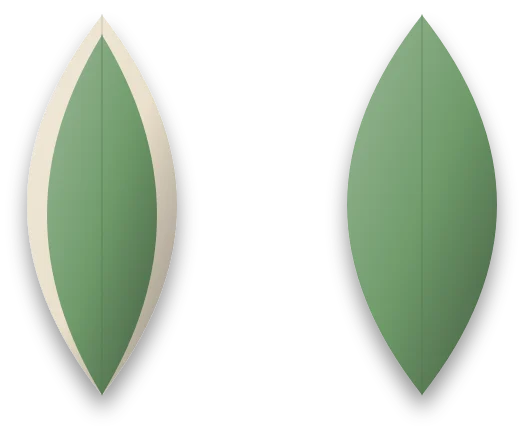
That is the whole of it, and it explains the two rules that follow. First, more light brings the pattern back, but only in new growth. A leaf is finished when it unfurls; it will not repattern. Judge whether you have fixed the problem by looking at the third or fourth leaf after the move, not at the ones already there.
Second, a fully green shoot on a variegated plant is not merely plain, it is a competitor. It photosynthesises better than its patterned neighbours, so it grows faster, takes a larger share of the plant’s resources, and within a season or two the whole plant is green. This is what nurseries mean by reversion. The remedy is to cut the green shoot out where it joins the plant, back to a patterned leaf, as soon as you notice it. Waiting is what loses the plant its markings.
There are two honourable exceptions. Some variegation is a virus or a chimera that is unstable by nature, and some plants, calatheas and marantas among them, have patterns that are pigment rather than an absence of chlorophyll and do not behave this way at all. And a few plants, notably the variegated forms of monstera, will simply throw a plain leaf now and then in the best light in the world.
The practical routine is short. Give a variegated plant the brightest light it will take without scorching, turn the pot weekly so the whole plant gets its share, feed no more than the bottle says, and cut out a green shoot the week you see it.
Entries that name it
What the journal says about this symptom on each plant.
| Calathea | Too much light, which bleaches the silver banding. Move it out of any direct sun into medium indirect light. The bleached leaves stay pale, but new ones come in marked. |
|---|---|
| Chinese evergreen | A pink or red form kept in low light, where the colour drains towards green. Move a coloured form to bright indirect light. Plain silver and green forms are the ones for dark corners. |
| Croton | Not enough light, so new leaves come out plain green. Move it to a brighter position with some gentle direct sun. The green leaves stay green; the new ones colour up. |
| English ivy | Too little light for a variegated form. Move it nearer a window. Cut out any all green shoot on a variegated plant, because it grows faster and takes over. |
| Inch plant | Too little light for the silver and purple to develop. Move it to bright indirect light with a little gentle sun, and cut out any shoot that has reverted to plain green. |
| Pothos | Too little light. Move to a brighter spot out of direct sun; new leaves will show more gold. |
| Prayer plant | Too much light, which fades the red veins and the dark blotches. Move it out of any direct sun. New leaves come in marked again; the faded ones stay faded. |
| Rubber plant | A variegated form kept too far from the light. Move it nearer the window. Plain green shoots on a variegated plant should be cut out or they take over. |
| Spider plant | Not enough light. Move it nearer a window. The white stripe is the last thing the plant can afford in a dim room, so it goes first. |
Questions from the margin
- Why is my variegated plant turning green?
- It is economising. The pale parts of a variegated leaf have little or no chlorophyll and are carried by the green parts, which is affordable in bright light and not in a dim corner. Move it somewhere brighter and the new leaves come back patterned.
- Should I cut off a plain green shoot?
- Yes, at its origin, and soon. A fully green shoot photosynthesises better than its patterned neighbours, so it grows faster and will take the plant over within a season if it is left.
Checked against RHS, Reversion; Missouri Botanical Garden, Variegated plant care.