How to clean a dishwasher, including the filter and the spray arms
About 7 minutes to read. Published . By the House & Hedge team.
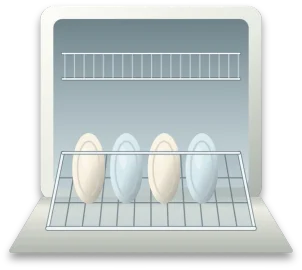
A dishwasher cleans dishes with water that is sprayed from arms, heated, and drained through a filter. Each of those parts collects something over time. Food particles collect in the filter, hard water leaves a film on the walls and the door, and the small holes in the spray arms clog with bits of food and mineral deposit. When one of them fails, the dishes come out cloudy, gritty or smelling of old food. Most of the fix takes a few minutes, and it is worth doing before you buy a new detergent or call for a repair.
What you need
- A soft brush, such as an old toothbrush or a small bottle brush
- A toothpick or a thin pipe cleaner for the spray arm holes
- A bowl of warm water and a little dish soap
- A microfiber cloth or a soft sponge
- White vinegar, or a dishwasher cleaner that the maker recommends
- Baking soda, for odors
Cleaning the filter
Most dishwashers have a filter at the bottom of the tub, and many have two parts: a coarse filter and a fine mesh filter that sits inside it. The layout depends on the model, so check the manual if the filter does not come out easily.
- Remove the bottom rack and lift out the filter. It usually twists anticlockwise or pulls up after a release tab is pressed.
- Separate the parts. Hold the coarse filter under warm running water and rinse away the loose food. Use the soft brush to clean the mesh, working in the direction of the holes so you do not push debris further in.
- Check the drain hole in the bottom of the tub after you lift the filter out. Remove any food and grit with your fingers or a cloth. Do not put a tool down the drain hole, because you can damage the pump.
- Put the parts back together, make sure they sit flat, and lock the filter into place. A filter that is not seated properly lets food through to the pump.
Clean the filter once a week if you run the dishwasher every day. If you run it less often, check it every two or three weeks, or whenever you notice that dishes are still wet after a cycle or that water stands in the bottom of the tub.
Clearing the spray arms
The spray arms throw water across the dishes, and the holes in them clog quickly with food and hard water deposits. A blocked hole means one part of the rack gets less water than the rest, which shows up as dishes that are dirty in one corner.
- Lift out the bottom spray arm. Most arms come off by unscrewing a nut at the center or by pulling the arm up and off its post.
- Remove any debris from the nozzles and the central bearing, which is often where food collects.
- Clear each hole with a toothpick or a thin pipe cleaner. Push gently and check that water comes through the other side. Brushing will not clear a hole that is blocked with mineral deposits.
- Rinse the arm under warm water, check that it spins freely on its bearing, and put it back on its post.
- Repeat the same steps for the upper spray arm, which is often overlooked. It sits near the top of the tub and is easy to forget.
If the arms spin stiffly, or if the bearing feels gritty, a small amount of grease from a dishwasher-safe lubricant may help, but check the manual first, because some models are not meant to be lubricated.
Wiping the door, the seal and the tub
The door seal is a rubber strip around the edge of the door. It stays damp after every cycle and traps food particles in the folds, so it is where mold often starts. Wipe the seal with a damp cloth and a little dish soap, then run a fingertip along it to feel for food and grit. Pay attention to the corners and the bottom edge, where water pools.
Wipe the inside of the door and the walls of the tub with a damp cloth to remove the thin film that builds up from hard water. Rinse the cloth and wipe again. A soft, dry microfiber cloth leaves the steel looking brighter than paper towel does.
The monthly cleaning cycle
A monthly cleaning cycle loosens the film and grease that the wipe-down does not reach, including the inside of the pump and the pipes.
- Remove the racks and the spray arms, and check the filter as described above.
- Place a cup of white vinegar in a dishwasher-safe cup on the top rack. Do not put vinegar in the detergent dispenser.
- Leave the racks empty, close the door, and run the hottest cycle on the machine.
- If your manual recommends a dishwasher cleaner rather than vinegar, use that instead, and follow the dose on its label.
Do not put bleach in the dishwasher unless the manual allows it, and never mix bleach with vinegar or any acid cleaner. The two can release chlorine gas.
Dealing with odors
A smell that comes from the dishwasher is usually food that has been trapped in the filter, the drain or the seal. Clean those parts first. If the smell remains, sprinkle a cup of baking soda over the bottom of the empty tub and run a short hot cycle. Baking soda helps lift odors and does not leave a residue. Keep the door open for a while after each cycle so the inside can dry, which discourages the growth that causes the smell in the first place.
Hard water and rinse aid
If your dishes come out spotted or cloudy, the cause is often hard water rather than dirt. A rinse aid helps water drain off the dishes without leaving spots, and it is a sensible choice in an area where the water is hard. If your dishwasher has a built-in water softener, check the salt level in its reservoir, because an empty reservoir gives the same spotting. Cleaning the spray arms and the filter does not fix hard water spots, so use the rinse aid and the softener together for the best results.
Common mistakes
- Running the dishwasher without the filter in place. Food goes straight to the pump, and it can jam or break the pump.
- Scraping the filter with a metal tool. Use a soft brush, because metal can damage the mesh.
- Overloading the racks. Water cannot reach the dishes behind a crowded rack, and the spray arms cannot turn freely.
- Putting vinegar in the detergent compartment. The detergent is designed to work with the machine’s cycle, and the vinegar can stop it dissolving properly.
- Ignoring a slow drain. A drain that stays wet after a cycle is usually a sign of a blocked filter or a kinked drain hose.
When to call a technician
If the dishwasher leaks from the door, makes a grinding noise, or does not drain even after you have cleaned the filter and the drain hole, turn it off at the wall and call a qualified repairer. The drain pump, the motor and the water inlet valve are not parts that a cleaning routine can fix, and running a faulty machine can flood the kitchen.
A dishwasher that is cleaned every week or two, and given a monthly cycle, will keep its performance for years, and it stays much more pleasant to open in the morning.