How to clean a microwave, including the baked-on splatters
About 6 minutes to read. Published . By the House & Hedge team.
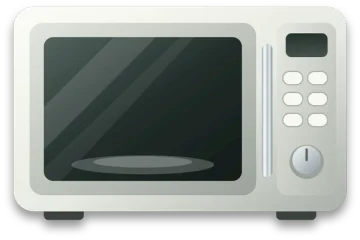
A microwave looks clean from the front and hides a lot inside. Splatters from soup, tomato sauce and popcorn bake onto the roof and walls, the turntable collects food under its edge, and the door and seal gather crumbs and grease. Left long enough, the smell of old food gets into the next dinner. The good news is that most of this comes off with steam and a soft cloth, and the job takes about ten minutes once a week.
The method below works for a standard countertop microwave, and it does not need harsh products. Read the manual if your model has a special cleaning setting or a removable part that is not described here.
What you need
- A microwave-safe bowl or jug
- Water, plus either a tablespoon of lemon juice or a quarter cup of white vinegar
- A soft cloth or sponge, and a second dry cloth
- A soft brush for the vents and the door channel
- Warm soapy water for the turntable and the door
- A plastic scraper or a soft spatula for stuck-on food
Steaming the inside
Steam is the most effective way to loosen baked-on food because it softens the spatters so they wipe away with very little scrubbing.
- Remove the turntable and its support ring. Set them aside to wash.
- Put one cup of water in the microwave-safe bowl, add the lemon juice or the vinegar, and place the bowl in the center of the cavity.
- Run the microwave on high for three to five minutes, until the water boils and the windows are steamy. Leave the door closed for another five minutes after it stops, so the steam can work on the walls and roof.
- Open the door carefully, because the steam is hot and it comes out fast. Wipe the roof, walls and floor with a damp cloth. Most of the splatters should lift in one or two passes.
- For spots that remain, use a damp cloth with a drop of dish soap. Rub gently in a circle, then wipe off the soap with a clean damp cloth.
- Dry the inside with the second cloth. A wet microwave can leave water marks on the glass and encourage smells.
The steam from the bowl is hot. Use a cloth or oven glove when you take the bowl out, and never try to lift it while it is still boiling.
Cleaning the turntable and the support ring
The turntable and its ring trap food in the grooves, and they are the most likely source of a lingering smell.
- Wash both in warm soapy water with a sponge. Pay attention to the underside and the edge, where spills collect.
- Rinse them well and dry them before you put them back. A damp ring under a turntable grows mold quickly.
- If the manual says the turntable can go in the dishwasher, you can use that setting. Some turntables cloud or warp in a hot cycle, so check first.
Also check the floor of the cavity, under where the turntable sits. Burnt food often hides there, and it is easy to miss until you lift the plate.
Cleaning the door, the seal and the vents
The door is the part most often ignored, and it is where grease and crumbs build up.
- Wipe the door glass on both sides with a damp cloth and a drop of dish soap, then dry it.
- Clean the rubber seal around the door. Run a damp cloth or a soft brush along it, pressing gently into any folds. Food can collect in the gap and leave a sticky film.
- Brush the vents on the side or back with a soft dry brush. Do not spray cleaner into them. Dust and grease on the vents can make the microwave run hot.
- Wipe the control panel with a damp cloth, lightly. Keep moisture away from the buttons, and use only a little soap so none of it gets into the gaps.
Dealing with stubborn spots and burnt food
Some spatters will not steam loose, usually because they have been heated for a long time. For those, make a paste from baking soda and a little water, spread it on the spot with a cloth, and leave it for ten minutes. Then wipe it away with a damp cloth. Baking soda is mildly abrasive, so use the paste only on the stubborn spots, and do not scrub the whole interior with it.
For burnt food stuck on the floor of the cavity, soften it with a damp cloth laid over the spot for a few minutes, then lift it with a plastic scraper. Do not use a metal scraper on the coating, because it will leave scratches that food sticks to later.
Removing the smell
A burnt or fishy smell that lingers after cleaning usually has one of three causes: old food under the turntable, grease in the vents, or a damp seal.
- Steam with lemon juice or vinegar, and leave the door closed for a few minutes after it finishes, as described above.
- Leave the door open for an hour after cleaning so the cavity can air out completely.
- Put a small dish of baking soda, or a slice of lemon in water, inside the closed microwave overnight. Remove it before you use the microwave again.
If the smell comes back quickly after you have cleaned everything, check the seal and the vents again, and look under the turntable for food that has been trapped there for weeks.
What to avoid
Do not use bleach or ammonia-based cleaners inside a microwave. They leave a strong chemical smell that is hard to remove, and some of the residue can end up on food you heat afterwards. Keep oven cleaner away from the interior coating altogether. Do not use abrasive pads or scouring powder on the inside walls, which damage the coating so that food sticks more easily. And do not run the microwave empty to dry it out, because that can damage the magnetron.
The outside and the stand
The outside takes more grease than most people expect, especially the side nearest the stove and the top, where steam from pans rises and condenses. Wipe the top, sides and front with a damp cloth and a drop of dish soap. If the finish is brushed steel, wipe with the grain so the surface does not show streaks, then dry it with a clean cloth.
Look at the feet and the shelf or stand underneath as well. A sticky ring or a dark patch under the feet usually means grease has been running down the side and pooling underneath. If you can lift the microwave safely, wipe the surface beneath it. If you cannot lift it, slide a cloth under the edge with a wooden spoon and clean as far as you can reach.
Checking the door seal and the latch
A cleaning session is also a good time to look at the door. Run a finger along the rubber seal and the metal edges. If you find cracks, a bulge, a loose hinge or a door that does not close firmly, stop using the microwave until a technician has looked at it. The seal stops microwave energy from leaking out, so a damaged seal is a safety problem, not only a cleaning one. Do not try to repair the seal yourself, and never run the microwave with the door held shut by a towel or a clip.
How often to clean it
Wipe the inside after any spill, and give it a steam clean once a week if you use it daily. Clean the turntable and the door seal once a month, or whenever you notice a smell or a film on the glass. A microwave that is cleaned this way looks new for years, and the food you heat in it tastes the way it should.
If the magnetron or the door latch is damaged, or if the microwave sparks when it runs, stop using it and have it repaired or replaced. Cleaning will not fix a fault like that, and running a damaged microwave is not safe.