Brown soft patches on the leaves
Soft brown damage is water that got into the tissue, or cold, or a fungus. Firm brown is old damage. The difference decides what you do.
What it usually is
1 Cold water or cold air on the leaf
| How to tell | Patches that appeared after watering with cold water from the tap, or after a cold night against glass, often circular where a drop sat. The tissue is soft and darker rather than crisp. |
|---|---|
| The fix | Use water at room temperature, water at the compost rather than over the leaves, and move the plant away from the glass. The marks stay, but no new ones appear. |
2 A fungal or bacterial rot in the leaf
| How to tell | A soft patch that grows week by week, sometimes with a yellow ring, sometimes weeping. It usually starts where a leaf was damaged or where two leaves touch and stay damp. |
|---|---|
| The fix | Cut the affected leaf off at its base with clean scissors and bin it. Stop misting, water the compost only, and give the plant space so air moves round it. Wash your hands before touching the next plant. |
3 Sunburn on a leaf that was wet
| How to tell | Patches on the leaves facing the window, on a plant that was misted or watered over the top and then stood in sun. Drops of water focus light and scorch the tissue beneath. |
|---|---|
| The fix | Water in the morning or evening rather than into midday sun, and keep water off the leaves of a plant on a sunny sill. |
Through the year. Cold water damage and fungal patches both belong to autumn and winter, when rooms are cooler, air is stiller and leaves stay wet for longer.
The word that matters in this symptom is soft. Brown tissue that is dry and papery is old damage, finished and harmless, and it belongs with the entries on crisp edges and brown tips. Brown tissue that is soft is either very recent or still spreading, and it is worth acting on.
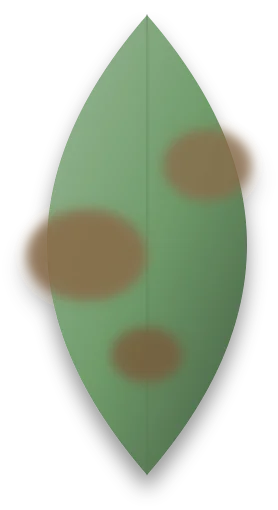
Soft brown patches come from water in the wrong place. Cell walls burst when they freeze, so cold does it; cells collapse when a pathogen digests them, so rots do it; and cells cook when a drop of water on a leaf focuses sunlight onto the tissue underneath, so watering overhead in bright sun does it too. All three leave a darker, wetter looking mark with an indefinite edge, which is what distinguishes them from the crisp bordered marks of dry air. Brown patches in a lawn have their own causes, and bare, brown and scorched patches covers those.
Telling them apart is a matter of asking when. If the patches appeared overnight and the plant sits against a window in winter, it is cold. If they appeared after a hot bright afternoon and the plant had been misted, it is scorch through water droplets. If they are growing week by week and new ones appear on leaves that were clean, it is an organism and the plant needs attention now rather than later.
For the organism, the treatment is removal and dryness. Cut off the affected leaf where it joins the stem, put it in the bin rather than a compost heap, and then change the conditions that let it start: no misting, no water sitting on leaves, no crowding pots so tightly that air cannot move between them, and no leaving a plant wet in a cool room overnight.
Two habits prevent almost all of this. Water the compost rather than the plant, and use water that has stood long enough to reach room temperature. Neither costs anything, and between them they remove the two commonest routes to a soft brown patch.
Entries that name it
What the journal says about this symptom on each plant.
| Echeveria | Sudden strong sun after a spell indoors. Introduce full sun over two weeks. Scorched patches do not heal, so remove the worst leaves as new ones grow. |
|---|---|
| Fiddle-leaf fig | Overwatering, or cold water sitting on the compost in a cool room. Let the top 5 cm dry properly between waterings, use water at room temperature, and check the pot is not standing in a full saucer. |
| Flamingo flower | Cold, or water left standing on the leaves in a cool room. Keep it above 16 degrees, away from draughts, and water the compost rather than the foliage. |
| Moth orchid | Water left standing on a leaf or in the crown, then bacterial rot. Cut out the affected tissue with a clean blade, keep the leaves dry, and improve the air movement around the plant. |
| Tomato | Blossom end rot, a dark sunken patch on the base of the fruit, caused by irregular watering rather than by a disease. Water evenly and never let the pot dry out. The calcium the fruit needs cannot move through a plant that keeps drying and refilling. |
Questions from the margin
- What are the soft brown patches on my plant's leaves?
- Soft brown tissue is recent damage, unlike the dry papery brown of an old edge. Cold water on the leaf, a cold night against glass, sunlight focused through a water droplet, and a fungal or bacterial rot all leave the same darker, wetter looking mark.
- How do I stop brown patches spreading?
- Cut the affected leaf off at its base with clean scissors and bin it, stop misting, water the compost rather than the plant, and give the pots enough space that air moves between them. Patches from cold or sun do not spread and need no treatment.
Checked against RHS, Houseplants: leaf spots and patches; Royal Botanic Gardens Kew, Glasshouse plant health notes.