Bare, brown and scorched patches
About 11 minutes to read. Published . By the House & Hedge team.
A patch of lawn that has gone brown, bare or scorched is one of the more common reasons someone looks at an otherwise decent lawn and assumes the worst, and it is genuinely not one single problem with one single fix. Drought dormancy, urine scorch, compaction, and a fungal ring all produce a patch that looks superficially similar from a distance, and the fix for one does actively nothing for another, so telling them apart before treating anything is worth the five minutes it takes.
Is it actually dead
The single most useful first check on any brown patch is whether the grass underneath is alive. Tug gently at a few blades: if they resist and the base shows any green or firmness, the plant is very likely dormant rather than dead, especially in a dry summer, and will green up again once it rains properly or is watered deeply. If the blades come away easily with almost no resistance and the crown at the base is dry, brittle and clearly dead, that patch has genuinely died and needs reseeding rather than simply waiting out.
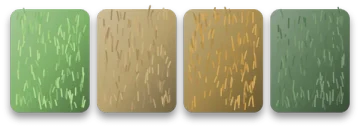
Widespread, even browning across an entire lawn in a hot dry spell, with the grass otherwise resisting when pulled, is classic drought dormancy, a survival strategy rather than a failure, and the correct response in most cases is patience and a reasonable watering routine rather than panic or heavy feeding, which a dormant lawn cannot use anyway. A nearby rose wilting in the same heat is showing genuine drought stress rather than dormancy, since roses do not have the same trick available to them, which is a useful reminder that the lawn’s ability to shut down and wait out a dry spell is doing it a favour most of the rest of the garden does not get.
Dog urine scorch
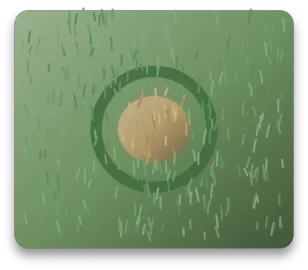
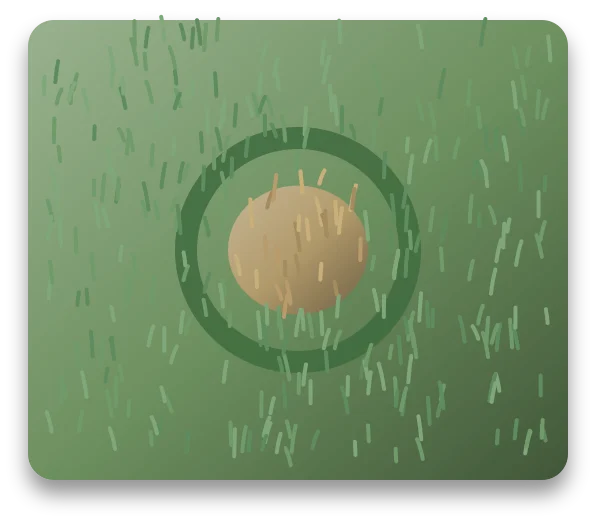
A concentrated dark green ring around a dead, straw-coloured centre, usually a roughly circular patch and often several scattered through the same general area, is the signature of dog urine scorch: the nitrogen in urine is effectively a very strong, localised fertiliser, strong enough to kill the grass at the point of contact while greening up the ring around it where the nitrogen has diluted to a level the grass can actually use. Watering the spot thoroughly within a few hours of the dog going dilutes the concentration before it scorches the crown, and is the single most effective preventive step available, more reliable than any product marketed as a lawn-safe supplement for the dog rather than a direct fix for the ground itself. Training a dog toward one consistent spot, ideally one set aside and mulched or gravelled rather than seeded as ornamental lawn, contains the damage to a small defined area instead of it turning up scattered across the whole lawn. Once a patch has died, treat it like any other bare patch: rake out the dead grass, loosen the soil surface, and reseed at the standard rate.
Compaction and thin, worn patches
A worn path across a lawn, thinning grass along a regularly walked route, or a generally poor patch near a gate, a washing line or a child’s play area is very often compaction rather than a disease or pest problem: repeated foot traffic packs the soil down until air and water struggle to reach the roots, and the grass thins out in direct response. The same compaction can thin out a border plant such as lavender growing at the edge of a well-used path, for the same underlying reason. Aerating the affected area, spiking with a fork or a dedicated aerator to open up the compacted soil, is the direct fix, ideally followed by topdressing with a sandy compost mix worked into the holes to help keep them open, and reseeding once the ground is workable again. Redirecting the actual foot traffic, a stepping-stone path across a route that gets walked regardless, is worth considering alongside the repair, since fixing the patch without addressing the traffic that caused it usually means treating the same spot again the following year. A hedge of laurustinus or similar planted to redirect a shortcut works as well as a stepping-stone path in the right spot, with the advantage of screening the route rather than merely marking it.
Fairy rings, looked at honestly
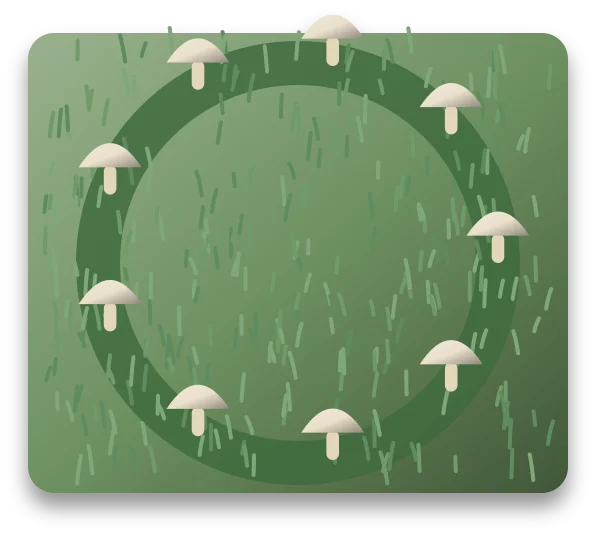
A ring or arc of darker green grass, sometimes with a band of dead or thinned grass alongside it and occasionally with mushrooms appearing after rain, is a fairy ring, caused by fungal mycelium spreading through the soil in a slowly expanding circle and altering how water and nutrients move through the ground it occupies. It is worth being straightforward about this one rather than promising an easy fix: the fungus lives in the soil, can persist for years, and there is no reliable, widely available home treatment that eradicates it outright. Aerating the ring heavily to let water penetrate the water-repellent zone the fungus can create, and feeding and watering it a little more than the surrounding lawn, disguises the ring by keeping the grass in it as green as everywhere else, which is a genuinely useful management approach even though it is not a cure. Digging out and replacing the soil to a real depth across the whole ring is the only approach that reliably removes the fungus itself, and it is disruptive and often impractical enough that most people reasonably choose to manage the appearance instead.
Grub damage, and the test that tells it apart from the rest
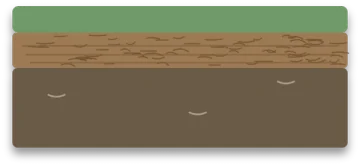
A patch that lifts away like a loose carpet when tugged, rather than resisting or coming free blade by blade, points to a different cause again: the larvae of chafer beetles or crane flies (leatherjackets) feeding on the grass roots underground, which detaches the turf from the soil below it rather than merely stressing the leaf above. Peeling back a suspect patch and checking the soil just beneath it for small, curled, pale grubs confirms it directly. Birds and foxes tearing up a lawn to get at the grubs is often the first visible sign, before the patch itself clearly dies, and is a reasonable early warning to check for grubs before assuming a bird problem. Vulnerability to this kind of damage is seasonal, generally worse where grub populations peak in late summer and autumn, and a lawn with a recurring grub problem in the same season each year is worth treating as a pattern rather than a one-off. A nematode-based biological treatment, watered into the affected area while the grubs are still small and the soil is warm enough for the nematodes to be active, is the main home-scale control available, applied as a preventive measure ahead of the season a lawn is known to be vulnerable in rather than only after the damage is already visible, and reapplied the following year if the same patch of lawn has a known history of it.
Reseeding any of the above
Whatever caused a bare patch, the repair is largely the same once the cause is addressed: rake out dead material down to soil, loosen the surface with a fork or a rake, work in a little compost if the soil looks poor, sow at the standard overseeding rate, rake lightly to cover the seed, and keep the patch consistently damp until the new grass is established enough to take a first light cut. Keep foot traffic off a freshly reseeded patch for as long as practical, since new grass roots are shallow and easily disturbed for the first few weeks, and a length of temporary netting or a few sticks marking the edge of the patch is a simple, low-cost way to remind anyone crossing the lawn, including the dog whose patch it may well have been in the first place, to go around it instead until the new grass has knitted together and can take normal wear again.