How to clean climbing shoes and keep the rubber grippy
About 6 minutes to read. Published . By the House & Hedge team.
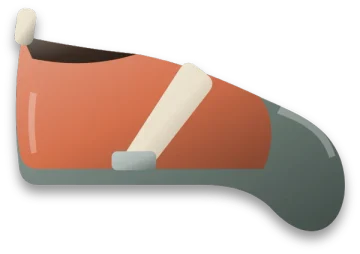
Climbing shoes spend their lives in two hostile places. Inside, they hold sweat, which feeds the bacteria behind the smell. Outside, the rubber picks up chalk, dust, skin oil and whatever the rock and the gym floor leave behind. Both problems are manageable, and both get worse when the shoes are treated like running shoes. A climbing shoe is built to fit tightly, with thin rubber glued and stitched to a thin upper, so most of the care is about keeping that structure intact.
This guide covers the daily habits, a hand wash that is safe for the glue, the rubber and the lining, and the drying that keeps the shape.
The daily habits that matter most
Brush the chalk and grit off the rubber after each session, using a stiff nylon brush. Chalk left on the rubber dries into a film, and that film gives less grip than clean rubber does. Do not seal the shoes in a bag while they are damp. A closed bag traps moisture, and that is the fastest route to a strong smell.
Loosen the straps and the laces when you take the shoes off, so they dry in something close to their natural shape and the heel does not fold over.
Brushing the rubber
The rubber does most of the work, so it needs the most attention. Dust and skin oil make it smooth and less grippy. A stiff brush, used with a little water, lifts the dirt out of the texture. For a deeper clean, wipe the rubber with a cloth dampened with lukewarm water and a drop of mild, unscented soap. Wipe it again with clean water, then dry it.
Some climbers also wipe the rubber with a cloth that has a little 70 percent isopropyl alcohol on it, to remove the oils. This works on many shoes, but check the maker’s guidance first. Alcohol can dry out the rubber on some models, and it should stay off the glue line, where the rubber meets the upper.
Do not scrub the glue line hard. The join between the rubber and the upper is the weakest point of the shoe, and rough scrubbing can start a split.
Cleaning the lining
Remove the insoles if they come out. Wash them by hand in lukewarm water with mild soap, rinse them, and dry them away from direct heat.
For the lining, fill the shoe with lukewarm water and a little soap, and swish it round. Use a soft brush on the inside of the toe and the heel, where sweat builds up most. Empty the shoe, rinse it with clean water, and press the water out with a towel. Do not soak the shoes for long. Water weakens the adhesive over time, so a short wash is safer than a long soak.
For the smell, sprinkle baking soda inside the shoe and leave it overnight. Shake out the powder and wipe the inside with a damp cloth. Baking soda reduces odor, but it does not remove the bacteria that cause it, so the wash matters more than the powder.
When the smell keeps coming back
If the shoes smell again within a few sessions, the lining is still holding bacteria. Clean it properly, let it dry for longer, and air the shoes out between climbs. Keep them away from a gym bag that also holds wet towels or damp clothing, because the extra moisture keeps the smell going.
Some climbers use sprays or sachets labeled for shoe odor, and they can help once the lining is clean and dry. Check that the product is labeled for footwear, and do not spray anything into a shoe that is not made for it.
Drying without damage
Dry the shoes at room temperature, away from radiators, heaters, car dashboards and direct sun. Heat is the enemy of climbing shoes. It softens the glue, can warp the rubber, and changes the fit.
Stuff the shoes loosely with newspaper or a towel to hold their shape, and replace the stuffing once it is wet. Leave them to dry for at least a day, and longer for a thick lining. Do not use a hair dryer or a heater to speed things up.
Leather and synthetic uppers
Leather uppers can be wiped with a damp cloth, and they can be conditioned with a leather conditioner made for footwear. Use it sparingly, and keep it off the rubber and the glue line. Synthetic uppers need only mild soap and water.
Brush the laces, the Velcro and the buckles clean. Grit in the hook side of Velcro tears the loop side over time, so it is worth brushing it out after each session.
Rotating a pair
Rotating two pairs of shoes gives each pair time to dry fully between sessions. A shoe worn every day rarely dries out, and the lining keeps the sweat and the bacteria. Alternate the pairs, and leave the shoes you have just worn open to the air. Keep the drying pair away from the other shoes, so air moves freely around it.
For a climber who trains several times a week, a second pair also spreads the wear across both pairs. Each session wears the rubber, and a rest between sessions gives the lining time to dry.
Checking the shoes after cleaning
After a wash, look over each shoe with care. Check the glue line along the rubber for lifting, the toe and the heel for cracks, and the lining for tears or loose stitching. Press the rubber gently to see whether it has separated from the upper. A small lift at the edge means a repair service should see the shoe soon, because water and grit get into the gap and widen it.
Check the straps and the buckles too. A worn strap can fail under load, and a broken buckle is a safety problem on a climb. Replace a damaged strap or buckle before the next session, not after.
Storage
Store the shoes in a breathable bag, not a sealed plastic one. Keep them somewhere cool and dry, away from the car, where the heat builds up. Loosen the straps between sessions so the shape holds.
The chalk bag and the brush
The chalk bag holds moisture and dust, and it needs cleaning too. Empty it, brush out the chalk, and keep it out of the sun. Rinse the chalk brush in warm water, then dry it bristles down, so the water does not run back into the handle.
When to replace the shoes
Replace the shoes when the rubber is worn through to the rand, when the toe is too thin to grip a small edge, or when the rubber is coming away from the upper. A hole in the upper, or a split along the toe, means the shoe will not hold its shape. Ask the maker about resoling, because some services repair climbing shoes, and that can extend the life of a good pair.
What to avoid
- Washing machines and dryers
- Bleach, and cleaners that contain it
- Strong solvents such as paint thinner or acetone, which can dissolve the glue
- Hot water, heaters, hair dryers and car dashboards
- Oils and greases on the rubber, which make it slide