How to clean retainers and clear aligners without warping them
About 5 minutes to read. Published . By the House & Hedge team.
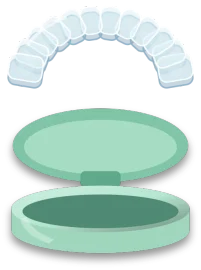
Retainers and clear aligners are made from thin plastic, shaped to fit the teeth precisely. The plastic is also easy to damage. Heat warps it, abrasives scratch it, and some common products cloud it. A retainer warped in a hot cup, or scratched by toothpaste, will not fit as it should. The teeth can drift back, or the aligner can stop doing its job.
The cleaning routine is simple. The aim is to remove the film of saliva and bacteria that builds up on the plastic each day, without changing its shape. This guide covers the daily routine, the weekly deep clean, the products to avoid, and how to store the pieces between uses.
Why clean them at all
Retainers and aligners sit against the teeth for many hours. Saliva, food and bacteria build up in a film on the plastic. That film causes bad breath and staining, and it can feed the bacteria that cause gum disease and tooth decay. Clean the device each time you take it out, and before you put it back in.
The daily routine
Rinse the retainer or aligner in lukewarm water each time you take it out. Brush it gently with a soft toothbrush, using mild, unscented soap or a cleaner your orthodontist recommends. Rinse thoroughly, and wipe it with a soft cloth. Put it in its case while it is still damp, and close the case so the device cannot be knocked or stepped on.
Brush your teeth before you put the retainer back in. Brushing afterward can trap food and toothpaste under the plastic.
The weekly deep clean
Once a week, soak the device for the time the cleaner’s label gives, using a product your orthodontist or dentist recommends. Some people dissolve a denture-cleaning tablet in lukewarm water. Check with your orthodontist first, because some products are too harsh for thin plastic. Rinse thoroughly afterward, then brush once more with soap and water to remove any residue.
The case needs cleaning too. Empty it, rinse it with warm water and mild soap, and let it air-dry with the lid open. A case that smells or has a film on it passes that film back to the retainer.
What to avoid
- Hot water, the dishwasher, the kettle, a radiator and a car dashboard, all of which can warp the plastic
- Toothpaste and scouring powders, which scratch and cloud the plastic
- Alcohol-based mouthwash, which can cloud and weaken the plastic over time
- Bleach and strong cleaners, which can damage the plastic and leave a residue that stays in the mouth
- Paper towels and tissues, which can tear the plastic and leave fibers in the case
- Wrapping the retainer in a napkin at a restaurant, which is a common way devices are lost in the trash
The last point matters. A retainer wrapped in a napkin is easily thrown away.
Bonded retainers
A bonded retainer is a thin wire glued to the back of the front teeth, usually the lower ones, and it is not removed. It needs a different routine. Brush around the wire carefully, and clean between the teeth with floss, using a floss threader to pass the floss under the wire. Pull the floss out sideways rather than lifting it straight up, so the wire does not catch and loosen.
Check the bond each week by looking at the teeth and the wire. A bonded retainer that is loose, that has a sharp end poking the gum, or that has a gap between the wire and the tooth should be checked by the orthodontist. Do not try to re-attach or bend a loose wire yourself, because a loose end can cut the tongue or the cheek.
Wire and hybrid retainers
Wire retainers, often called Hawley retainers, combine a wire that runs across the front of the teeth with an acrylic base that sits against the roof of the mouth or the back of the lower teeth. Clean the acrylic as you would any removable retainer, and brush the wires gently with a soft brush. Metal can tarnish over time, and a little baking soda paste on the wires lifts the staining. Rinse well afterward.
Do not bend the wires yourself, and do not pull on them to remove the retainer. A wire bent out of shape will not sit correctly, and a wire pulled out of the acrylic can cut the gum or be swallowed. Take the retainer to the orthodontist if a wire has moved.
Travel and the gym
Take a hard case when you travel, and keep the retainer in it on the plane, in the car and at the gym. A soft pouch is easy to lose, and a retainer carried loose in a pocket is easily damaged or lost. Pack a spare case, a small brush and a travel-size soap, so you can clean the device on the road.
Never wrap the retainer in a napkin or a tissue at a restaurant, and never leave it on a plate or a tray. Check the table and the chair before you stand up, and check the bag before you leave.
Keeping a spare
If the retainer is lost or cracked, a replacement can take days or weeks to make, and the teeth can move in the meantime. Ask the orthodontist about a spare pair while treatment is still active, and keep the spare in its own case. Labeling the case with your name and a phone number helps if the case is found.
Storage
Keep the device in its case whenever it is not in your mouth. Keep the case somewhere safe, away from pets, children and the bathroom sink, where a dropped retainer goes straight down the drain. Do not leave it loose in a pocket or a bag, and do not leave it in direct sun. Heat is the quickest way to warp a retainer.
Odor and staining
A smell from the retainer usually means the film is still on the plastic, or the case is dirty. Clean the device and the case, and check that you are brushing the retainer as well as your teeth. Staining often comes from coffee, tea, red wine or some medications. Brush the retainer soon after drinking these, and do not wear it while you eat or drink anything other than water.
Signs that a retainer no longer fits
If the retainer feels tight or loose, has changed its fit, cracks, or has a rough edge that cuts the gums, stop using it and contact your orthodontist. A retainer that does not fit can put pressure on the teeth in the wrong direction. A warped aligner can move teeth in ways the treatment did not plan.
Aligners during treatment
Clear aligners are usually swapped for a new set on a schedule, and each set should be worn for the time the orthodontist sets. Remove them for meals, and drink only water while wearing them. Brush the aligners as you brush your teeth, and keep them in their case whenever they are out. Ask the orthodontist before you use any new cleaning product on them.
When to see the orthodontist or dentist
See your orthodontist or dentist if the device is cracked, if it no longer fits, if your teeth are moving in an unexpected way, or if your gums are sore. A retainer that has been lost or replaced should be checked as soon as possible, because teeth can begin to move within days.