Planting a new hedge
About 10 minutes to read. Published . By the House & Hedge team.
Hedge plant calculator
Work out how many plants to buy for the length of hedge you are planting.
The guide says 30 to 45 cm for a fast screening hedge, and closer for a low formal hedge such as box.
A hedge that fails to thicken up is very rarely a wrong choice of plant. It is almost always one of three things done at planting: poor spacing, the wrong season, or being left to fend for itself through its first two summers. All three are fixed before the plants ever go in the ground, which makes the planting itself, not the choice of species, the part most worth getting right.
Timing the planting
Bare-root hedging, sold and planted only while the plant is dormant and leafless, gives the strongest start for the plants that are sold that way, mainly the deciduous and semi-evergreen shrubs such as privet. In the northern hemisphere that window runs October to March, ideally finished before the end of January while the soil is still workable and before the spring flush of growth begins; south of the equator the equivalent dormant season falls roughly May to August. Planting into frozen or waterlogged ground is worth avoiding at either end of the window even when the calendar says it is the right month.
Container-grown stock, which covers evergreens such as cherry laurel, photinia and escallonia, can go in outside that dormant window but still establishes best in the cooler, wetter part of the year rather than the height of summer, when a new root system is asked to support full leaf growth in hot, drying conditions before it has had a chance to spread. Frost-tender, warm-climate shrubs such as Duranta and Plumbago follow a different rule again, since they have no dormant season to speak of in a genuinely frost-free climate: plant them once the risk of a late frost has passed in spring, giving them the longest possible run of warm weather to establish before the following winter.
Spacing
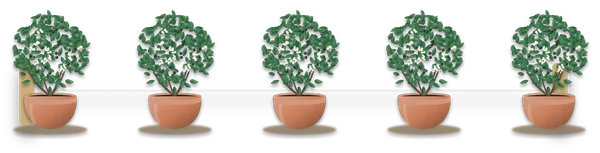
Space plants roughly 30 to 45 cm apart for a fast screening hedge, tighter for a low formal hedge such as box, which is genuinely slow and needs the extra density from the start rather than growing to fill a wider gap over time. Planting closer than the recommended spacing does not speed up the result. It creates a row of plants competing for the same water and nutrients from the outset, which more often produces a hedge that is thin and starved at the base within a few years than one that is thicker sooner, since none of the individual plants ever get the root run they would need to put on strong top growth.
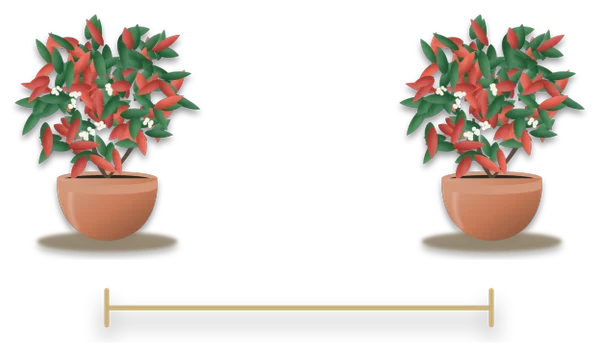
A straight line, marked with a string line between two pegs before any digging starts, is worth the extra ten minutes it takes: a hedge planted freehand tends to wander slightly, and the wander becomes far more visible once the hedge is clipped to a crisp face than it ever was on the day of planting.
How the calculator works
The hedge plant calculator works out how many plants to buy. Enter the length of the hedge in metres, the spacing in centimetres, and whether you are planting a single row or a double, staggered row.
A row has a plant at the start and another at the end of every space, so plants in a row = floor(length / spacing) + 1, where floor means rounding down to a whole number and both are in centimetres. In a double, staggered row the second row is offset by half a space, so each of its plants stands opposite a gap in the first row. It holds floor((length - spacing / 2) / spacing) + 1 plants, and the total is the two rows added together.
With the defaults, a 10 m hedge is 1000 cm. At 40 cm apart, 1000 / 40 = 25 whole spaces, so a single row takes 25 + 1 = 26 plants. The second row starts 20 cm in and holds floor(980 / 40) + 1 = 25, so a double row takes 51.
Spacing is the part of the rule that matters most. The guide suggests 30 to 45 cm for a fast screening hedge and closer for a low formal hedge such as box, and the calculator accepts 15 to 100 cm. Planting closer does not give a thicker hedge sooner. It makes the plants compete for the same water, nutrients and root run, and it often leaves the hedge thin at the base. Spacing is measured along each row, so a second row puts about twice as many plants into the same length, and the rows need room. The count is for plants only and allows no spares.
Soil preparation
Dig a proper planting trench rather than individual holes for each plant, working in well-rotted organic matter along its entire length rather than only around each root ball, and break up any compacted subsoil at the bottom so roots can get away quickly rather than circling in a neat hole surrounded by harder ground. This matters more on a new-build garden with compacted, subsoil-heavy ground than on an established bed, and it is worth checking with a spade before assuming ordinary garden preparation will be enough.
The mulch and soil calculator works out how much compost or mulch a trench of a given length actually needs in litres and bags, which is the form it is sold in, rather than leaving the quantity to guesswork on the day and running short halfway along the row. A generous mulch layer over the finished trench, kept clear of the actual stems, also suppresses the first flush of weeds that would otherwise compete with the new plants for water.
The first two years
This is where most new hedges are actually lost, not in the choice of plant or even the planting itself. Water thoroughly and regularly through the first two growing seasons, more often than an established hedge of the same species would need, since the root system has not yet spread far enough to find its own water in dry soil between rains. A newly planted privet or cherry laurel hedge can need watering two or three times a week through its first summer on light or free-draining soil; an established one of either copes on rainfall alone outside a real drought.
Keep a weed-free strip along the base of the hedge for the same first-two-year period: weeds compete directly for the water and nutrients a young hedge needs most, and a hedge planted into weedy, uncleared ground establishes noticeably slower than one kept clean, even when both are watered identically. A mulch mat or a hand-weeded strip both work; what matters is doing one of them rather than leaving the base of a new hedge to whatever grows there on its own.
Feeding matters less than watering at this establishment stage. Good soil preparation and consistent water do most of the work a fertiliser would otherwise be asked to do, and some of these plants, cherry laurel in particular, are intolerant of heavy fertiliser and grow soft, disease-prone growth if pushed too hard too early rather than growing noticeably faster for it. A light mulch is a safer default than a feed for a first-year hedge on reasonable soil, with a proper feeding routine better saved for once the hedge is established and actively being clipped.
What not to do yet
Resist the temptation to shape a young hedge in its first season, however tempting it is to tidy up an uneven planting straight away. Let it establish and put on some height and root growth first; an early formative trim once it is genuinely growing away, usually in its second year, is more useful for building a dense base than repeated light clips on a plant still building the root system everything else depends on.
A note on replacing an existing hedge
Where a new hedge is going into ground that held a similar plant before, particularly if the previous one was removed because of a disease such as honey fungus or box blight, it is worth checking whether the same disease is still present in the soil before replanting the same species into the same trench. Honey fungus in particular persists in old root material for years, and a new privet or laurel planted into ground that still carries it is likely to develop the same problem again regardless of how well the rest of the planting is done.
Where the old hedge was removed for a reason unrelated to disease, ordinary soil preparation is enough, but it is still worth digging out as much of the old root system as practical before replanting, since decomposing woody roots left in the new trench can harbour fungal problems of their own and create pockets of uneven, compacted soil exactly where the new plants’ own roots need to travel freely.
A short planting-day checklist
Water the plants themselves, whether bare-root or container-grown, before they go in the ground rather than after, so the root ball is not drying out while the trench is being finished. Set each plant at the same depth it was growing at before, whether that is the soil mark on a bare-root plant or the top of the compost in a container, since planting too deep is a common and avoidable way to check a young plant’s growth before it has even started. Firm the soil in around the roots with your hands rather than stamping it down hard, which compacts the ground more than a new root system wants. Water thoroughly once everything is in and firmed, and again the following day, rather than assuming the first watering has done the job for the whole first week.