Pruning raspberries and blackberries
About 10 minutes to read. Published . By the House & Hedge team.
Bramble fruit, raspberries and blackberries both, is the fruit where getting the pruning genuinely wrong costs an entire season’s crop rather than just a slightly untidy plant, because the two common types fruit on canes of a different age and cutting the wrong one removes next year’s harvest rather than this year’s spent growth. Getting this one distinction right, before the secateurs come out at all, matters more than any other single piece of bramble care, and is worth confirming for certain rather than pruning first and checking afterward.
The distinction that actually matters: summer-fruiting or autumn-fruiting
Summer-fruiting raspberries fruit in early to mid summer on canes that grew the previous year, meaning the cane doing the fruiting this year was last year’s new growth. Once that cane has finished fruiting, its job is done, and it is cut right down to the ground, making way for this year’s new canes to become next summer’s fruiting wood. Cutting down the wrong cane, this year’s new green growth instead of last year’s spent one, is the single most common mistake, and it removes the entire following year’s crop in one afternoon.
Autumn-fruiting raspberries work the opposite way and are, in a real sense, easier to get right by accident: they fruit in autumn on canes that grew earlier the same year, so the entire planting is cut down to ground level once in late winter, before any new growth starts, and the whole bed regrows and fruits again the same year. There is no old-cane, new-cane distinction to track at all, which is why an autumn-fruiting variety is often recommended to anyone nervous about getting summer-fruiting pruning wrong.
Blackberries follow the same summer-fruiting logic as summer raspberries, fruiting on the previous year’s canes, but grow as long, scrambling, often thorny stems rather than raspberry’s more upright canes, which makes training as important as the pruning itself.
Training makes the pruning possible
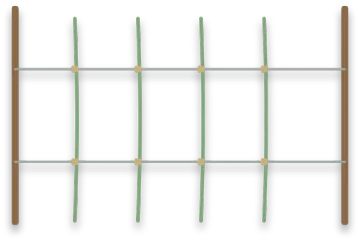
A bramble left to sprawl untrained is genuinely difficult to prune accurately, since telling a two-year-old cane from a current-year one is much harder in a tangled heap than on a plant trained onto a support. Tying new canes to a horizontal wire system as they grow through the season, keeping this year’s new growth visually separate from the canes that are currently fruiting, turns the pruning itself into a quick, confident job rather than a guessing exercise. This matters more for blackberries, with their longer, more sprawling growth, than for an upright raspberry variety, but it helps with both.
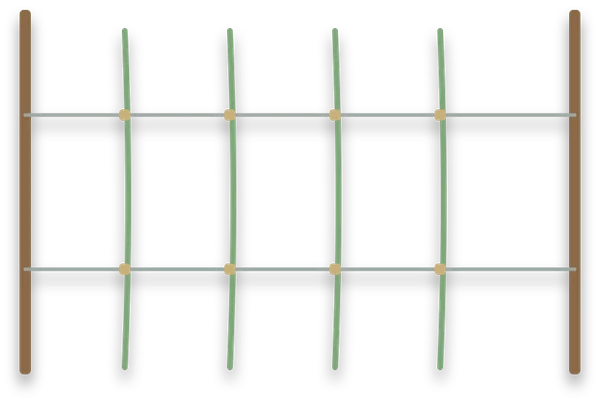
Doing the cut
Cut a spent fruiting cane right down to the ground, not partway, since a stub left standing does not resprout usefully and simply clutters the base of the row. Do this as soon as convenient after the last fruit is picked on a summer-fruiting variety, which also improves airflow around the developing new canes for the remainder of the season. On an autumn-fruiting variety, cut the entire planting down to ground level in later winter, before growth resumes, in one pass rather than cane by cane.
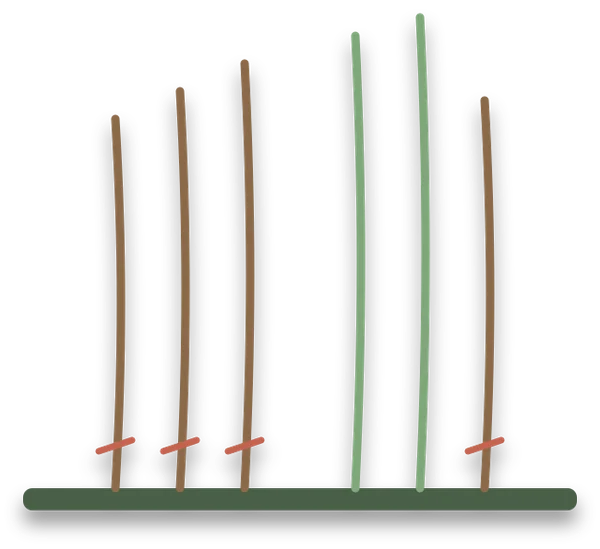
Thin overcrowded new canes at the same time, keeping the strongest few per metre of row rather than every cane that came up, since a densely packed row produces more, weaker canes and worse airflow than a properly thinned one, and poor airflow is a direct invitation to the fungal problems that trouble brambles in damp weather.
Feeding and mulching after the cut
A mulch of well-rotted organic matter around the base after the main prune, kept clear of the crown itself, both feeds the row for the coming season and suppresses the weeds that compete with new cane growth for water and nutrients early on. The mulch calculator works out the quantity needed for a given row length in the bags a garden centre actually sells it in, rather than leaving the amount to a guess on the day.
How this compares to other soft fruit
Not every soft fruit follows the same age-of-cane logic. Blackcurrants fruit most heavily on growth from the previous one to two years and are pruned by removing a portion of the oldest, darkest wood right at the base each winter to keep the bush constantly renewing itself, a genuinely different system from the strict old-cane-out, new-cane-in cycle raspberries and blackberries follow. Tree fruit is different again: apple is pruned to an open, balanced framework of permanent branches rather than an annually replaced set of canes, since it fruits on spurs that build up over several years on wood that is kept rather than removed. Checking which system a given fruit actually follows, rather than applying one plant’s rule to another, is worth doing before the secateurs come out on anything unfamiliar.
Common problems worth knowing before they appear
Cane blight and cane spot are the two fungal problems most likely to affect a bramble planting, both entering through wounds, a pruning cut, wind damage, or an insect bite, and both showing as dark, sunken lesions on the cane that can girdle and kill it above the damaged point. Pruning with clean, sharp tools and cutting flush rather than leaving a ragged stub reduces the wound area available for infection, and removing and destroying, rather than composting, any cane showing these symptoms stops the problem spreading to its neighbours through the same bed. Raspberry beetle is the common pest problem, its small white larvae found inside the fruit itself at picking time rather than visible on the outside beforehand, and cultivating the soil around the base in autumn and winter is a genuinely effective non-chemical control, since it disturbs the overwintering pupae in the soil before they emerge the following season.
Choosing a variety with the end use in mind
Thornless blackberry varieties trade a small amount of vigour for considerably easier picking and training, worth the trade for most garden situations unless a particularly vigorous, thorned variety is specifically wanted for its fruit quality or yield. Autumn-fruiting raspberry varieties, as covered above, remove the old-cane, new-cane distinction entirely and are worth recommending specifically to a beginner nervous about pruning a summer-fruiting variety incorrectly in its first year or two, before the visual difference between cane ages becomes second nature.
A one-season recovery plan for a neglected bramble
A bramble that has not been pruned properly for a year or more, and is now an indistinguishable tangle of old and new growth, is worth recovering over one full season rather than trying to sort out retroactively. Let it fruit as best it can that year without attempting to identify individual cane ages in the tangle, then immediately after that harvest cut the entire planting hard, all of it, back to ground level, and let it regrow as a single clean cohort of new canes to train and manage properly from that point on. This sacrifices one season’s full potential crop in exchange for a bramble that is straightforward to prune correctly every year afterward, which is a reasonable trade for a planting that has become too tangled to manage any other way, and is a far smaller sacrifice than continuing to guess at cane ages indefinitely and losing an unpredictable portion of the crop to mispruning every single year instead.