Roots coming out of the pot
Roots through the drainage holes or circling the surface mean the plant has run out of room. When to pot on, when to leave it, and the size to choose.
What it usually is
1 The plant has filled its pot
| How to tell | Roots emerging from the drainage holes, or circling visibly on the compost surface. Tip the plant out: if the root ball holds its shape and you see more root than compost around the outside, it is ready. |
|---|---|
| The fix | Pot on in spring into a container one size larger, about three to five centimetres wider, using fresh compost of the kind that species wants. Tease the outer roots loose so they grow outwards rather than continuing to circle. |
2 It is potbound and that is fine
| How to tell | A plant that is flowering well and growing steadily with a few roots at the drainage holes, or a species that prefers to be snug: moth orchids, hoyas, spider plants, many bulbs. |
|---|---|
| The fix | Leave it. Many houseplants flower better slightly potbound, and a plant given a much larger pot will grow roots and leaves rather than flowers. Top dress instead: scrape off the top three centimetres of compost and replace it with fresh. |
3 It has been in the same compost for years
| How to tell | Water runs straight through and out, the compost has shrunk and gone grey or hard, and the plant needs watering far more often than it used to. |
|---|---|
| The fix | Repot into fresh compost even if the pot size stays the same. Old compost loses its structure, holds no air and no longer holds water where the roots are. Same pot, new compost, is often the right answer for a large plant. |
Through the year. Spring, as growth starts, is the time to pot on. A plant repotted in autumn spends the winter with disturbed roots and little light to rebuild them, which is how a healthy plant is lost.
Roots at the drainage holes are the plant asking a question, not issuing an instruction. The answer depends on what else the plant is doing.
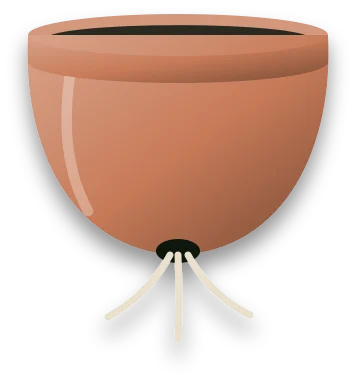
Tip it out and look, which takes a minute and settles it. Hold the plant by the base of its stems, turn the pot over and tap the rim on the edge of a table. If the root ball holds together as a solid mass with roots circling the outside and little compost visible, the plant has filled its pot. If it falls apart and you see mostly compost, put it back and leave it alone for another year. Repotting without killing the plant covers the rest of the job.
When you do pot on, the size matters more than anything else. For the choice of container, see choosing a pot. One size up, three to five centimetres wider, and no more. The temptation is to give a plant plenty of room and be done with it for years, and it is exactly the wrong thing. A small root ball in a large volume of compost sits in wet material its roots cannot reach through, which stays wet, which is how rot starts. Small steps, more often, is the rule.
Use compost that suits the species: an ordinary peat free houseplant mix for most, with added grit or perlite for succulents and cacti, and a coarse bark mix for orchids, which are not growing in soil at all in the wild. Tease the circling roots gently outwards as you set the plant in, or they will keep circling in the new pot too.
The other case worth knowing is the plant that does not need a bigger pot but does need new compost. Compost breaks down over a few years, loses its structure, and stops holding air and water in the right proportions. The signs are water running straight through, a hard grey surface, and a plant that needs watering twice as often as it once did. That plant goes back into the same pot with fresh compost around it, which is less disruptive than moving up a size and does more good.
Finally, the plants that prefer to be crowded. Moth orchids, hoyas, spider plants, clivias and many bulbs flower better with their roots snug, and potting them on generously is the commonest reason they stop flowering. If yours is blooming, leave it be.
Questions from the margin
- Should I repot when roots come out of the bottom?
- Tip the plant out and look first. If the root ball holds its shape with roots circling the outside and little compost visible, pot it on in spring. If it falls apart and you see mostly compost, put it back and leave it another year.
- What size pot should I repot into?
- One size up, three to five centimetres wider, and no more. A small root ball in a large volume of compost sits in wet material it cannot reach through, which stays wet, and that is how rot starts.
Checked against RHS, Repotting houseplants; Royal Botanic Gardens Kew, Potting on.