Moss and weeds in the lawn
About 11 minutes to read. Published . By the House & Hedge team.
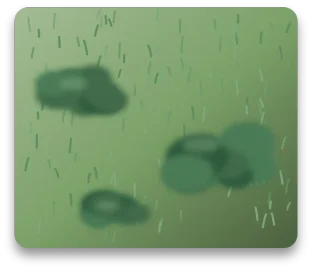
Moss and weeds are both symptoms before they are problems in their own right. Neither one moves into a lawn at random: each is a response to a specific condition the grass itself is struggling with, and treating only the moss or the weed while leaving that condition in place is why the same problem comes back every year on the same lawn.
Why moss actually appears
Moss thrives where grass struggles, and the usual causes are shade, compaction, poor drainage, mowing too short, low soil fertility, or a combination of several at once. A lawn under a tree, on heavy clay that holds water, or cut scalped-short every week is offering moss exactly the damp, undisturbed, low-competition conditions it wants, while the grass in the same spot is stressed and unable to compete for the light and space it needs. A lawn bordered by a dense, unclipped hedge of box can suffer the same shading effect along that edge specifically, which is one more reason keeping a border hedge trimmed matters for the lawn beside it and not only for the hedge itself.
A north-facing garden, a lawn hemmed in by fences or hedges on more than one side, or ground that stays visibly damp long after rain are all worth checking specifically, since each points to a different part of the underlying cause. This matters because it is the whole reason a moss killer alone is a temporary fix. It clears what is visible today, and the same conditions bring moss straight back within a season or two if nothing else changes. Improving drainage on compacted or waterlogged ground, raising the mowing height, thinning overhanging branches to let more light through, or improving fertility with an appropriate feed all address the actual cause rather than only the symptom, and are worth doing at the same time as any direct treatment rather than instead of it.
Treating moss directly
A lawn sand or iron sulphate based moss killer, applied following its own label rate, blackens moss within a week or two, at which point it can be scarified out along with the thatch it was growing in. Scarifying before the moss is dead simply spreads live fragments around the lawn, which is why the order matters: kill it first, then remove it. Once the dead moss is out, overseed the bare ground it leaves behind at the standard overseeding rate, since a scarified patch left bare is an open invitation for the same moss, or a weed, to move straight back in.
Time this for a period of active grass growth, spring or early autumn in most temperate climates, so the lawn recovers and fills the gap the moss leaves quickly rather than sitting bare and vulnerable for weeks.
Why weeds actually appear
The same logic applies to broadleaf lawn weeds: dandelion, clover, plantain, daisy and the rest largely move into thin, weak or bare patches of lawn rather than establishing readily in a thick, vigorously growing sward. A lawn that is fed appropriately, mown at a sensible height rather than scalped, and not compacted underfoot competes with weed seedlings for light and space far more effectively than any spray does on its own, which is why the single most effective long-term weed control for a lawn is simply a thicker, healthier lawn.
Treating weeds directly
For a handful of weeds scattered through an otherwise healthy lawn, spot treatment, either pulling them out by hand where the root comes cleanly (a dedicated weeding tool that lifts the whole taproot works better than pulling by the leaves, which usually snaps off and leaves the root to regrow) or a targeted spot spray, deals with the problem without treating the entire area. Where weeds cover a large proportion of the lawn rather than a scattering, a selective lawn weedkiller applied across the whole area, chosen specifically to kill broadleaf weeds without harming grass, is the proportionate response, applied at the rate and timing its own label specifies rather than guessed.
Whichever method is used, the same principle from the moss section applies again: reseed any bare patch a weed leaves behind once it is gone, since an empty patch of soil in an otherwise thick lawn does not stay empty for long, and what moves in next is rarely grass unless grass seed is what gets given the first opportunity.
Reading a lawn’s weeds and moss as a diagnosis
A lawn heavy in moss on one shaded side and largely clear on a sunnier side is telling you plainly that light, not a lack of moss treatment, is the actual issue, in much the same way a struggling, leggy rose or a thin, flowerless patch of lavender nearby would be telling you the same thing about that same corner of the garden. A lawn with weeds concentrated along a well-worn path is showing compaction from foot traffic rather than a general weed problem across the whole area. Reading the pattern before reaching for a product, rather than treating the whole lawn uniformly regardless of where the problem actually sits, both saves product and points more directly at whatever underlying fix, better drainage, more light, less foot traffic, a higher mowing height, will actually stop the problem returning.
Soil pH and moss
Moss also has a genuine preference for acidic soil, and a lawn on naturally acidic ground, or one that has been fed with an acidifying product for years, can carry a heavier moss burden than the shade and drainage explanation alone accounts for. A soil pH test, cheaply available as a home kit, is worth doing on a lawn with persistent moss and no obvious shade or drainage cause, since correcting the pH with an appropriate lime application, done gradually over more than one season rather than all at once, addresses a cause that scarifying and moss killer alone never touch. Overcorrecting is its own mistake: a large single lime application can push the soil too far the other way and cause its own problems, which is the reason gradual correction over successive seasons, checked with a further test rather than assumed, is the safer approach than one large, one-off application.
A more honest word on clover
Clover is worth a specific mention rather than lumping it in with every other broadleaf weed without comment. It is nitrogen-fixing, meaning it can actually thrive in a lawn that is under-fed rather than only in a weak one, which is a useful diagnostic in its own right: a lawn heavy in clover and otherwise thin is often telling you it needs feeding, not just weeding. It is also increasingly kept deliberately by gardeners who value its flowers for pollinators and its drought tolerance over a uniform all-grass sward, which is a legitimate choice rather than a lapse in lawn care. Whether to treat clover as a weed to remove or a feature to tolerate is a genuine preference rather than a right answer, and worth deciding on purpose rather than by default, ideally before buying a product to remove something that a slightly different feeding routine might have addressed on its own.
A note on timing everything together
Moss treatment, scarifying, weed control and overseeding work best done as one connected sequence within the same couple of weeks, in spring or early autumn, rather than as separate jobs scattered through the year. Killing moss in isolation in midsummer, for instance, leaves a bare patch sitting through the hottest, driest part of the year with nothing sown into it, which is a much harder environment for new grass seed to establish in than the cooler, damper conditions of spring or autumn.