Beneficial insects in the garden
About 7 minutes to read. Published . By the House & Hedge team.
Most gardens already have a team working on the aphids, and most gardeners never see it. The team is small, quiet and busy, and it is often undone by a spray that is meant to help. The RHS names a long list of aphid predators, and the same list shows what you can do to keep them working.
The team
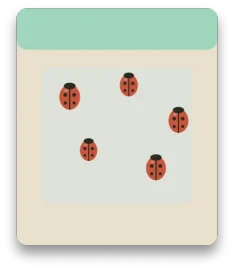
Ladybirds come first in most people’s minds. The RHS says that a majority of ladybird species are predatory on aphids and other insects, though some feed on mildews and a few on plants. Not every ladybird is on your side, but most are.
Parasitoid wasps are the quiet ones. The RHS calls them parasitoids rather than parasites, because they kill their host. Several small species lay a single egg inside an aphid. The grub that hatches usually kills the aphid by eating its body contents. By then the aphid has turned whitish brown and inflated, and it is called an aphid mummy. Parasitoid wasps are small and easy to miss.
Lacewing larvae are the sickle-jawed predators. The RHS says they eat aphids and other small insects, seizing them with curved jaws. The North Carolina State University extension says they are sometimes called aphid lions. They are described in more detail in the guide on hoverfly and lacewing larvae.
Hoverfly larvae are the maggot-like ones. The RHS says that approaching half of British hoverfly species have larvae that feed on aphids, and that those larvae also prey on leafhoppers, whiteflies and scale insects. The RHS says the adults are pollinating insects rather than aphid eaters. The larvae are easy to squash by mistake, which is why the same guide covers how to tell them apart from pests.
Predatory midge larvae are the one that surprises most people. The RHS names the midge Aphidoletes aphidimyza, and says its larvae insert their mouthparts into an aphid’s body and suck out the contents.
Earwigs are omnivorous, feeding on small invertebrates and plant material. The RHS says that on tree fruit they can give useful control of fruit aphids, so an earwig on the fruit trees is not automatically a nuisance.
Some ground and rove beetles climb plants to feed on aphids, so they are worth looking for on stems and leaves as well as on the soil.
Birds count too. The RHS says that blue tits will feed on aphids, and that there is some evidence that aphid numbers are lower in gardens where birds are encouraged.
The mummy in detail
The aphid mummy is the one most worth knowing about, because it looks like a problem and is often a success. A whitish brown, inflated aphid stuck to a leaf is not a dead aphid to be scraped off. Look at it closely. If there is a hole in its body, the wasp has already hatched and left. If the body is still whole, the wasp may still be developing inside.
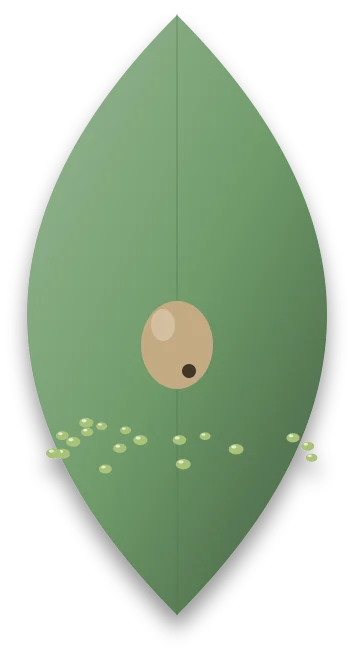
That is why the mummy is worth leaving alone. Removing it removes the next generation of predators along with the aphid that was already dead. A plant with a few mummies on it is a plant where the team is working. The RHS notes that the adult wasp emerges through a hole cut in the aphid’s body, which is the easiest sign to look for.
What keeps them working
Tolerate some aphids. The RHS says that tolerating some aphids and avoiding pesticides can help attract predators to gardens. Aphids are the food that brings the predators in, so a few on a plant you can spare is part of the process rather than a failure.
Avoid pesticides. The RHS does not support the use of pesticides, and it recommends non-chemical control whenever it is needed. A broad spray does not tell predators from pests. It hits the wasps, the larvae and the adults along with the aphids. The aphids come back, and the team has to start again.
Plant flowers. The RHS recommends a broad range of easy-to-reach flowers through the year, and its hoverfly list includes Allium, Coreopsis, Japanese anemone, Buddleja, English marigold (calendula), Hebe, poppies, Sanguisorba, thistles and angelica. Calendula is also a plant on this site, and the calendula entry covers how it grows. The dill entry makes the same point: its flowers bring in hoverflies, whose larvae eat aphids.
Encourage birds. The RHS notes some evidence that aphid numbers are lower where birds are encouraged, so a bird-friendly garden is part of the picture.
Keep the rose in mind. Roses are a common home for aphids, and the University of California example used one. The rose entry is a good place to start if your garden has a rose that gets an early colony every year.
Timing
The RHS says that early in the season aphid numbers can build up, and that by early to mid-summer aphid predators often wipe out colonies. A plant that looks overrun in May may be clean by July if the predators have arrived. If you can wait, waiting costs nothing and often does the job.
The same logic applies to bought predators. The University of California research on lady beetle releases found that releasing them can control aphids in a limited area, when the beetles are properly handled and released in sufficient numbers. In its example, one large, heavily infested rose needed about 1,500 beetles in two applications a week apart. Most shop packs are far smaller, and many beetles fly away within a few days. The guide on buying ladybirds for aphids goes through the details.
What a working team looks like
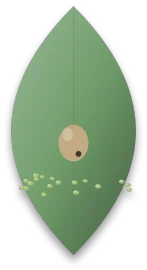
You do not need to see every predator to know the team is at work. Three signs are enough. The first is mummies: aphids that have turned whitish brown and inflated, with a hole in the body where a wasp has hatched, show that parasitoids are present. The second is eggs and larvae near the colony. Lacewing eggs stand on stalks, and the RHS says hoverfly eggs are laid near aphid colonies, so eggs and larvae in the middle of a colony are a good sign. The third is the colony itself, which tends to shrink as the season goes on, because the RHS says predators often wipe out colonies by early to mid-summer.
None of those signs needs a microscope. Walk the garden each morning for a week and look at the same few plants. If you see mummies or larvae and the colony is smaller than it was, the team is working, and the best thing you can do is leave it alone. If the colony is growing and there is nothing else on it, the team has not arrived yet, and the advice on tolerating a few aphids and planting flowers is the place to start.
Where to go next
Start with the team you already have. Check the plant for aphids, and look for mummies, larvae, eggs and the adults before you decide on any treatment. If you are not sure what you are looking at, use the diagnoser, which asks about what you can see. For the sticky patches that aphids and other sap-feeders leave behind, the sticky residue page shows how to trace the source, which is usually a few leaves above the patch.
Then decide what the garden needs. A few flowers, no broad spray, a bit of patience and a healthy tolerance for early aphids will do more over a season than any bag of predators, and it costs far less.