How to clean a grill, the grates, the burners and the grease tray
About 7 minutes to read. Published . By the House & Hedge team.
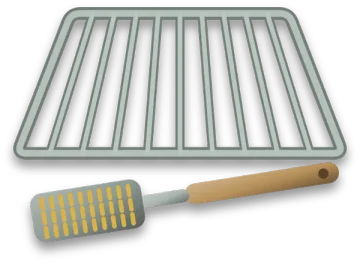
A grill cooks food well, and it collects a remarkable amount of grease and carbon along the way. The grates hold the burnt residue, the tray underneath fills with drips, and the burner ports on a gas grill can clog with grease and food. Left alone, the build-up causes flare-ups, uneven heat and smoke that tastes of old fat. Regular cleaning takes twenty minutes, and it makes every cook safer and better tasting.
Before any cleaning inside a gas grill, turn off all the burners and close the gas supply at the tank or the main valve. Let the grill cool. Never spray water on a hot grill, because the sudden change can crack the cast iron or the ceramic, and the steam can scald.
What you need
- A grill brush with strong bristles, checked for loose wire before each use, or a non-metal brush or a scraper
- A plastic scraper, for stuck-on residue
- Warm water and a little dish soap
- A bucket or a large trash bag, for soaking the grates
- A stiff brush and an old toothbrush
- A pipe cleaner or a thin piece of wire, for the burner ports
- A shallow tray and a trash bag, for the grease
- A cover for the grill once it is clean
Brushing the grates
Brush the grates while they are still warm, after you have finished cooking and turned the burners off. Hold the brush at an angle and work across the bars, pushing the residue off the grate. Do this on every cook, because residue that has cooled hard is much harder to shift.
Before the next cook, heat the grill on high with the lid closed for about fifteen minutes. This burns off most of the residue that is left, and it makes the second brush much quicker. Brush again, then oil the grates lightly with a cloth dipped in oil, so the food releases more easily.
Check the brush before each use. If the bristles are coming loose, stop and replace the brush, because a loose bristle can stick to food and be swallowed.
Deep cleaning the grates
Every few months, or when the grates are heavily stained, take them out and clean them thoroughly.
- Remove the grates and let them cool fully.
- Soak them in warm water with a generous amount of dish soap for an hour or two. A trash bag works well for this, tied around the grates with a little soapy water inside.
- Scrub with a stiff brush and an old toothbrush for the corners. Use the plastic scraper for stuck-on food, rather than a metal one, which scratches the coating.
- Rinse them well, and dry them completely before you put them back, because wet cast iron rusts quickly.
Some grills have porcelain or ceramic-coated grates. Those should not be scraped with metal tools, and they should be cleaned with a soft brush and a mild soap.
Emptying the grease tray
The grease tray sits under the burners or the cooking area, and it catches the drips. A full tray is a fire hazard, and a grease fire can spread quickly.
- Let the grill cool, then slide out the tray.
- Pour the grease into a metal container, or into a jar with a lid, and throw it away with the household waste according to your local rules. Never pour grease down a drain.
- Scrape the tray with a plastic scraper, then wash it in warm soapy water with a brush. Lining the tray with foil makes the next clean easier, but check that the foil does not block a drip hole.
- Dry the tray and slide it back into place.
Empty the tray after every few cooks, or more often if you cook fatty meat.
Clearing the burner ports on a gas grill
The burner ports are the small holes along the burner tubes where the gas meets the air to form the flame. Grease and food can block them, and a blocked port causes a weak flame or a flame that appears in the wrong place.
- Make sure the gas is turned off at the tank and the burners are off.
- Remove the cooking grates and the flavor bars or heat plates if your grill has them.
- Clean the outside of the burner tubes with a brush. Use a pipe cleaner or a thin piece of wire to clear each port, pushing gently into the hole.
- Check the burner tubes for cracks, rust or holes that the flame does not come through.
- Reassemble the parts and light the grill to check the flame. The flame should be steady and blue, with no yellow tips, and it should burn evenly across the whole burner.
Do not use a toothpick, which can break in the port. If a port is badly blocked, check the manual for the recommended cleaning method.
Cleaning the outside
Wipe the lid, the sides, the handles and the cart with warm soapy water and a sponge. Use a soft brush for the corners and the vents. Stainless steel should be wiped with the grain, then dried. Painted and enamelled surfaces should be cleaned with a mild soap only, because harsh cleaners can dull or chip the finish.
Avoid oven cleaner on aluminum parts, which can darken or pit, and do not use it on the grates unless the maker allows it.
Charcoal grills and ash
Charcoal grills produce ash, and the ash is the main safety issue. Hot ash can stay hot for many hours, and a bag or a trash can holding warm ash can catch fire.
- Wait until the ash is completely cool. This can take a day or more after the last use.
- Lift the ash into a metal container with a lid, using a metal scoop or a small shovel.
- Keep the container outside, away from the house, the car and anything flammable, and check it the next day to make sure nothing is glowing.
- Dispose of the ash according to your local rules, and do not put it in a plastic trash can.
Clean the charcoal grill by brushing the grates as described above, then emptying the ash catcher or the bowl once it is cool.
Safety checks
Look over the grill before the season and after a long rest. Check the gas hose for cracks, holes and brittle sections, and check the fittings for leaks. To test for a leak, brush soapy water onto the connections with the gas on. Bubbles mean a leak, so turn the gas off and tighten or replace the part. Never test for leaks with a flame.
Keeping the grill clean
- Brush the grates after every cook.
- Empty the grease tray regularly.
- Clean the burner ports and the grates once a month in a season of heavy use.
- Cover the grill when it is not in use, so rain and dust do not build up on the surfaces.
- Store the cover and the brushes in a dry place.
When to call a professional
If the burners do not light, if the flame stays weak after the ports are clean, or if you smell gas that does not clear once the grill is off and the cylinder is closed, stop using the grill. Turn off the gas and call a qualified technician or your gas supplier. A gas leak is a safety problem that cleaning cannot fix.