How to get rid of moss on a patio, path or deck
About 7 minutes to read. Published . By the House & Hedge team.
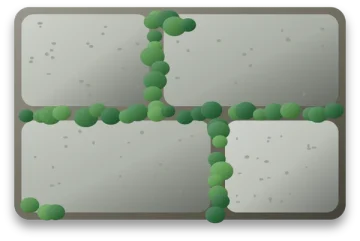
Moss on a patio, a path or a deck is more than an eyesore. It makes the surface slippery, it holds water against the paving, and it can lift the edges of the pavers and rot a timber deck over time. It grows where the surface stays damp and gets little sun, so it is usually a sign that the area needs better drainage or more light, not only a clean. Treating the moss clears it for now, and fixing the damp and shade keeps it from coming back.
Moss on paving is often joined by algae and lichen, which are removed in the same way. Work on a dry day, when the surface is cool and the moss is easy to see.
What you need
- A stiff broom or a stiff brush, and a stiffer scraper for tight joints
- A moss killer or a moss remover labeled for the surface you are treating
- A watering can or a garden sprayer, for applying the treatment
- A bucket of warm water and a little mild detergent
- Protective gloves and eye protection
- Old clothes, a mask if the product recommends one
- A stiff broom for sweeping the dead moss away at the end
Choose the right product
Moss killers are sold in different forms, and they work in different ways. Most contain iron sulfate or a similar compound, which turns the moss black within days. Some are formulated for paving, and others for lawns, so check the label. A product labeled for lawns can stain some paving, and a product for paving may not be suitable on a lawn.
Do not use bleach or vinegar as a moss killer on paving, because they can etch or discolour the surface, and they do not reach the roots of the moss. Use a product made for the job, and follow the label exactly.
Clearing the surface
Start by removing as much moss as you can by hand or with a brush, before you apply anything. Sweep the surface hard, working across the pavers and along the joints. A stiff scraper helps with moss that is stuck in the joints, but be careful not to dig out the mortar joints.
If the moss is thick, you can rake it with a stiff rake or a garden fork, then sweep up the debris. Put the moss in a bag or a trash can, not on a compost heap, where it can spread spores.
Applying a moss killer
- Read the label and wear gloves and eye protection. Keep children and pets away from the area.
- Dilute the product as directed, and apply it evenly with a watering can or sprayer. Wet the moss thoroughly, but do not let the product run onto plants, pond edges or drains.
- Wait for the time the label gives, usually a few days, for the moss to turn black or brown. It will look dead and brittle.
- Do not wash the area during this time. Rain can help the product, but heavy rain can dilute it, so check the forecast.
If you are treating a lawn edge or a border next to plants, cover the plants with a sheet during treatment, and rinse any product off the leaves promptly if it touches them.
Removing the dead moss
Once the moss is dead, brush it off with a stiff broom or a scraper. Sweep the surface, then rake the joints to lift out the debris. The surface will look rough and gray, and it may still hold some dead moss in the joints, so repeat the sweeping until it is clear.
Do not use a pressure washer on the joints, where the mortar or sand can be washed out. If you use a pressure washer on the pavers, keep it on a low setting, hold it at an angle, and keep the nozzle moving. On a timber deck, use a low setting and sweep with the grain, and do not blast the boards, which can raise the grain and split the wood.
Cleaning the surface
After the dead moss is removed, scrub the paving with a stiff brush and warm water with a mild detergent, to lift any remaining residue. Rinse with clean water, then let the surface dry. A pressure washer on a low setting can be used for this stage on paving, but keep the spray off the joints and any wood.
Check the pavers for loose or cracked sections, and the joints for gaps. Sand or a suitable jointing material can refill joints, and loose pavers should be re-bedded by a builder.
Fixing the cause
Moss returns where the surface stays wet and in shade. The most effective long-term fix is to change those conditions.
- Light. Cut back overhanging branches and plants, so more sun and air reach the surface. This is often the most effective step.
- Drainage. Check where water pools after rain. Fix low spots, clear gutters and downpipes that discharge onto the paving, and make sure the surface falls away from the house.
- Leaves and debris. Sweep up fallen leaves regularly. Leaves hold water against the surface and feed the moss.
- Surface. A rough or porous surface holds moss more easily than a smooth one. On a deck, check for loose boards or gaps where water collects.
Do this work before or with the treatment, so the moss does not return in a few months.
Algae, lichen and moss on gravel
Algae, the green or black slime that grows on paving, and lichen, the crusty gray or orange patches, are removed in the same way as moss. A stiff brush, warm water and a little mild detergent lift most algae. Lichen is tougher, because it grips the surface, and it often needs a labeled moss and lichen remover, followed by a stiff brush.
Gravel and loose stone paths are harder. Moss grows in the gaps, and the product can run into the surrounding soil. Rake the gravel first to loosen the moss, lift the dead moss out with a rake, and apply the treatment only to the moss, keeping it off plants and soil. Top up the gravel afterwards, because the process removes some of it. Fix the shade and the drainage that caused the moss, since a loose gravel path that stays damp will grow moss again within a season.
Decking
A timber deck with moss needs care. Moss grows on the boards where water sits, and it can hide rot. Treat the deck with a product labeled for timber decking, then scrub the boards with a stiff brush, following the grain. After treatment, check the boards for soft spots and for rot around the joists. A deck that feels spongy or shows dark, crumbling wood should be inspected by a carpenter, because the timber may need replacing.
Once the deck is clean and dry, consider a decking oil or a stain, which helps to repel water. Follow the product’s instructions and reapply as directed.
Safety
Moss killers contain chemicals that can irritate skin and eyes. Read the label, wear gloves and eye protection, and keep the product away from children and pets. Do not mix two products. Store the product in its original container, out of reach, and dispose of any leftover product according to the label. Keep the product away from drains and ponds, because it can harm fish and wildlife.
When to call a professional
Call a builder or a landscaper if the paving is sinking, cracked or rocking underfoot, if there is persistent water pooling on the surface, or if the deck has rot. A professional can fix the drainage, relay the pavers and replace the damaged timber, which cleaning alone cannot do.
For a clean surface that stays clear, treat it once or twice a year, and fix the light and drainage so the moss has less reason to return.