How to get rid of pantry moths
About 9 minutes to read. Published . By the House & Hedge team.

Small brown moths in the kitchen, and a flour bag with a web in the corner. This is the usual start of a pantry moth problem. The moths are adults, and they do not feed on your food. The caterpillars do, and the caterpillars are already in a package somewhere. UC IPM, the University of California’s pest management program, says the Indianmeal moth is the moth most often found in household food and that pantry pests usually come into the home in an infested package of food. The job is to find that package, remove it, clean up after it, and store food so the next one cannot spread.
The extension services below agree on the approach: find and remove the source, clean, and store food tightly. UC IPM does not recommend spraying, and Clemson treats it as a last resort.
Confirm that it is the Indianmeal moth
UC IPM describes the adult as roughly 1/3 to 2/5 inch long with a wingspan of about 3/5 inch. The forewings are reddish brown with a coppery sheen on the outer two-thirds and whitish gray on the inner part. Clemson Cooperative Extension says the moths fly in an irregular pattern in the kitchen or nearby rooms, typically a few hours after sunset.
The larvae are what you need to find. UC IPM says fully grown larvae are about 1/2 inch long and white with a greenish or pinkish tint. They spin webbing and leave silken threads wherever they crawl. Clemson Cooperative Extension says a first sign is often pinkish white caterpillars crawling over counters or across a wall or ceiling, and that mature larvae may travel a considerable distance from their food to pupate.
To check that a larva is a moth’s and not a beetle’s, UC IPM suggests a hand lens: moth larvae have three pairs of true legs plus leglike structures farther down the abdomen, while beetle larvae are either legless and grublike or have three pairs of legs clustered near the head. UC IPM covers pantry beetles in the same note as the moths, and the cleaning steps below apply either way.
Is it a clothes moth?
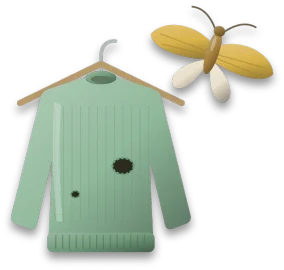
Clothes moths are a different problem. UC IPM says they are smaller and have more hair than pantry moths, so the two are easy to mix up. If the moths are in a bedroom, near a wool rug or in a closet, read the guide on clothes moths. If they come from the kitchen and fly around at night, it is the pantry.
Where they come from
- Packages. UC IPM says pantry pests usually enter in an infested package of food. Infestations often start in packages damaged at the store, or in opened packages left on the shelf for a long time.
- Pet and bird food. Clemson Cooperative Extension traces infestations to birdseed and dry pet food, which are often stored in large amounts in unattended places. Utah State University Extension names grain and seed for chickens and songbirds.
- A wide menu. Clemson lists grain products, dried fruit, nuts, chocolate, candy, dried peppers, powdered milk, cornmeal, herbs and some beans.
- Nests. UC IPM says some pantry insects breed in rodent or insect nests and can move from them into homes, and that pantry pests can breed in rodent baits.
The larvae also move on their own. Clemson Cooperative Extension says mature larvae can penetrate packaging, including polythene film. UC IPM says plastic bags are not adequate storage. A cardboard box or a bag is not a barrier.
Step one: find the source and remove it
UC IPM says often the first sign is small moths flying about, or beetles, in or near a package of food. Inspect everything. Check the packages that have been opened, the ones that have been in the cupboard longest, and anything damaged. Look for webbing in tight spots of a package and for tiny holes in containers. Utah State University Extension lists molted skins, silky webbing, sawdust-like waste and broken grain kernels as signs of an active infestation.
Do not stop at the first one you find. Larvae leave a package and wander, and a second package may be infested too. Check:
- Flour, cereals, rice, pasta and cornmeal.
- Pet food and birdseed.
- Nuts, dried fruit, chocolate and candy.
- Spices, dried peppers and herbs.
- Powdered milk and anything at the back of the shelf that you have forgotten.
UC IPM says to destroy any package that gives the slightest indication of infestation. Seal the package and remove it from the house immediately, so the larvae do not leave it on the way to the bin.
Step two: clean the space
- Vacuum. UC IPM advises scrubbing corners and crevices or vacuuming them with a crevice attachment, to remove eggs and pupae. Empty the vacuum outdoors afterward.
- Wash with care. UC IPM advises washing shelves with soap and water. Clemson Cooperative Extension advises against washing cabinets with water, since it can leave a sticky residue that attracts the pest, and Utah State University Extension advises cleaning pantry shelves with a disinfectant. The sources differ. Vacuum first, then if you wipe, dry the shelf completely and leave no residue.
- Wash containers. UC IPM says to wash old containers before refilling them, and not to mix old and new food.
- Keep checking. UC IPM says pantry pests can live for many weeks without food, so keep looking after you clean.
Step three: freeze, heat or discard the food
Throw away anything of little value, and anything severely infested. For food worth saving:
- Freeze. Clemson Cooperative Extension says to freeze infested or suspect food at 0 degrees Fahrenheit. Utah State University Extension says to freeze at 0 degrees or lower for 4 to 7 days, long enough for the whole of the contents to freeze solid, and that this should kill every stage including eggs and pupae. UC IPM does not give a time or temperature.
- Heat. Utah State University Extension says to spread grain products on a tray and heat them in the oven at 130 to 140 degrees Fahrenheit for 30 to 60 minutes. It warns against heating finely ground grains such as flour, because of the danger of fire or explosion in the oven. It also says heating can change the quality of the food and may not be worth it compared with replacing it.
The two sources differ on health. UC IPM says infested food can be contaminated with insect hairs, droppings, webbing and secretions, and Utah State University Extension says pantry insects do not contain toxins or diseases that are harmful to humans, but that they can spread molds and bacteria and cause off flavors. Both end up in the same place for a bad infestation: discard the food.
Step four: use a pheromone trap
UC IPM advises traps labeled for pantry pests. Indianmeal moth traps use a sex pheromone that draws in males only, and catching males before they mate may reduce egg production. A moth-specific trap will not attract beetles. Some multi-species traps attract several pests. Place the trap where the infestation was, check it weekly, and note that most remain effective for about three months. If a trap keeps catching new pests, go back and inspect the food packages again.
A trap is a monitor first. It tells you whether the moths are gone and whether a new package has come in.
Step five: store food so it stays clean
- Tight containers. UC IPM advises containers with tight-fitting lids and says plastic bags are not adequate. Utah State University Extension advises air-tight, rigid plastic or metal containers and warns that insects can chew through paper, plastic and foil bags.
- Cold for the slow movers. UC IPM advises keeping infrequently used items such as flours, spices and grains in a freezer if possible, and storing susceptible food in airtight containers, or in a refrigerator or freezer, for at least several months after you have removed infested products.
- Buy what you will use. Clemson Cooperative Extension suggests buying only what you can use in about 2 to 4 months, and only sealed packages with no sign of insect damage. Utah State University Extension says to buy only as much as you can use in about two months and to use older stock first. UC IPM advises not to buy broken or damaged packages.
- Freeze new grain products. Clemson Cooperative Extension recommends freezing grain products for 3 days after purchase as a regular habit.
- Keep it dry and clean. UC IPM says moisture favors pantry pests. Wipe spills and clear crumbs.
Insecticides
UC IPM says insecticides are not recommended for controlling pantry pests, and warns that spraying pesticides on or near food may cause greater harm to you and your family than would pantry pests. Clemson Cooperative Extension says to avoid using insecticides around food and to treat them as a last resort. If you ever use one, it says to choose a household product labeled for pantry pests, to remove all food and clean the cabinets first, not to treat surfaces used for food storage or preparation, and to let it dry and cover shelves with clean shelf paper before food goes back. This guide does not recommend a spray.
When to call a professional
The sources do not say when to hire one. Two cases are worth it. One is moths that keep coming back after you have removed every infested package and cleaned, which may mean a source you have not found. The other is the one UC IPM names: pantry insects that breed in rodent or insect nests, which a pest control company can look for.
Safety with traps and any chemicals
Read the label before you use any product, and follow it. The EPA’s advice is to “always read the label first and follow the directions to the letter, including all precautions and restrictions.”
- Children and pets. The EPA says to “Keep pets and children away from areas where pesticides have been applied.”
- Storage. “Store pesticides in their original containers.” The EPA warns that “Children and others have been poisoned by accidentally consuming pesticides stored in food or beverage containers.”
- Poison Control. The EPA’s advice is to “Keep the telephone number of your area Poison Control Center near your telephone: 1-800-222-1222.”
- Pets. If a pet may have eaten a pesticide or rodent bait, call a vet or an animal poison line at once. The numbers are in the guide on what to do if a pet eats a plant.
For the other small flier that gets into kitchens, see the guide to fruit flies.