Holiday watering
About 6 minutes to read. Published . By the House & Hedge team.
The plants that die while you are away are almost never the ones that needed daily attention to begin with; they are the ones nobody thought to prepare, because the usual routine simply did not happen. A week’s absence needs almost no preparation for most plants. Two weeks or more is where it is worth doing something.
Start with what each plant can actually tolerate
Drought-tolerant plants are the easy case. Snake plant, ZZ plant, aloe and jade plant store water in thick leaves or rhizomes specifically so they can go without for extended periods, and two weeks unwatered is well within what any of them handles without visible stress, provided the compost was not left waterlogged beforehand.
Ferns and other plants that dislike drying out are the harder case, and the ones actually worth planning for. Left to their own devices for two weeks, a fern’s compost dries hard, and a fern that has fully dried out rarely recovers looking the same even once watered again.
Match the trip length to the method
A weekend away needs nothing beyond a normal watering before you leave for almost any plant. Up to a week is where grouping plants together, described below, starts to make a measurable difference for anything moisture-loving. A wick or a capillary tray earns its setup time on a trip of one to two weeks. Beyond two weeks, a person checking in becomes the only genuinely reliable option for anything other than the most drought-tolerant plants, since every passive method above is compensating for absence rather than replacing attention entirely.
Grouping plants together
Moving plants close together, rather than spread across a room, genuinely slows how fast they dry out. Each plant’s own transpiration raises the humidity immediately around the group, and the plants partly shade each other’s compost from direct light and airflow, both of which reduce evaporation compared with the same plants standing apart. It costs nothing and takes five minutes, which makes it worth doing before reaching for any gadget.
The wick method, for longer trips
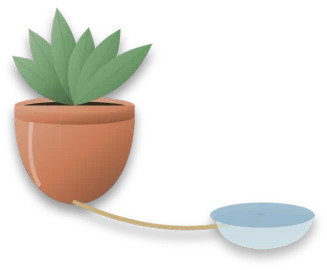
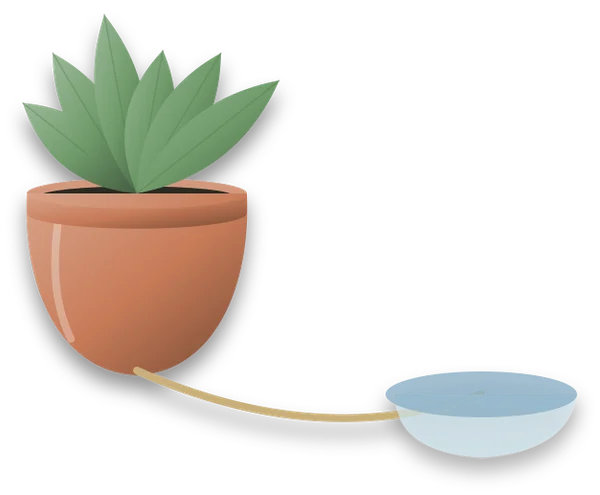
A length of cotton string or a strip cut from an old cotton t-shirt, with one end buried in the compost and the other sitting in a reservoir of water above or beside the pot, draws water into the compost by capillary action as it dries, roughly matching the plant’s own actual demand rather than releasing water on a fixed schedule. Set it up a day or two before leaving to check it is actually drawing water, not just sitting in the reservoir doing nothing. A wick reservoir, kept topped up, can realistically cover one to two weeks per fill depending on the plant and the pot size.
The bathtub or tray method, for the moisture-lovers
For plants that dislike drying out and a trip too long for a wick to be worth setting up, a capillary tray works on the same principle at a larger scale. Line a bath, a large tray or a sink with a folded old towel or a length of capillary matting bought for the purpose, soak it thoroughly, and stand the pots directly on it, each drawing moisture up through its own drainage hole as needed. Keeping a shallow reservoir of water at one end for the towel or matting to draw from extends this from a few days to two or three weeks, depending on how much water the reservoir holds and how thirsty the plants grouped on it are.
This suits ferns and other moisture-loving foliage plants well, since they draw water readily and evenly through the technique. It suits succulents and other drought-tolerant plants poorly for the same reason a self-watering pot does: constant contact with damp matting keeps their compost wetter than they are built to tolerate, so keep those two groups on separate arrangements rather than sharing one towel between them.
Self-watering globes and spikes
These release water at a rate fixed by the ceramic or glass tip rather than by what the plant is actually using, which is their main weakness: a globe sized for a large, thirsty plant can just as easily overwater a small or drought-tolerant one left in the same size pot. They are a reasonable backup for a plant that is already a moderate, steady drinker, and a poor match for anything particularly drought-tolerant or particularly moisture-loving.
Before you leave
Water once, thoroughly, the day before departure rather than repeatedly in the days beforehand. Compost that is already saturated when the trip starts holds excess water for longer than compost watered once and allowed to drain and settle properly, which works against the drought-tolerant plants above more than it helps them.
Move anything in very bright direct light back from the window slightly, since stronger light means faster drying, and there is no one at home to notice a plant drying out early. None of this replaces a neighbour or a sitter checking in on a trip of more than two or three weeks, particularly for anything that dislikes drying out; the methods above buy time, not indefinite absence.
Asking a neighbour or a sitter
A person checking in beats any gadget, provided the instructions are specific rather than a general “water my plants.” Write down, per plant or per group, how much and how often, since “a splash if it looks dry” leaves someone unfamiliar with the collection guessing at exactly the compost-by-hand check this guide relies on throughout. Leave a watering can already filled to a marked level rather than assuming a visitor will measure anything, and point out which plants are drought-tolerant and can simply be skipped if the visit is brief or the person is unsure.
A sitter who waters lightly but consistently causes far less damage than one who overcompensates with a heavy single soak partway through the trip, which risks recreating the exact overwatering problem covered in its own guide on top of an already unfamiliar routine.
Pot size changes the maths
A small pot holds little compost relative to the plant it supports and dries out faster than a large one with the same plant in it, so the drought-tolerant plants above buy the least extra margin when they are in small pots, and the most when recently moved into a slightly larger one. A plant already close to needing repotting, in a pot it has visibly outgrown, is the worst candidate for a long unattended trip regardless of how drought-tolerant the species itself is, since there is very little compost left to hold any water at all.
When you get back
Check the compost by hand rather than watering on reflex the moment you walk in. A well-prepared group of drought-tolerant plants often needs nothing at all after two weeks, and watering on top of compost that is still damp undoes all the planning that got them through the trip in the first place, since it recreates the same waterlogged conditions the whole arrangement was designed to avoid. Update the log with the actual date you last watered before leaving, so the schedule picks back up from reality rather than from whenever you happen to remember.