Rescuing an overwatered plant
About 8 minutes to read. Published . By the House & Hedge team.
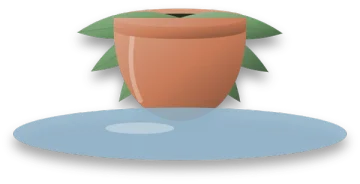
Overwatering, not underwatering, is what actually kills most houseplants. A dry plant wilts, asks plainly for water and recovers within the hour once it gets it. A plant sitting in wet compost gives almost no early warning, because the damage is happening underground, out of sight, to roots that need air as much as water.
The two get confused for a reason
Underwatered and overwatered plants can look similar from the leaves alone: both can droop, both can turn crisp at the edges eventually. The compost is the honest test. Push a finger in to the first knuckle. If it is dry, the plant is thirsty. If it is wet and the leaves are drooping anyway, or turning yellow from the bottom up while the compost stays damp, the roots are the problem, not the lack of water.
Peace lilies droop dramatically when thirsty and recover within an hour of watering, which trains people to water at the first sign of drooping. The same plant overwatered droops too, but the compost stays wet and the leaves turn yellow rather than crisp: worth checking the compost before reaching for the watering can a second time.
Why wet compost is the actual problem
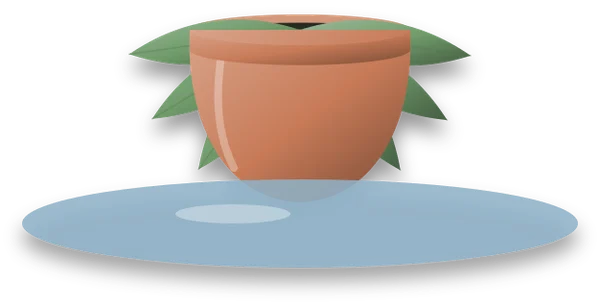
Roots need oxygen from the air pockets in compost as much as they need water. Compost that stays waterlogged for more than about two to three days pushes the air out of those pockets, and roots sitting in oxygen-starved compost start to die. Dead roots cannot take up water, which is the particular cruelty of the condition: the plant can show signs of thirst while sitting in a pot full of water, because the roots that would normally use that water no longer can.
ZZ plant and snake plant both store water in thick rhizomes or leaves and are drought tolerant by design, which makes them especially unforgiving of frequent watering: a schedule that would suit a fern leaves these two sitting in wet compost for days at a time.
What the early signs look like
Yellowing from the bottom up, while the compost is still damp, is usually the first visible sign. A soft or mushy stem base is later and more serious, and if the stem base has gone dark and mushy or the base of the whole plant feels soft rather than firm, root rot has already set in. A sour or swampy smell from the pot is a reliable sign that something in the compost is rotting rather than growing. Mould or a white film on the compost surface is a related sign of compost that has stayed wet too long, covered in its own guide.
How much can be saved
Within the first day or two of noticing wet compost with no visible damage yet, the fix is simple: stop watering, improve airflow around the pot, and let the top 5 cm of compost dry out properly before watering again. Most plants recover with no further intervention at that stage.
Once the stem base has softened or the smell has turned, the roots underneath are already affected and the plant needs to come out of its pot. As a rough guide, a plant with at least a third of its roots still firm and pale, rather than dark, mushy or hollow, usually recovers once repotted. Below that fraction the odds get much worse, though it is still worth attempting a rescue rather than giving up on the plant.
The rescue itself
- Take the plant out of its pot and gently shake or rinse the old compost away from the roots so you can see them clearly.
- Cut away any root that is dark, soft or slimy, using clean scissors, back to firm pale tissue. Do the same for any stem that has gone soft.
- If the pot has no drainage hole, or the compost smelled sour, do not reuse either. A pot with a hole and fresh, dry compost every time.
- Pot the trimmed plant into a pot no bigger than it needs, following the same one-size-up principle as an ordinary repot, since a large pot around a reduced root system holds even more unused water than usual.
- Water once, lightly, to settle the compost, and then wait longer than you normally would before watering again. A plant that has just lost a share of its roots needs less water, not the same amount on the old schedule, until it grows new roots to replace them.
When the plant itself is too far gone
Sometimes the rescue steps above reveal a root system with almost nothing healthy left: a stem that is soft well above the compost line, or roots that come away as mush rather than being trimmable back to firm tissue. In that case, look for any part of the plant still firm and green above the damage. A stem cutting taken from healthy growth well clear of the rot, treated exactly as in the propagation guide, can give the plant a second life as a new, smaller start even when the original root system cannot be saved. It is a genuinely different outcome to losing the plant outright, and worth attempting before discarding a plant that still has any firm, green stem left.
The habits that cause it in the first place
Watering to a fixed schedule, rather than checking the compost first, is the single most common cause. A plant that needed watering every five days in a bright, warm summer does not need the same interval once the light fades and growth slows in autumn, and continuing on the summer schedule through a slower season is how compost ends up staying wet for days at a time without anyone noticing.
A pot with no drainage hole, or a saucer left to fill and never emptied, produces the same result even with otherwise careful watering, since the water has nowhere to go once the compost has taken what it can hold. Choosing a pot with the drainage question settled from the start avoids this particular version of the problem entirely, regardless of how attentive the watering itself is.
Choosing a pot several sizes too large for the plant it holds compounds the problem further: more compost around a proportionally small root system takes far longer to dry out, and dries unevenly, so the surface can look and feel dry while the compost lower down, where most of the roots actually are, is still saturated.
Checking the roots out of the pot sign specifically
Roots visibly pushing out of the drainage holes usually means the plant has filled its pot and needs repotting up a size, which is the opposite problem to overwatering and is covered in full in the repotting guide. Do not assume every root-related sign is rot: a plant that is simply root bound is a healthy plant that has outgrown its pot, not a damaged one.
Afterwards
Update the watering interval in the log rather than returning to the schedule that caused the problem in the first place. A plant recovering from root loss can support even less water than before while it regrows, and checking the compost by hand before every watering is worth doing for a few months even if the log suggests otherwise.