Kikuyu and couch lawns in winter
About 6 minutes to read. Published . By the House & Hedge team.
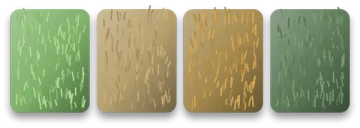
Brown in June is not the same as dead, but from the kitchen window the two look alike. On the Highveld, kikuyu and Cynodon lawns go into full dormancy from June, and the lawn stays brown until the warm weather returns. This guide explains why the colour changes, how to check the living parts, and what to leave alone until spring.
Why the grass goes brown
Turf research on warm-season grasses links the change to temperature. Texas A&M’s forage guidance, written for bermudagrass, says that as days shorten and temperatures fall below 50 °F, which is 10 °C, the grass stops top growth and moves carbohydrates and nutrients into the rhizomes, the underground stems, for storage. The leaves above stop growing. The reserves below carry the grass through to spring.
That research is on bermudagrass and related grasses, not on kikuyu specifically, so treat the 10 °C figure as a guide rather than a rule for the Highveld. The South African page this guide relies on describes the same pattern for kikuyu and Cynodon: full dormancy on the Highveld from June to August.
Couch and kikuyu are not the same grass
The names cause confusion. In Britain, couch grass is a weed, a different plant from the warm-season turf grasses of the Highveld. The South African lawn page names Cynodon, which it describes as Bermuda grass, and it covers kikuyu and Cynodon together. If you are not sure which grass your lawn is, check the seed packet or the lawn’s history, or ask a nursery. The advice here applies to both grasses as the South African page presents them.
Frost and footprints
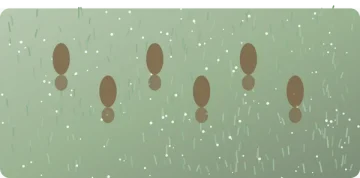
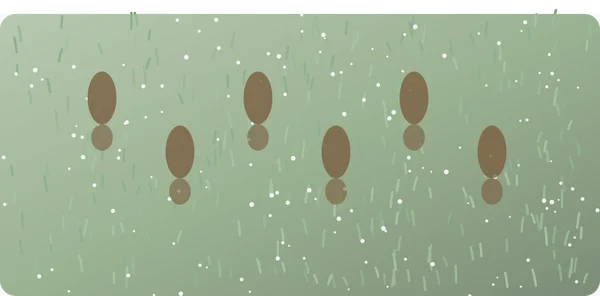
On the Highveld, frost is part of winter. The same South African page says kikuyu and Cynodon crowns survive Highveld frosts in dormancy, and that on particularly cold mornings in June and July the entire lawn may stay frosted until 10am. Frost has a cost if you walk on it. Walking on frosted grass damages the grass cells, which leaves brown footprint-shaped damage that stays until spring green-up. The advice is to wait until the frost has fully thawed, usually by mid-morning on a sunny winter day, before stepping onto the lawn.
Purdue University’s turf research makes the same point from the crown’s side. Cart, foot or mower traffic can crush frozen or dormant crowns, causing death, and Purdue advises avoiding winter traffic on warm-season fairways, tees and athletic fields for that reason. Keep the paths and the children’s games off the frosted patches until the thaw is complete. Mowing a frosted lawn carries the same risk, because Purdue lists mower traffic alongside foot and cart traffic. Leave the mower in the shed until the frost has thawed.
Check the crowns and underground stems
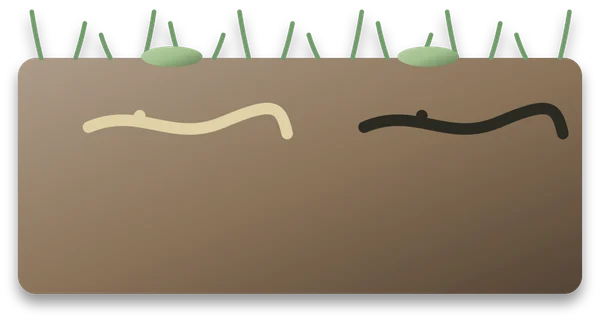
If you need to know whether a patch is alive, the test is underground. Texas A&M suggests digging up some of the plant while it is dormant and examining the rhizomes, the underground stems. Healthy ones look white or tan and succulent. Necrotic ones look dark and rotted. Purdue’s research describes stolons and rhizomes as key to winter survival, which is why this check tells you more than the colour of the blades does.
Lift a small plug with a spade, look at the underground stems, and firm the soil back in place afterwards. Check a few patches rather than one, so you can compare them. A brown patch with pale, firm stems is dormant. A brown patch with dark, rotted stems is dead. A dead patch and a dormant one look alike from a distance, which is why the plug is worth the few minutes it takes.
Water lightly, and keep it off the beds
A dormant lawn needs very little water, but it does need some. Lawn by Season advises watering minimally, about once every three weeks, to keep the crowns alive, with a light application of 10 to 15 mm each time. It is a company’s advice rather than a research figure, so check the soil before each session and skip it if the soil is still moist.
The beds beside the lawn follow different rules. The lavender entry on this site says that wet winter roots kill more lavender than cold does, so the lawn’s light drink should not reach a bed that is meant to stay dry. Evergreen shrubs such as laurustinus keep their leaves through winter, so a green hedge beside a brown lawn is not a sign that anything has gone wrong. The rose entry covers how to feed roses through the year, which is a separate job from the lawn.
Feed in the warm months
Texas A&M warns that poor nutrition leaves even winter-hardy grass open to winterkill. It urges keeping soil nutrients adequate during the growing season, with potassium in particular, because potassium supports winter hardiness. The practical lesson is to feed the lawn in the warm months, so the grass goes into winter with reserves, and to leave winter feeding alone. The year-round plan is in a lawn through the year.
Purdue suggests mowing higher before winter, since taller grass is thought to give the crowns structural protection. Leave the blades a little longer going into the cold months, then return to the usual height once the grass is growing again.
Green-up in August and September
The green comes back slowly. Lawn by Season says the Highveld lawn recovers in August and September, so give it that time before you judge a patch. Once the grass is growing again, a patch with dark, rotted stems can be reseeded, and the grass seed calculator works out how much seed the area needs. If a patch is still brown well after August, check it with the plug test rather than assuming it is dead. The South African page gives the recovery window, not a guarantee for every patch.
What the sources leave out
The South African page gives no soil temperature for green-up, and it does not mention couch by name. The research figures in this guide come from North American turf studies on bermudagrass and related grasses, so they show how dormancy works rather than giving a timetable for the Highveld. The June to August window and the August to September recovery are local figures from the South African page, and they describe what one lawn company sees in its own area. Use them as a guide and check your own lawn.
What to leave alone until spring
Keep off frosted grass until the thaw is complete. Water lightly, and only when the soil is dry. Leave winter feeding alone, and give the lawn until August before deciding that a patch is gone. Most of the harm in winter comes from walking on the frost and watering more than the dormant grass needs, and both are easy to avoid.
Where to go next
Summer browning has different causes, including dog urine and drought, and the guide on brown patches in a lawn sorts them out. For the jobs through the whole year, see a lawn through the year.