Root rot, and how to rescue a plant from it
Roots that are soft, brown and foul-smelling, usually from compost that never dries. How to tell it from thirst, and how to cut a plant back to healthy roots.
This one is worth acting on today rather than at the weekend. A week of waiting changes what is left to save.
What it usually is
1 Compost that never dries out
| How to tell | The lowest leaves wilt first although the compost feels wet. When you lift the plant out, the roots are brown or black, soft and sometimes foul-smelling. |
|---|---|
| The fix | Unpot it, cut every soft, black or brown root back to firm tissue, and repot into fresh, well-draining mix. Water by the feel of the compost, not by a fixed calendar. |
2 A pot with no drainage, or a saucer left full
| How to tell | Water sits in the bottom of the pot and the compost stays soggy for days after watering. Some decorative cover pots have no hole at all, so the water has nowhere to go. |
|---|---|
| The fix | Repot into a container with drainage holes and leave gravel out of the base, since gravel works against drainage. Empty any saucer half an hour after watering. |
3 Reused compost, an old pot or drainage water carrying the fungus
| How to tell | The rot shows up in a plant moved into used compost or an old pot, or one that stands in water drained from an affected plant. Garden soil in a pot often carries these fungi too. |
|---|---|
| The fix | Use fresh potting mix, preferably a pasteurised commercial one, and wash old pots in a 10 per cent bleach solution before reuse. Do not reuse compost or drainage water from an affected plant. |
Through the year. The fungi that cause root rot favour wet ground, so the risk follows the watering rather than the calendar, and it rises whenever the compost stays wet for days.
Root rot is not a disease of the leaves. It is what happens below the compost when the roots sit in water long enough for the fungi that live in wet ground to get the better of them. The leaves only show it once the roots can no longer supply the plant, which is why the first sign is so easy to mistake for its opposite. The plant wilts, the natural response is to water it, and the extra water makes the rot worse.
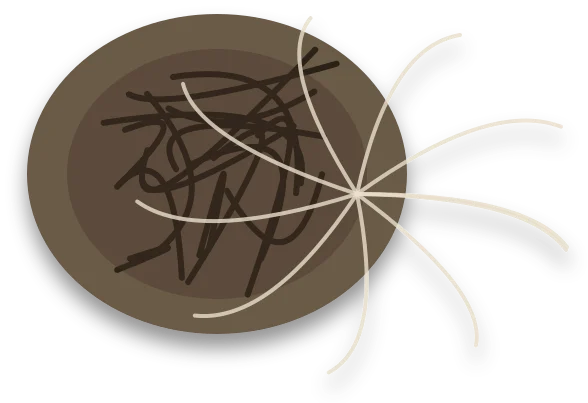
The usual culprits are soil-living water moulds and fungi, among them Pythium, Phytophthora, Fusarium and Rhizoctonia. Most favour wet ground, and the water moulds produce spores that can persist in the soil or in old plant material for a long time. Overwatering raises the risk, and so does any mix or pot that holds water for too long. A pot with no drainage hole, or a saucer left full after watering, does the same job.
Before watering a wilting plant, check it. Push a finger into the compost, then lift the plant out of its pot. Healthy roots are firm and pale and have plenty of fine feeder roots. Rotting roots are soft, brown or black, and they can smell foul. A plant with rotten roots and damp compost is not thirsty, and more water will not help it.
The rescue is more cutting than watering. Take the plant out and shake off the old compost, rinsing the roots under lukewarm water if they are caked. Cut away every root that is black, soggy or broken, making each cut just above where the damage ends, and stop when only clean, healthy roots remain. Use clean scissors or clippers and wipe them between plants. Wash the old pot in a 10 per cent bleach solution, then repot into fresh, well-draining potting mix in a container with drainage holes. Leave gravel out of the base, because it works against the drainage. Water only when the compost is dry a few centimetres down, and empty any saucer half an hour after watering. The repotting guide covers the new pot and mix in more detail.
Chemical fungicides are not recommended for houseplants by the University of Wisconsin-Madison extension service, so the cutting and the watering are the treatment. A plant that has lost most of its roots is usually not worth rescuing as a whole. A stem cutting from healthy growth, rooted in water or damp mix, is often the surer way to keep it.
Once the plant is recovering, keep the routine that caused the problem out of the way. Use the feel of the compost rather than the calendar, buy a pot with a hole in it, and do not reuse old compost or drainage water. Most houseplant root rot starts with one of those three things, and each of them is easy to change. The overwatered plant rescue guide covers the earlier stages, and how to tell whether a plant actually needs water gives the test for the next watering.
Questions from the margin
- Can a plant with root rot be saved?
- Often, if some firm roots are left. Cut every soft or dark root back to healthy tissue, repot in fresh, well-draining mix, and let the compost dry before the next watering. If most of the roots have gone, a stem cutting from healthy growth is often the surer way to keep the plant.
- How do I tell root rot from underwatering?
- Lift the plant out and look at the roots. Underwatered roots are dry and brittle and the compost is dry all the way through. Root rot shows soft, brown or black roots in compost that is still wet, often with a foul smell, and the plant can wilt while the pot still feels heavy.
Checked against University of Wisconsin-Madison Extension, Root rots on houseplants; Iowa State University Extension and Outreach, Root rots of houseplants; Gardener's Path, How to prevent and treat root rot in houseplants.