Fall cleaning checklist
About 8 minutes to read. Published . By the House & Hedge team.
Fall is the season when the work moves inside. NOAA defines meteorological fall in the Northern Hemisphere as September, October and November. The seasons are reversed in the Southern Hemisphere, so fall there is March, April and May. The jobs are the same in both. They are ordered so that the outside work is done while the weather is still dry, the heating jobs come before the heating starts, and the oven is clean before the next big cooking weekend, whenever that falls where you live.
Each job links to the full guide. This page places it in the sequence and says what the fall pass is for.
1. Clear the gutters
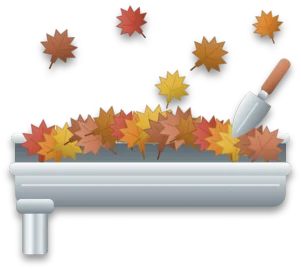
Gutters and downpipes carry rain away from the house, and a blocked one cannot do that job. The moss guide lists clearing gutters and downpipes that discharge onto paving as part of fixing drainage. Wait until most of the leaves are down, then clear them in one go.
The ladder is the dangerous part, so set it up properly. The National Institute for Occupational Safety and Health, part of the US Centers for Disease Control and Prevention, says to set up extension ladders at about a 75 degree angle and to choose a ladder with the right size and duty rating for the job. It lists overreaching, carrying objects up or down the ladder and applying excessive force as improper use, and it says that in about 40 percent of cases the cause of a ladder-related injury is the ladder sliding out at the base. In practice that means level, firm ground, moving the ladder instead of stretching, and a tool small enough to carry in a pocket or on a belt.
Remove the leaves by hand, with gloves, into a bag or a bucket, then run water down the downpipe to see that it flows. If the gutters are out of reach from a ladder you can set safely, or the roof is steep, hire someone. A gutter is not worth a fall.
2. Sweep the patio and the paths
Fallen leaves lie wet on paving and decking. The moss guide says that leaves hold water against the surface and feed the moss, and advises sweeping them up regularly. Do it while you are outside for the gutters, then look at where water pools after rain, because that is where moss and slippery patches begin. The method for dealing with moss that has already taken hold is in how to get rid of moss on a patio, path or deck.
3. Wash the windows
Clean the outside of the glass while the weather is mild, and the inside afterward. Do it on a cloudy day or in the shade, because in direct sun the solution dries too fast and leaves streaks. Clean the frames, tracks and sills as well, so that a clean pane is not sitting in a dirty frame.
If the glass carries a tint film, use mild soap and water or a cleaner made for it, because vinegar and ammonia can damage the film. The method is in how to clean windows without streaks.
4. Check the furnace filter
Do this before the heating starts. ENERGY STAR’s maintenance checklist says to inspect, clean or change the air filters once a month in a central air conditioner, furnace or heat pump, and warns that a dirty filter can increase energy costs and damage the equipment, leading to early failure. Put the monthly check on the calendar now and it will carry through the winter.
5. Clean the dryer vent
The National Fire Protection Association says to clean the lint filter before or after each load and to clean lint out of the vent pipe once a year, or more often if clothes are taking longer than normal to dry. It adds that the leading cause of home clothes dryer fires is failure to clean them.
The advice is once a year, with no season attached, so pick a date you will remember. Fall is a convenient one, and it puts the job ahead of the winter. The full method, including the outside vent, is in how to clean a dryer lint screen and the vent, safely.
6. Change over the closet
Put the summer clothes away and bring out the warm ones. Wash or dry-clean everything before it is stored. The University of California’s pest notes on clothes moths say that susceptible items should be stored clean and pest free, in an airtight container, and that woolens which should not be washed hot may need a dry cleaner.
Use the changeover to see what you no longer wear, and to vacuum the shelves and rails. The method is in how to organize a closet so it stays organized, and the signs of moth damage are in how to get rid of clothes moths.
7. Turn the mattress and wash the bedding
Colder weather means heavier bedding, so this is the natural point to wash the duvet and give the mattress its turn. The mattress guide says to vacuum the mattress every three to six months and to turn or rotate it if the maker recommends it. Check the maker’s instructions before turning anything, because the maker’s advice decides whether the mattress is turned, rotated or left alone.
Wash the protector and the bedding while the bed is stripped. Duvets and pillows have their own method in how to wash a down comforter and pillows, and the mattress itself is in how to clean a mattress and keep it clean.
8. Clean the oven before the holidays
Do the oven before the heavy cooking, not after. The oven guide says to wipe spills as soon as the oven is cool enough to touch, to do a manual clean every two or three months and to run the self-clean cycle no more often than the manual suggests, usually once or twice a year.
Before a self-clean cycle, take out the racks and any foil, wipe up loose food and move any pet bird out of the kitchen, because the high heat can give off fumes that harm birds. Open a window or run the exhaust fan. While the racks are out, wash them by hand in warm soapy water with a non-scratch pad and dry them completely before they go back, so that water does not drip onto the hot enamel. Do not line the floor of the oven with foil, which can damage the heating element. Never mix an oven cleaner with bleach, vinegar or any other cleaner. If the oven smells of gas, stop using it and call a qualified technician, because that is a safety problem and not a cleaning one. The full method is in how to clean an oven, and when to use the self-clean cycle.
Why this order
The outside jobs come first because they depend on the weather and the daylight, and both get worse as the season goes on. The heating jobs come next because they should be done before the equipment is working every day. The closet, the bed and the oven come last because they are indoor jobs that can be done in any weather, and because they are the ones the next few weeks will use.
If time runs short, keep the three that carry a safety point: the ladder work on the gutters, the dryer vent and the oven. The rest can wait a week without harm.
Keeping the list moving
In many places fall runs into the holiday season, and the list is easier to finish if the outside jobs and the heating jobs are done first and the oven and the bed come last. When the cold sets in, the winter cleaning checklist picks up with the oven after the holidays, the kettle, the humidifier and the entryway. It runs from December to February in the Northern Hemisphere and June to August in the Southern Hemisphere.
If you plan to use more than one cleaning product on any of these jobs, read what never to mix when cleaning first.