What never to mix when cleaning
About 9 minutes to read. Published . By the House & Hedge team.
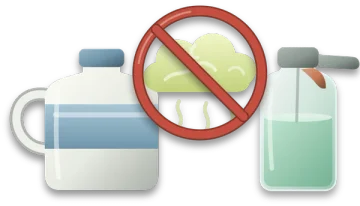
Most mixing accidents are not experiments. A second product is added to boost the first, one cleaner is poured into a drain that still holds another, or a spray bottle is topped up with something else. The result can be a gas that harms the lungs within minutes. In 2021, a physician at the National Capital Poison Center told TODAY, U.S. poison centers received 4,800 calls about chlorine gas exposure from mixing a household acid with bleach, and she said that most of the cases are unintentional.
This guide sets out the combinations that public health sources warn against, in their own words where the wording matters, and what to do if it has happened. The rule that covers all of them comes from the US Centers for Disease Control and Prevention: never mix bleach with ammonia or any other cleaner.
The four mixtures to know
The New Jersey Department of Health’s hazard alert on mixing cleaning products is written for workers, but the chemistry is the same at home. It lists the following pairings. Each is quoted as the alert gives it.
Bleach and ammonia
The alert says: “Mixing bleach with ammonia creates chloramine gases which can cause coughing, shortness of breath, chest pain, wheezing, nausea, watery eyes, irritation of the throat, nose, and eyes. In serious cases, it can lead to pneumonia and fluid in the lungs.”
Ammonia is in some glass and multipurpose cleaners, so read the label. The Tennessee Poison Center adds that urine, from an animal or a person, counts as a source of ammonia in this reaction. The US Environmental Protection Agency says the same about cleaning mold: never mix chlorine bleach solution with other cleaning solutions or detergents that contain ammonia.
Bleach and vinegar
For vinegar the alert says: “Produces harmful vapors, including chlorine and chloramine, which can burn the eyes and lungs.” The Tennessee Poison Center says that combining bleach with an acid such as vinegar or multipurpose bathroom cleaners causes a chemical reaction that creates chlorine gas.
The alert explains the effect of chlorine gas: “When chlorine bleach is mixed with an acid, chlorine gas is produced. Even low levels of chlorine gas for short periods can irritate your eyes, nose, and throat, and cause coughing and breathing problems. Higher levels can lead to chest pain, severe breathing trouble, vomiting, and lung damage. Very high levels can be fatal.”
The same rule appears in a washer manufacturer’s safety instructions. The Amana washer guide says not to use chlorine bleach and ammonia or acids, such as vinegar or rust remover, in the same wash, because hazardous fumes can form.
Bleach and rubbing alcohol
For rubbing alcohol, which the alert also calls isopropyl alcohol, it says: “Forms chloroform, which can cause dizziness, nausea, headaches, and even loss of consciousness.”
Hydrogen peroxide and vinegar
This pairing does not involve bleach, so it is the one people most often overlook. The alert lists it under other hazardous mixes and says: “Together they form peracetic acid, which can irritate the eyes, skin, and lungs.”
Other products the alert names
The alert says never to mix cleaning products, especially anything containing bleach. Besides ammonia, vinegar and rubbing alcohol, it lists these products as dangerous with bleach:
- Mildew stain removers, which “can release chlorine gas and irritate the eyes, nose, throat, and lungs.”
- Toilet bowl cleaners, which “may give off toxic fumes that can burn the throat and lungs.”
- Oven cleaner, which “can produce chlorine gas and cause irritation to the eyes, nose, and respiratory system.”
- Lemon juice, whose “natural acids can react with bleach to release chlorine gas.”
- Drain cleaner, which “can create toxic chlorine gas and may lead to long-term health issues.”
It also says that different brands of drain cleaner “can react dangerously when combined,” and that they should never be mixed. More generally it names products with acids, such as lime, calcium or rust removers and some dishwasher detergents, as releasing toxic gas when mixed with bleach.
Where mixing happens without anyone meaning it
The alert describes two cases that show how it happens out of sight. In one, a restaurant employee with asthma opened a dishwasher that contained a limescale remover and bleach, was overcome by fumes and later died. In the other, a plumber noticed a bleach smell in a drain and poured in a drain solvent that contains sulfuric acid, released chlorine gas and was taken to the emergency department with breathing trouble.
The same thing can happen in a washing machine drum, in a toilet bowl that holds one product while another is added, in a drain, in a mop bucket that was not rinsed and in a spray bottle that has been reused. The toilet cleaning guide says to use one product at a time and rinse the bowl between products. The laundry and dishwasher guides say the same about the drum and the tub.
How to avoid it
- One product at a time. Rinse the surface with water and let it dry before you use a different product.
- Original containers. The alert says to keep chemicals in their original containers and to make sure all containers are clearly labeled. Do not decant a product into an unmarked bottle, and do not top up a bottle with something else.
- Read the label. It carries the maker’s warnings, and the bleach maker’s own page says to check labels before using bleach on any surface or fabric.
- Ventilate. The CDC says to try not to breathe in product fumes and, if using products indoors, to open windows and doors to let fresh air in. It also says to wear rubber or other non-porous gloves, boots and eye protection.
- Skip the boosters. Detergent and water do most jobs. For mold on a hard surface the EPA says to scrub it off with detergent and water and dry completely, and that bleach is not recommended as a routine practice during mold cleanup.
- Keep products out of reach. The bleach maker says not to store bleach within reach of children or pets, and to keep it in a secure, ventilated space.
If you have mixed them
The Tennessee Poison Center recommends airing out the area and getting fresh air.
- Leave the room, taking everyone with you, including any pets, and get into fresh air.
- Open the windows and doors if you can do it without breathing the air in the room.
- Watch for symptoms. A physician at the National Capital Poison Center told TODAY that they include coughing, throat, nose and eye irritation, trouble breathing, watery eyes and chest tightness, that people with asthma may start wheezing, and that symptoms can start at once or be delayed.
- Call for advice. In the United States, call Poison Help on 1-800-222-1222. The New Jersey Department of Health gives that number for its poison center help line.
- Call 911 if breathing problems continue or get worse. The Tennessee Poison Center says that the majority of patients have resolution of symptoms with fresh air in one to two hours, and that if respiratory symptoms persist or worsen the patient should call 911.
People with restrictive lung disease are at higher risk of severe symptoms, according to the Tennessee Poison Center. If someone with asthma or another lung condition has been exposed, treat it as more serious. Outside the United States, call your local poison information service or emergency number.
Where to go from here
The details for each of the two products that appear most often are in separate guides: things you should never clean with bleach and things you should never clean with vinegar. For the toilet, where an acid cleaner and a bleach cleaner sit side by side on the shelf, see how to clean a toilet bowl, the rim and the ring stains. For the washing machine, see how to clean a washing machine.