A houseplant in a dark cupboard
About 6 minutes to read. Published . By the House & Hedge team.
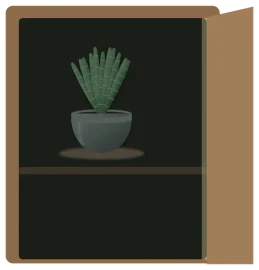
It sounds like a question with a number in it: how many days can a plant last in a dark cupboard? It is a fair question, and people ask it without finding a straight answer. The extension services do not publish one. What they do publish is enough to understand the risk, to notice trouble early, and to bring a plant back before it is too far gone. This guide sets out what the sources say, what they leave out, and what to do.
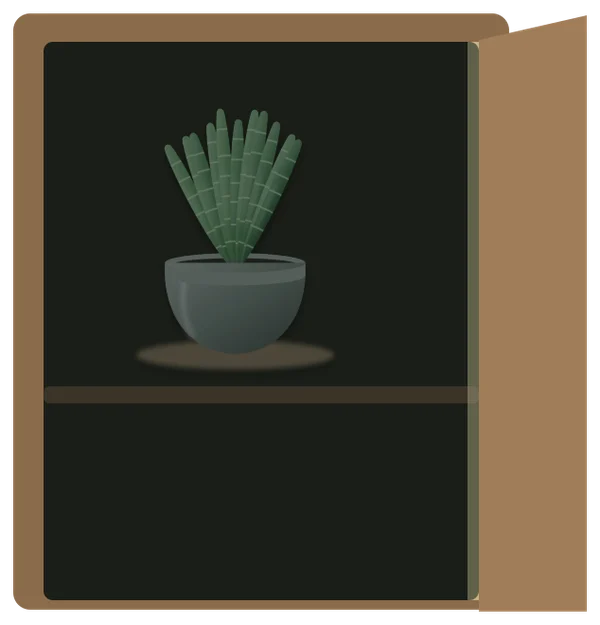
What the sources say, and what they leave out
Three extension sources were checked. Illinois Extension’s Great Plant Escape page says a plant tells you when it is not getting enough light, because its stems become thin and lean toward the light. It says nothing about how long a plant can survive without light, or in darkness. The UF/IFAS guide to the ZZ plant says the plant grows and produces new leaves under an interior low light level of 25 foot-candles for more than a year, but it does not address darkness. The University of Maryland Extension covers overwatering and mentions light only in passing. So the one firm sign on record is the thin, leaning stem, and the rest of this guide is reasoning from it.
Check the plant before you move it
The compost comes first, because a plant with rotting roots cannot use light either. Feel it with a finger, lift the pot if you can, and look at the stems. If the compost is wet and the stems are soft, deal with the water before the light. If the compost is dry and the stems are thin and leaning, the light is the problem, and the steps below apply.
Why there is no clean number
A plant in darkness cannot make new food, so it lives on what it has already stored. How long that lasts depends on the plant, how much it has stored, how large it is and how warm the cupboard stays. A plant with thick stems or rhizomes has more to draw on than one with thin, soft growth.
The site’s entries show the spread. The snake plant tolerates low light and grows fastest in bright, indirect light, and the pothos fades in low light. The ZZ plant is the most tolerant of the three, and its entry notes that the underground rhizomes are water stores. UF/IFAS states that the ZZ can survive without being watered for three to four months. That figure is about water, not light, and it attaches no conditions to it, so it cannot be carried over to a dark cupboard.
What a cupboard does to the water
The second effect matters more than the first, and it is about water. Illinois Extension says that growth and water uptake are less in winter, so watering has to change to match, and that water demands are much lower when plants are not growing. A dark cupboard stops growth almost completely. The compost then stays wet for far longer than it would in a bright window, and wet compost with no growth is the setup for root rot. The University of Maryland Extension says that overwatering leads to root rots and plant death.
So the danger in a cupboard is often the water you give the plant, not the light it lacks. A plant in the dark needs far less water than the same plant on a sill, and the compost should be allowed to dry before you add any.
Signs of too little light
The clearest sign is the one Illinois Extension names: thin stems that lean toward the light. A plant that has been in the dark will often stretch toward any gap of light, such as a crack under a door. Watch the new growth, because the leaves already on the plant will not change much. A plant that has been dark for a long time shows the problem in what it grows next.
Wilting while the compost is still wet points the other way, toward roots that cannot take up water. Illinois Extension notes that wilting can be a symptom of overwatering. If the plant droops and the compost is damp, treat it as a root problem first.
Bring it back into the light
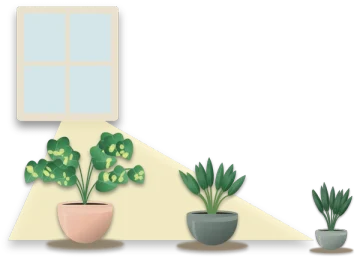
Move the plant back to a bright place, and do it gradually if you can. A plant that has been in the dark is used to very little light, so a sudden jump is a risk in its own right. Illinois Extension advises placing plants close to the best window. In the southern hemisphere the best window faces north, because the sun is in the north. Illinois’s window advice was written for the northern hemisphere, where south and west windows get the most sun, so turn it round before you choose a spot.
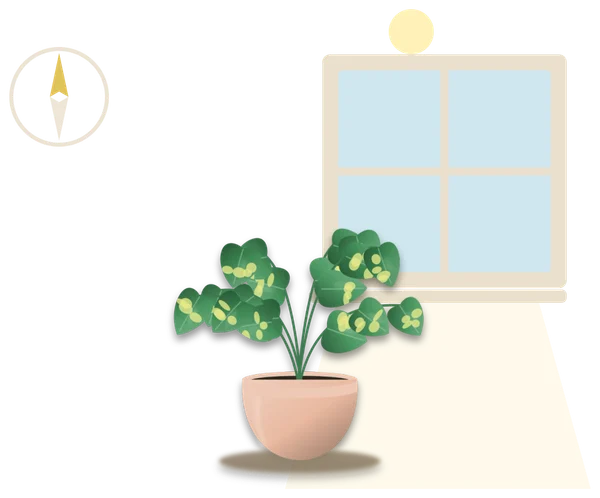
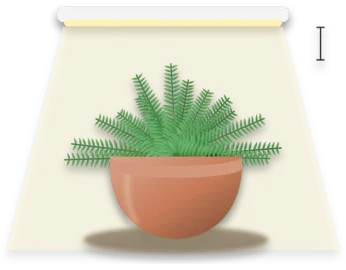
If there is no bright window, a lamp is the alternative. Illinois Extension suggests keeping a grow light about six inches above the plants and leaving it on for 14 to 16 hours a day. Iowa State University Extension gives 12 to 14 hours for fluorescent fixtures. The two sets of hours overlap, so start with the lower end and watch the plant. For more on setting a lamp, see ferns in a windowless bathroom. Give the plant time to show the change. The sources do not give a figure for how long recovery takes, so watch the new growth over several weeks rather than judging the plant after a few days.
Water while it recovers
While the plant recovers, water it only when the compost has dried. Illinois Extension says to add water only when the soil has dried out, and to water thoroughly so the whole pot is saturated. Iowa State University Extension says to discard the excess water, so empty the saucer after watering. The University of Maryland Extension suggests letting most of the soil dry out in winter, until it feels like a freshly wrung out dish towel, not bone dry but not too moist. Use the same target after a spell in a cupboard.
When it is rot, not the light
A plant that has spent time in a dark, damp cupboard may have a root problem as well as a light problem. If the compost stays wet for days, or the plant wilts while the soil is still damp, the trouble is more likely to be rot than light. The overwatered plant rescue guide sets out how to tell overwatering from underwatering, and what to do with wet roots.
Where to go next
If a plant looks wrong and you are not sure why, the diagnoser asks about what you can see. Before you choose a place for any plant, read the light in each room, using the guide on light room by room. That is the quickest way to avoid the cupboard problem in the first place.