Things you should never clean with bleach
About 8 minutes to read. Published . By the House & Hedge team.
Bleach is the strongest product in most cabinets, and people tend to reach for it when something looks bad enough to need it. It is the wrong choice more often than it is the right one. Some of the things you should not use it with release toxic gas. Some of the surfaces you might use it on are damaged by it. For many jobs it does less than a detergent and water.
This guide lists the specific uses to avoid, the reason for each and what to use instead. The wording of the chemical warnings follows the public health sources named in each section. The pairings are set out in full in what never to mix when cleaning. The rule behind this whole list is the CDC’s: never mix bleach with ammonia or any other cleaner.
Ammonia and cleaners that contain it
The New Jersey Department of Health says: “Mixing bleach with ammonia creates chloramine gases which can cause coughing, shortness of breath, chest pain, wheezing, nausea, watery eyes, irritation of the throat, nose, and eyes. In serious cases, it can lead to pneumonia and fluid in the lungs.” The EPA gives the same warning for mold cleanup: never mix chlorine bleach solution with other cleaning solutions or detergents that contain ammonia.
Use instead: one product at a time. If a surface has had an ammonia cleaner on it, rinse it with water and let it dry before bleach goes near it.
Vinegar and other acids
The New Jersey alert says that bleach with vinegar “produces harmful vapors, including chlorine and chloramine, which can burn the eyes and lungs.” The Tennessee Poison Center says that combining bleach with an acid such as vinegar or multipurpose bathroom cleaners creates chlorine gas. The alert lists drain openers, toilet bowl cleaners and products with acids, such as lime and calcium removers, rust removers and some dishwasher detergents, as releasing toxic gas when mixed with bleach. It lists lemon juice too, because its natural acids can react with bleach to release chlorine gas.
Use instead: bleach alone, or the acid cleaner alone, with a thorough rinse in between. The toilet is where this happens most, because acid and bleach cleaners often sit side by side. The guide to the toilet bowl says to use one at a time: how to clean a toilet bowl, the rim and the ring stains.
Rubbing alcohol
The alert says that rubbing alcohol, also called isopropyl alcohol, “forms chloroform, which can cause dizziness, nausea, headaches, and even loss of consciousness.” The bleach maker’s own list of products not to mix with bleach says the same thing in shorter words: it can create chloroform.
Use instead: do not wipe a surface with alcohol and then with bleach, or the other way round, without rinsing between the two.
Urine, including pet urine
The Tennessee Poison Center says that combining bleach with ammonia, “such as store-bought ammonia or even animal or human urine,” causes a chemical reaction that creates chloramine gas. Low concentrations or short exposures can cause irritation, pain, burning and coughing, and high concentrations or long exposures can cause corrosive injury, shortness of breath, chemical pneumonia and lung edema.
That is why bleach does not belong on a litter box or a floor with urine on it. The cat litter box guide says to wash the box with hot water and mild soap, rinse it well and dry it, and not to use bleach on a box that still holds urine.
Use instead: an enzyme cleaner for carpet and floors, as in how to clean carpet stains and pet urine without the lingering smell, and soap and hot water for the box: how to clean a cat litter box and keep the smell down.
Stainless steel
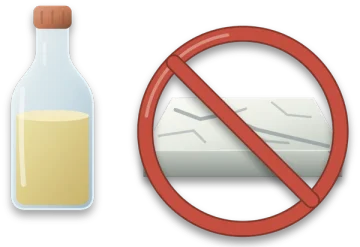
The Specialty Steel Industry of North America says that pitting of stainless steel generally occurs in the presence of halide ions, typically chloride, and it lists bleach, meaning sodium or calcium hypochlorite, among the chloride sources. The pits are small and cannot be repaired once they have formed.
Use instead: warm water and dish soap, then a rinse and a dry cloth. For stains and heat tint, the stainless steel guide has a method that does not use chlorides: how to remove brown and rainbow stains from stainless steel pots and pans.
Natural stone
The Natural Stone Institute’s cleaning guidance quotes a stone professional who says that vinegar and bleach are harsh and will etch or burn the surface of the stone. It adds that harsh products can damage stone, and that some chemicals can break down sealers, so that resealing may be needed more often.
Use instead: a soft cloth with warm water and a cleaner made for natural stone. If you are not sure what the surface is, ask the installer before you try anything.
Mold on grout and other porous surfaces
Bleach looks like the answer to black spots, and it is not. The EPA says it is not recommended as a routine practice during mold cleanup, and that mold on hard surfaces should be scrubbed off with detergent and water and dried completely. It also says that if the moldy area is less than about 10 square feet, in most cases you can handle the job yourself.
The shower grout guide explains what happens in practice: bleach lightens the mold on the surface but does not reach the growth that has gone into porous grout, so the spots come back.
Use instead: detergent, a stiff brush and water, or 3 percent hydrogen peroxide used on its own, as in how to remove black mold from shower grout and caulk.
Fabrics and surfaces that are not labeled bleach-safe
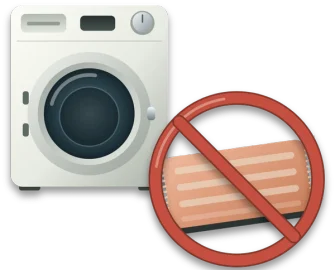
The bleach maker says not to use bleach on non-bleach-safe surfaces and fabrics, and to always check labels. For clothing, the federal care labeling rule, 16 CFR 423.6, says that a care label has to give a bleaching instruction when bleach would harm the product, and that if all commercially available bleaches would harm it, the label must say “No bleach” or “Do not bleach.” A label that says so is a legal warning, not a suggestion.
The laundry guide for musty towels says to use chlorine bleach only on white cotton and linen that can tolerate it, and never on colored fabrics, wool or silk: musty towels and laundry.
Use instead: the products the label allows. The laundry guide names an oxygen bleach as the safer choice for most loads, and says it can be used on colored fabric when the label permits.
Together with other products in the washing machine or dishwasher
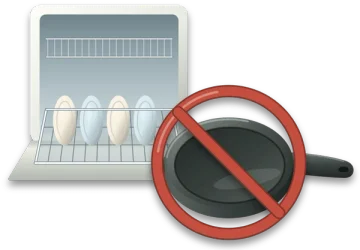
A washer manufacturer’s safety instructions say not to use chlorine bleach and ammonia or acids, such as vinegar or rust remover, in the same wash, because hazardous fumes can form. The New Jersey alert describes a restaurant worker who opened a dishwasher containing bleach and a limescale remover and was overcome by fumes.
Use instead: one product per cycle. The dishwasher guide says not to put bleach in the dishwasher unless the manual allows it, and the washing machine guide says to use bleach alone and then run a rinse cycle: how to clean a washing machine.
In a closed room, or without gloves and eye protection
The CDC says to try not to breathe in product fumes, to open windows and doors to let fresh air in when using products indoors, and to wear rubber or other non-porous gloves and eye protection. The bleach maker adds that bleach should be used in a well-ventilated space and kept out of reach of children and pets.
Use instead: open a window, wear the gloves and keep the door of a small bathroom open. If you cough, feel dizzy or get chest tightness, leave the room and get fresh air.
What to use instead for most jobs
For most cleaning jobs, the right answer is plain: warm water, dish soap and a cloth or a brush, followed by a rinse. The EPA says this for mold on hard surfaces. Use bleach only when the surface and the label allow it, only on its own and only with the room ventilated. If you are not sure whether a surface is safe, test an inconspicuous spot or ask the maker.