Things you should never put in the dishwasher
About 9 minutes to read. Published . By the House & Hedge team.
A dishwasher is very hot water, strong detergent and a hard spray, and some things cannot take it. The damage is rarely dramatic. A pan loses its coating by degrees, a knife gets duller, a wooden spoon cracks after a few cycles and a pretty plate loses its gold rim. The loss is usually permanent, and it costs more than the few minutes saved.
This guide sets out what to keep out of the machine, the reason for each and how to wash it by hand. The main source is a list from a dishwasher expert at the Whirlpool Corporation’s Institute of Home Sciences, published by TODAY. Lodge, the cast iron maker, is the source for cast iron. The rule that overrides every general list is the maker’s label. If the maker says an item is dishwasher safe, follow the maker.
Why these things fail
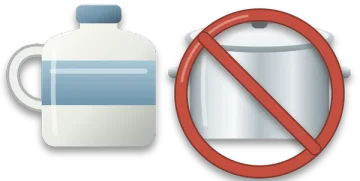
Three things in a dishwasher do the damage, and the expert’s list names each of them. The first is very hot water, which warps wood, stains aluminum and melts the adhesive in knife handles and repaired plates. The second is harsh detergent, which strips seasoning, wears off printed measurements and dulls metals. The third is the heat of the drying cycle, which can crack wood and deform plastic. Most of the items below fail for one of these three reasons, and it helps to know which, because it tells you whether a particular piece is at risk.
Cast iron
Lodge answers the question directly: cast iron cookware should be washed by hand, and a dishwasher will remove the seasoning and likely cause rust. The dishwasher expert quoted by TODAY agrees that detergent strips the built-up surface and leaves the pan vulnerable to rust.
Wash by hand instead: warm water and a brush, and dry it completely. Lodge says that soap is fine, because the dish soap sold today is no longer strong enough to remove seasoning, and that soaking cast iron in water is a recipe for rust. The method is in how to clean a cast iron pan without losing the seasoning.
Nonstick cookware
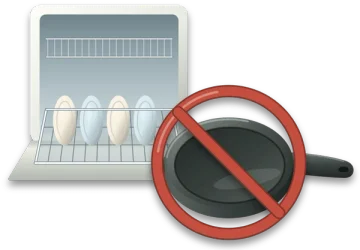
The dishwasher expert’s advice is not to put nonstick cookware in the dishwasher unless the manufacturer specifically states that it is dishwasher safe, because over time the dishwashing process can break down the coating and make it flake off during cooking.
Wash by hand instead: warm soapy water and a soft sponge, with no scouring pad.
Sharp knives and knives with hollow handles
The cycle dulls knife blades, so the advice is to wash prep knives by hand. Hollow-handled knives have a second problem: the high temperatures can melt the adhesive that holds the two pieces of the handle together, and the handle can fall apart.
Wash by hand instead: warm soapy water, then a rinse and a dry cloth.
Wood
Cutting boards, spoons and wooden handles do badly in a dishwasher. The expert says that very hot water can warp or crack the wood and damage its finish.
Wash by hand instead: warm soapy water, a rinse and a dry cloth.
Aluminum, brass, bronze, pewter and gold-colored flatware
The very hot water in a dishwasher can stain the surface of aluminum, and the detergent can dull it. Brass, bronze and pewter can become pitted and discolored, and gold-colored flatware will discolor.
Wash by hand instead: warm soapy water, then a rinse and a dry cloth.
Plastic, acrylic and insulated drinkware
The expert says that, unless plastic items are marked dishwasher safe, they should stay out, because heat can melt or warp them. Insulated pitchers, drinkware and travel mugs are on the list too, since the high temperatures could damage the vacuum seal. Acrylic plates can be damaged by the hot water and harsh products, which can also wash off printed designs, and the detergent will remove the measurements printed on some measuring cups.
Wash by hand instead: warm soapy water. Look for the maker’s dishwasher safe mark before you trust any plastic item to the machine.
Fine china, hand-painted pieces and crystal
Dinnerware with metallic images or trim should be washed by hand to prevent damage to the decoration, and hand-painted ceramics and stoneware should be hand washed, “unless you want the artwork to go down the drain over time.” Some lead crystal will etch, becoming cloudy and pitted, after repeated washings, and milk glass can turn yellow. Delicate items such as hand-blown glass, antiques and fine figurines should stay out of the machine entirely.
Wash by hand instead: warm water, a little mild soap and a soft cloth.
Pressure cooker lids
The expert says that small food particles or dishwasher detergent can collect or lodge in the regulator or safety valves of a pressure cooker lid.
Wash by hand instead: follow the cooker’s manual for washing the lid and for clearing the valves, because a blocked valve is a safety problem.
Anything with a paper label, a glued repair or large pieces of food
Dishwashers can loosen and remove paper labels from bottles and jars, and the labels can clog the drain or stick to other dishes. Hot water and harsh detergent can dissolve the adhesive in a plate that has been repaired with glue. Big pieces of food can clog the drain or end up on otherwise clean dishes.
Do instead: scrape plates before loading. For labels and repaired items, wash by hand.
Hand dish soap
Dish soap belongs at the sink. GE Appliances says that any soap other than detergent made for automatic dishwashers makes suds inside the machine, washes poorly, and can push water out past the door onto the kitchen floor. Dishes washed by hand first need a thorough rinse before they go in, because the soap left on them makes suds in the same way.
Use instead: detergent made for dishwashers, in the amount on the pack.
Bleach together with an acid cleaner
This is the one that can kill. The New Jersey Department of Health describes a restaurant employee with asthma who opened a dishwasher and was overcome by strong fumes, and later died. The fumes came from a mix of a limescale remover, which is an acid, and bleach inside the machine, and the alert says that mixing an acid and a hypochlorite released chlorine gas.
Use instead: one product per cycle, and only the cleaner the manual names. The dishwasher cleaning guide says not to put bleach in the dishwasher unless the manual allows it, and never to mix bleach with vinegar or any acid cleaner. The CDC’s rule applies here as everywhere: never mix bleach with ammonia or any other cleaner. See what never to mix when cleaning.
How to tell if something is dishwasher safe
Look for the maker’s dishwasher safe mark on the item or its packaging, or look up the model on the maker’s care page. The dishwasher expert’s rule for plastic is blunt: unless the item is marked dishwasher safe, do not put it in. For nonstick cookware the rule is that the maker must specifically say so. For anything else, including antiques, handmade pieces, gifts and anything you could not replace, the safer assumption is that it needs hand washing.
A quick summary of the list above:
- Wash by hand: cast iron, wood, hand-painted china, lead crystal, antiques and pressure cooker lids.
- Wash by hand unless the maker says otherwise: nonstick cookware, plastic, insulated mugs, aluminum and metal-trimmed china.
- Wash by hand to keep the edge: sharp knives, and any knife with a hollow handle.
- Keep out of the machine: hand dish soap, and bleach together with an acid cleaner.
What the dishwasher is good for
The machine suits ordinary glasses, plates, bowls, flatware and metal pots that the maker has marked dishwasher safe, and that is most of what a household uses every day. Scrape the plates, load the racks so the spray can reach every surface, and use only detergent made for the machine.
The machine needs care, too. Clean the filter and the spray arms regularly, as set out in how to clean a dishwasher, including the filter and the spray arms. If you are not sure whether an item is safe, wash it by hand once. It costs one minute and keeps the item.