Things you should never clean with vinegar
About 8 minutes to read. Published . By the House & Hedge team.
Vinegar is the cleaner most people already own, and it does real work. It dissolves the mineral deposits that hard water leaves on glass, showerheads and kettles, which is why several guides here use it. Vinegar is an acid, though, and the same property that dissolves scale makes it the wrong choice for some products, some stone and some finishes.
This guide lists the specific things to keep vinegar away from, the reason for each and what to use instead. The two chemical combinations come first, because those are the ones that can hurt a person. The wording follows the public health sources named in each section.
Bleach
This is the one that matters most. The Tennessee Poison Center says that combining bleach with an acid such as vinegar or multipurpose bathroom cleaners causes a chemical reaction that creates chlorine gas. The New Jersey Department of Health says: “When chlorine bleach is mixed with an acid, chlorine gas is produced. Even low levels of chlorine gas for short periods can irritate your eyes, nose, and throat, and cause coughing and breathing problems. Higher levels can lead to chest pain, severe breathing trouble, vomiting, and lung damage. Very high levels can be fatal.”
For vinegar in particular the alert says that it “produces harmful vapors, including chlorine and chloramine, which can burn the eyes and lungs.” A washer manufacturer’s safety instructions say not to use chlorine bleach and ammonia or acids, such as vinegar or rust remover, in the same wash.
Use instead: one product at a time. If you want to follow vinegar with bleach, or the other way round, rinse the surface thoroughly with water and let it dry first, and read what never to mix when cleaning.
Hydrogen peroxide in the same container
This is the pairing that people do not expect, because neither product is a bleach. The New Jersey Department of Health lists it under other hazardous mixes: “Together they form peracetic acid, which can irritate the eyes, skin, and lungs.”
Use instead: one or the other. The shower grout guide uses 3 percent hydrogen peroxide alone for dark spots, and the descaling guide uses vinegar alone for scale. Neither needs the other. If you do use both on one surface, rinse well with water and let the surface dry between the two, and never keep them in one bottle.
Marble, limestone, travertine and other natural stone
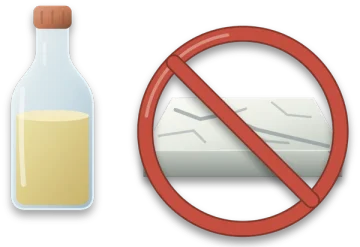
The Natural Stone Institute says that some stones, such as marble, travertine or limestone, react adversely with vinegar because it is acidic. Its cleaning guidance quotes a stone professional who says that vinegar and bleach are harsh and will etch or burn the surface of the stone, and it adds that some chemicals can break down sealers, so that resealing may be needed more often.
The tile guide gives a simple test for a floor you cannot identify: put a drop of vinegar in an inconspicuous spot. If it fizzes or leaves a dull mark, the surface is calcium-based, and acid should stay off it.
Use instead: a soft cloth, warm water and a cleaner made for natural stone, as set out in how to clean tile floors and grout, and when to seal the grout. For other stones, ask the installer.
Finished hardwood floors
The National Wood Flooring Association says that it is best to use a cleaner made specifically for the finish on the floor, which your flooring professional can provide or recommend. The hardwood guide adds that many finishes are damaged by vinegar over time, and that a strong mix can dull the surface.
Use instead: the cleaner the maker of the finish names, on a damp cloth or mop that is wrung out, never a wet one. The association also says not to use wet mops or steam mops. The method is in how to clean hardwood floors without damaging the finish.
Window tint film
The window guide says that window tint is a film applied to the inside of the glass, and that vinegar can cloud or damage it over time. Ammonia-based cleaners can do the same.
Use instead: mild soap and water, or a cleaner made for tinted glass, and the film maker’s own care advice. The method is in how to clean windows without streaks.
Brass, bronze and lacquered finishes
The showerhead guide says that chrome and stainless steel finishes take a vinegar soak well, but that brass, bronze and some lacquered or specialist finishes can be dulled by acid. The damage often shows as a patch that does not match the rest.
Use instead: check the finish first, and when it is not chrome or stainless steel, use warm water, mild soap and a soft cloth. The method is in how to clean a clogged showerhead.
Leather and faux leather
The sofa guide says that real leather needs a cleaner made for leather and a conditioner once or twice a year, and that household sprays, vinegar and strong soap can dry it out and leave a dull, cracked surface.
Use instead: a leather cleaner on a soft cloth, in small areas, buffed dry. The method is in how to clean an upholstered sofa, and what its care code means.
Screens and electronics
The TV guide says that household cleaners contain chemicals that can damage the anti-glare coating on a screen and leave permanent marks on the panel. The electronics cleaner guide names vinegar among the products to keep away from devices.
Use instead: a dry microfiber cloth, or one barely dampened with distilled water, and the maker’s instructions for anything stronger. The methods are in how to clean a TV screen without scratching it and which cleaners are safe for electronics.
Appliance parts the maker has not cleared
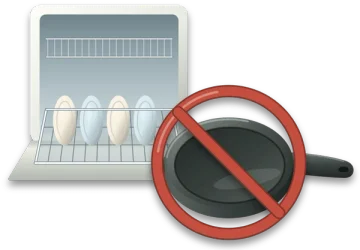
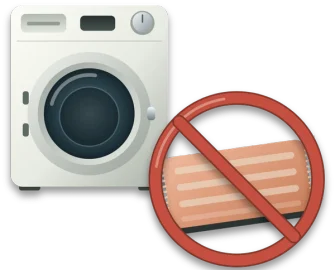
Vinegar is not wrong for every appliance, but the manual decides. The dishwasher guide says to put vinegar in a cup on the top rack and never in the detergent compartment, because it can stop the detergent dissolving properly. The washing machine guide and the dishwasher guide both say to check the manual first, because some makers advise against vinegar on certain seals, parts and models. The descaling guide says plain vinegar should not go into a machine whose manual does not allow it.
Use instead: the descaler or cleaner the manual names, in the amount on its label.
If vinegar has already been used
Rinse the surface with clean water, wipe it dry and look at it in daylight. On stone, an etch is a dull patch where the surface has been eaten away, and it will not wipe off. The tile guide says that acid leaves dull marks that cannot be buffed out easily, and the Natural Stone Institute recommends a professional for etches, with a soft cloth for daily cleaning. On a wood floor, a dull patch is a sign to stop and ask the flooring professional or the maker of the finish what to use, not to try a stronger product.
If vinegar and bleach have met, leave the area at once and get fresh air. The steps for that are in what never to mix when cleaning, including the Poison Help number in the United States.
At a glance
- Bleach: never together, because chlorine gas forms.
- Hydrogen peroxide: never in the same container, because peracetic acid forms.
- Marble, limestone and travertine: use a cleaner made for stone.
- Finished hardwood: use the cleaner made for the finish.
- Window tint, brass, bronze and leather: use mild soap and water, or the maker’s cleaner.
- Screens: a dry microfiber cloth, or one barely damp with distilled water.
- Appliance parts: whatever the manual allows.
Where vinegar does belong
Vinegar is not on a blacklist. The guides here use it where the surface and the manual allow it: for hard water spots on glass, as in how to remove hard water spots from shower glass, for mineral deposits in a showerhead, for heat tint on stainless steel, for scale in a kettle and for the monthly clean of some dishwashers and washing machines. In each case the guide says what to check first.
The rule that works across all of it is the one on the maker’s label. If you do not know whether a surface can take an acid, test a small hidden area, or choose warm water and a drop of dish soap, which damage almost nothing.