Keeping a Christmas tree fresh
About 8 minutes to read. Published . By the House & Hedge team.
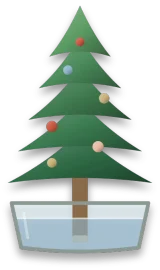
A cut Christmas tree is a conifer with its roots taken away, and nearly everything about keeping it fresh follows from that. It can only drink through the cut end of its trunk, and that cut seals over if it is left dry. Get the trunk into water quickly, keep the base under water for the whole holiday, and stand the tree somewhere cool, and the RHS says it should last about four weeks.
This guide is written for both hemispheres. In the north a December tree stands in a heated room in winter. In the south the same tree stands in a house in high summer, and some of the advice changes with it. Those places are marked.
Choosing a tree that will last
The species matters first. The RHS says the traditional Norway spruce is quick to drop its needles, while Nordmann fir is very slow to drop them, blue spruce keeps its needles better than Norway spruce, and Korean fir and Fraser fir both hold theirs well. Which of these is on sale depends on where you live, so ask the seller what the tree is.
Then look at it. The University of Illinois Extension suggests running a hand through the needles: if they are dry and brittle, or break or drop easily, the tree is dry. Queensland Fire and Emergency Services gives the same test from the other side and advises choosing a real tree with fresh, green needles that do not fall off when touched.
The fresh cut
NC State Extension says a fresh tree can lose more than half of its water content in a single day if it is exposed to drying conditions, and the National Christmas Tree Association says most species can go six to eight hours after cutting and still take up water. If the base dries out, the University of Illinois Extension says resin forms over the cut end and the tree can no longer drink.
So when the tree comes home, saw a slice off the base, straight across. The sources differ on how much: half an inch (about 1.3 cm) from the National Christmas Tree Association and the University of Illinois, 2 cm from Queensland, and 2.5 cm from the RHS. All agree on a clean, straight cut, not an angled or V-shaped one. Do not whittle the trunk to fit a small stand, and do not drill a hole in it, because the National Christmas Tree Association says that does not improve water uptake.
If you cannot set the tree up straight away, stand it in a bucket that stays full of water in a cool, sheltered place. If a tree has been dry for more than three days, NC State Extension says it needs another fresh cut.
The stand and the water
A stand is only useful when it is full. Both the National Christmas Tree Association and the University of Illinois Extension give one US quart of water per inch of trunk diameter, which is just under a litre for every 2.5 cm and comes to about four litres for most trees. The RHS asks for a stand with a well of water in the base.
Look at the trunk, not just the reservoir, and keep the water above the base of the trunk every day. A cut tree drinks heavily in the first week, so that is when the stand empties fastest.
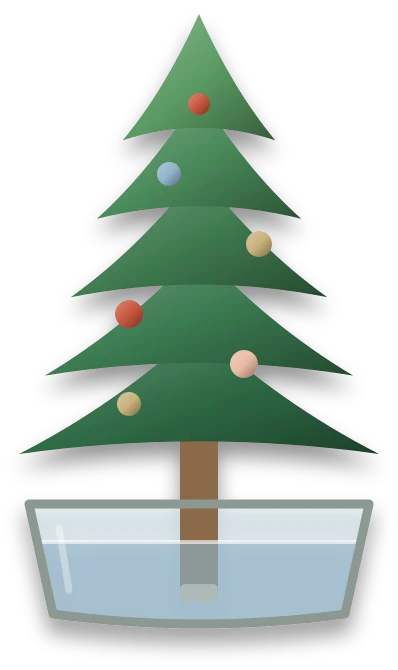
Plain water is enough. The University of Illinois Extension says research has shown that plain water will keep a tree fresh and advises against additives, and the National Christmas Tree Association says the temperature of the water does not affect uptake.
Where to put it, and the lights
Heat is what dries a tree. The National Christmas Tree Association advises keeping it away from fireplaces, heaters, heat vents and direct sunlight, and notes that a cooler room means the tree uses less water each day. The RHS names a fire or radiator as the cause of excessive moisture loss and needle drop. Queensland Fire and Emergency Services asks for at least a metre between the tree and any heat source, such as candles or lights, and says a tree must not block an exit.
Lights add heat too. The National Christmas Tree Association says low-heat lights, such as miniature lights, reduce drying, and that worn light sets should be replaced. The National Christmas Tree Association, the University of Illinois Extension and Queensland Fire and Emergency Services all say to switch the lights off when you go to bed or leave the house.
In the south. Christmas falls in midsummer, so the room is warm before the tree arrives. The sources agree that heat is the enemy, so choose the coolest room, keep the tree out of sun through the window, and check the water every day. Queensland Fire and Emergency Services, an Australian source, advises adding water daily. Do not skip a day because the tree looked fine yesterday.
How long it lasts, and when it goes
The RHS puts a well-kept cut tree at about four weeks, and the University of Illinois Extension at three to four. The end is not a date. It is dry, brittle needles, and needles falling when the branches are touched.
Take a dry tree out. Queensland Fire and Emergency Services says dried-out trees are highly flammable and a fire danger, and the National Christmas Tree Association says never to burn any part of a Christmas tree in a stove or fireplace. The RHS and Queensland both suggest turning it into mulch or using a local recycling scheme.
The potted alternative
A potted tree is a young conifer in a container, and the rules are almost the reverse of a cut tree’s, because it has to go back outside. The RHS says to keep a living tree indoors for no longer than 12 days, in a cool room, and to bring it in as late as possible, ideally the weekend before Christmas. If it looks unhappy, put it back outside. The National Christmas Tree Association adds that the root ball should be kept slightly damp, not flooded, and that the tree needs to be acclimatised gradually before it goes outdoors again.
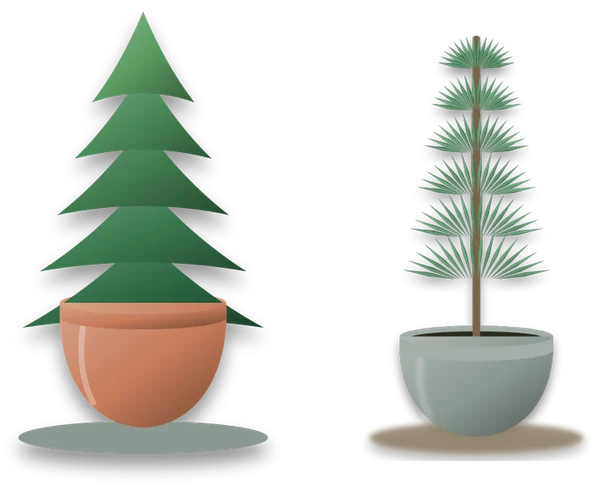
After Christmas the RHS says to plant it out in the garden, or to keep it in a container and move it into a bigger pot each year, stopping at about 45 cm across and deep, in peat-free John Innes No 2 compost, kept well watered in a sunny spot.
The RHS limit of 12 days is written for a British December. None of the sources checked gives a separate limit for a pot-grown conifer brought indoors in midsummer, so in the south treat 12 days as the longest, not the target, and put the coolest room ahead of the prettiest one.
The other living tree is the Norfolk Island pine, which comes from a small Pacific island and is kept indoors as a houseplant. Its entry says it wants a cool, bright room rather than a hot, dry one, and that most of the ones sold at Christmas are dead by March for two reasons: a hot dry room and a pot allowed to dry out. It is recorded there as non-toxic to cats and dogs on the ASPCA list.
If a tree is more than you want
Plenty of people want something living at Christmas without a conifer in the corner. The guide to plants for the festive season covers the usual choices: the Christmas cactus, the amaryllis and the cyclamen, with the hemisphere each one flowers in. There are separate guides to poinsettia care and amaryllis care. The almanac shows what each plant in the collection wants in each month for both hemispheres, and the plant finder will narrow a list by light, pets and room if you are choosing something to keep.