Six southern African houseplants
About 8 minutes to read. Published , updated . By the House & Hedge team.
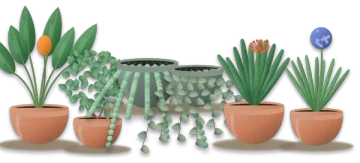
Six of the most familiar plants on windowsills worldwide come from one region, and almost nobody buying them knows it. Knowing where a plant is actually from is not trivia here: it explains exactly why each of these six wants what it wants, and why the usual houseplant advice, water a little and often, is wrong for every one of them.
South Africa packs an unusual range of habitats into a relatively small area: dry rocky hillsides, coastal scrub, deep forest floor and open grassland all within a few hundred kilometres of each other. Plants that evolved in that range of conditions arrived already adapted to almost exactly what a house provides: bright windows that are never quite full outdoor sun, long unpredictable gaps between waterings, and a pot that never gets much bigger than the patch of ground the plant first found itself rooted in.
Bird of paradise
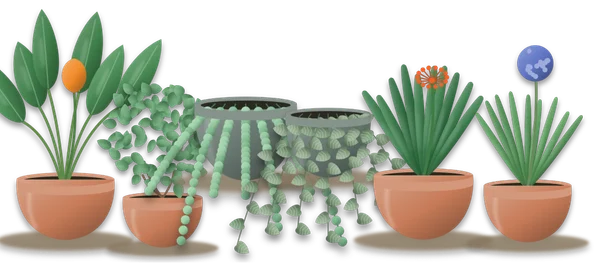
Strelitzia reginae grows wild in coastal scrub and along riverbanks in the Eastern Cape, and is the floral emblem of Cape Town. Its flower, a horizontal boat-shaped bract with orange sepals and a fused blue arrow of petals, is built for sunbirds to perch on and pollinate, not for a human eye, though it works well enough for both.
Knowing where it comes from explains the whole care sheet. It wants full sun, it wants to be left crowded in its pot for years rather than moved up early, and it wants a dry winter rather than a steady damp one. A young plant will not flower at all until its roots have filled the pot, which is the single most common disappointment people report with this species and the one thing a bigger pot cannot fix.
Jade plant
Crassula ovata is a shrub from the dry eastern parts of South Africa, growing on rocky hillsides and storing enough water in its leaves to sit out a real drought. Left alone for decades it becomes a small tree with a thick, woody trunk, which is exactly why it turns up so often as a plant handed down through a family rather than bought new.
Everything about growing it indoors follows the same rocky-hillside logic: hard, direct light, a gritty compost that drains fast, a proper soak followed by complete dryness, and almost no attention at all through winter, when a mature plant in a cool room may want water once a month or less.
String of pearls
Trailing over rock and through the shade of taller shrubs in the dry southern parts of Africa, rooting wherever a strand touches the ground: that is Curio rowleyanus in the wild, and it explains both its beauty and its reputation for dying without warning. The beads are leaves, folded almost into spheres to hold water and reduce the surface exposed to the sun, with a translucent stripe letting light reach the middle.
The roots are shallow, which is the detail most people miss. A fortnight of compost that stays wet is fatal, not because the plant is fussy in general but because there is so little root there to begin with. Soak it, then let it dry completely, in a shallow pot rather than a deep one, which matters more here than choosing a pot usually does: a deep pot under a shallow root system holds a reservoir of wet compost the roots never reach, which is exactly where the rot starts.
String of hearts
Thread-thin purple stems carrying pairs of small, silver-marbled heart-shaped leaves, trailing up to two metres from a shelf or hanging pot: Ceropegia woodii is a succulent from southern Africa that grows from a tuber and wants exactly what that background implies, gritty compost, a small pot, bright light and long dry spells between waterings.
Small round tubers form along the strands at the nodes, and any one of them laid on compost roots and starts a new plant on its own, which is why hardly anyone who owns one ever buys a second. It also flowers, in small pink and purple tubes shaped like tiny lanterns, easy to miss among the foliage but worth a close look when they appear.
Clivia
Clivia miniata grows wild on the forest floor of South Africa’s eastern side, in shade so deep that almost nothing else there flowers at all, which is the single fact that explains its entire care sheet: no direct sun, ever, leafy compost that drains, and a pot it has visibly outgrown.
The flowering trigger is a cool, dry winter rest. Cut the water back from late autumn, keep it around ten degrees for a couple of months, and the flower stem comes up between the leaves in spring. In South Africa itself, clivia is planted through spring and divided just after flowering; a Northern-Hemisphere grower keeping one as a conservatory plant sets it outside in the shade from around April and brings it back under cover before the first frosts.
Agapanthus
Agapanthus has become a summer fixture in gardens well beyond South Africa, and asks for very little once it is settled: deep, weekly soakings while the flower buds are forming in spring and summer, sun all day, and then largely being left alone. It flowers best on crowded roots, so a clump that looks ready to burst its pot is exactly right, and one lifted and divided too often sulks rather than flowers.
The calendar flips by hemisphere rather than by six fixed months: in South Africa, seed is sown from around February and clumps are split just after flowering in early March; a Northern grower plants out the same species in April or May, once the ground has warmed on their own opposite calendar.
What they have in common
None of the six wants to be coddled. All six want a proper soak followed by real dryness rather than a little water often, all six tolerate, or actively prefer, being left in a pot smaller than seems generous, and several flower specifically because of that neglect rather than despite it. That combination, drought tolerance plus a dislike of fussing, is exactly what a wide range of harsh South African habitats selects for, and exactly what makes a plant forgiving of an inconsistent watering routine on a windowsill thousands of kilometres from where it actually grows wild.
A safety note
Four of the six, bird of paradise, jade, string of pearls and clivia, are listed by the ASPCA as toxic to cats and dogs, mostly causing vomiting and stomach upset rather than anything more serious, though clivia’s bulb carries stronger alkaloids worth taking seriously. Neither string of hearts nor agapanthus has an ASPCA entry either way, which is stated here as honestly unknown rather than assumed safe. If a pet eats a meaningful amount of any plant, keep a piece of it, note roughly how much and when, and call your vet.
Log any of the six in the daily log once you know which one you own, and the watering interval described above becomes something the log tracks for you rather than something to remember on its own, which matters most in the months when each plant’s own dry rest makes the gap between waterings far longer than habit expects.