How to get rid of spider mites
About 8 minutes to read. Published . By the House & Hedge team.
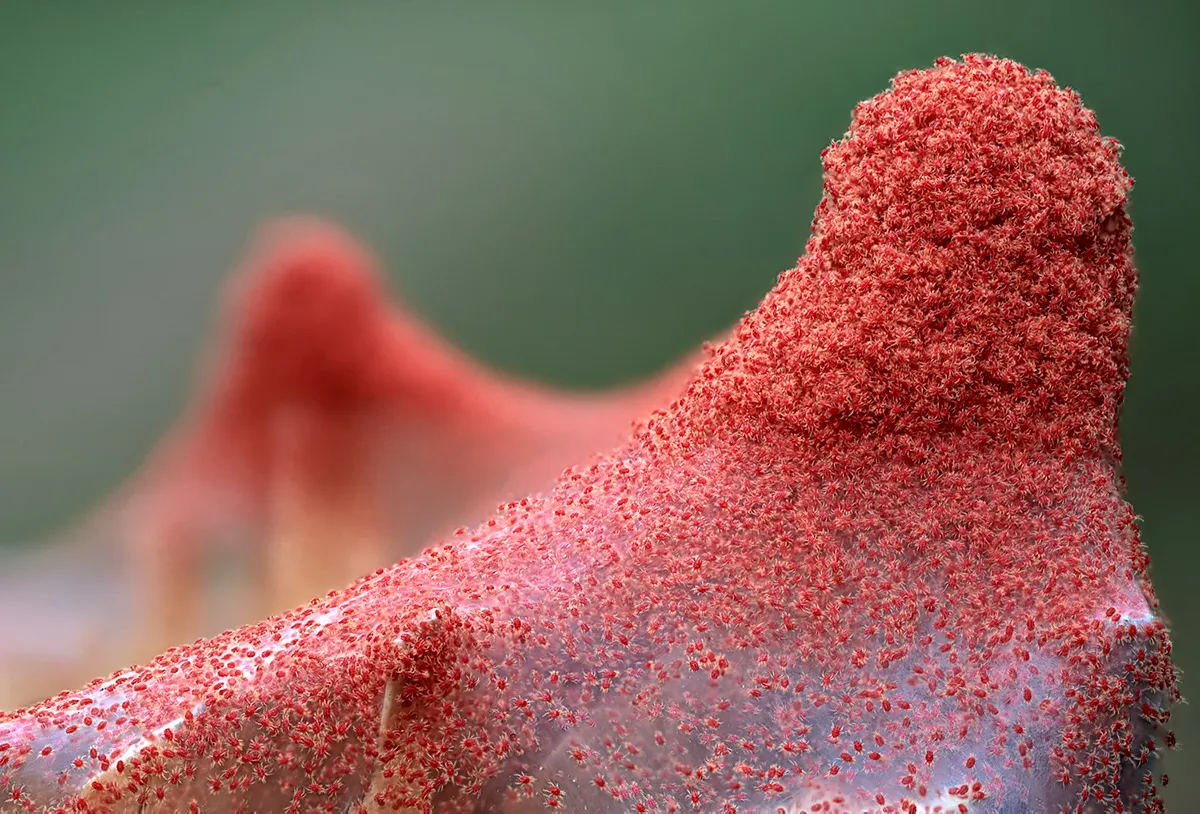
Pale, dusty-looking leaves, speckled as if someone had flicked bleach at them, are the usual first sign. Spider mites are among the pests people notice late, because the mites are barely visible and sit on the undersides of the leaves, and they are a pest with a very clear cause: warm, dry air.
What they are, and what the damage looks like
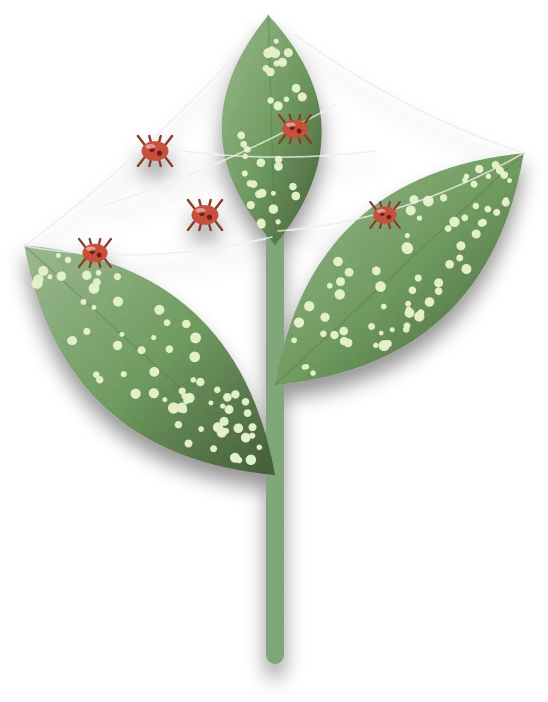
Spider mites are mites, not insects, and the adults have eight legs. The RHS puts the adult at up to 1 mm, just visible to the naked eye when present in large numbers, and UC IPM gives about 0.5 mm. In spring and summer the RHS says they are yellowish-green with a pair of darker markings, and in autumn the adults may turn reddish-orange. The eggs are spherical and found on the underside of the leaf.
The damage is feeding. The RHS describes fine pale mottling on the upper leaf surface, and the University of Wisconsin Extension a pale, stippled look that is harder to see on thick-leaved plants. UC IPM says early damage can have a bronze tint. The RHS says that on the undersides you may find many tiny yellowish-green mites with white cast skins and egg shells, easiest to see with a x10 hand lens. In severe cases the leaves lose most of their green colour and dry up or fall off.
Webbing comes later. The RHS says a fine silk webbing may be seen in heavy attacks, and UC IPM says that it is an easy way to distinguish spider mites from other mites and from small insects such as aphids and thrips.
Confirm it with a sheet of paper
Hold a sheet of white paper under a leaf and tap the leaf. UC IPM and the University of Wisconsin Extension both describe this test, and the second says to look for moving specks. A 10x hand lens makes the mites easier to see, as the RHS and UC IPM both say. If specks move, you have mites. If nothing moves, look at the undersides again with a lens before you rule them out.
Lookalikes
Thrips cause a stippled, silvery pattern that UC IPM says is similar to mite damage, and the RHS says they leave tiny black droppings, where mites leave webbing and pale cast skins. The guide to thrips describes the differences.
Dry air and care problems. UC IPM says some of these symptoms are also characteristic of plant injury caused by chemicals, so infestations may be misidentified. Dry air alone gives crisp brown edges, as several entries note, and the same dry air favours the mites, so the two often go together.
Why they come
The RHS says the mite thrives in warm, dry conditions, and that plants grown at high temperatures in dry, overcrowded conditions are more liable to damage. The University of Wisconsin Extension says houseplant problems often start when the heating comes on, and that mites thrive on stressed plants. UC IPM says damage is usually most severe in hot, dusty conditions and on water-stressed plants.
In the north that is the heated room from autumn onwards. In the south the heating season is the cool months of the year, and a hot dry summer can do the same. In both, it is the air that matters, not the date.
Several plants in the collection have entries that name spider mites as the pest to watch: the zebra alocasia, the calathea, the croton, English ivy, the parlour palm, the Boston fern and the fiddle-leaf fig.
How fast they breed
Fast. The RHS says that at 10 °C the life cycle takes about 55 days, but at 21 °C it is complete in 12 days. UC IPM says that at 24 °C, mites develop from egg to adult in about two weeks. The University of Wisconsin Extension says mites can mature in as few as five days in hot, dry weather and each female may lay up to 120 eggs. Development stops below about 13 °C.
Wash them off first
The gentlest treatment is water. The University of Illinois Extension says to wipe leaves with a moist sponge or paper towel, or spray repeatedly, in a sink for small plants and the shower for large ones. UC IPM says to frequently wash leaf surfaces with water, and the University of Wisconsin Extension says a forceful stream removes some mites and webbing. Turn the leaves over and wash the undersides.
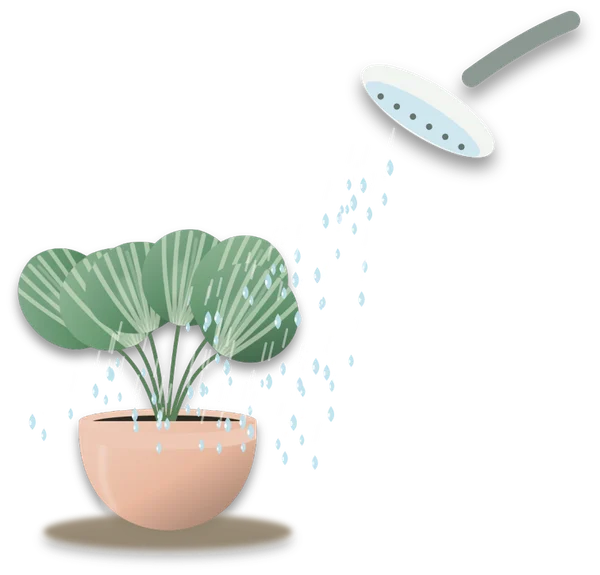
The English ivy entry says a monthly rinse under the shower and more humidity will do more than any spray, and that is a good habit for any plant that keeps getting them.
Then change the conditions. The RHS says regular syringing and spraying with water and a high humidity will reduce the risk, but will not on their own control the mite, and its general advice for humidity-loving houseplants is to mist them or stand the pot on a saucer of damp pebbles. Keep the plant away from radiators and out of dry draughts, and wipe dust off the leaves, as dust favours mites. Remove and bin the worst leaves, as UC IPM advises.
Soap, and why it must be repeated
If washing is not enough, the University of Wisconsin Extension says insecticidal soap is very effective and the first choice among sprays for most problems. It only kills mites it touches, so coverage must be thorough, with the spray reaching the undersides. It leaves no residue, so the spraying has to be repeated: the Wisconsin article says repeated applications are essential. UC IPM lists horticultural oil or soap labelled for your plant species as a last resort for houseplants, advises testing a small part of the plant several days before a full treatment, and says not to spray plants that are water-stressed or when temperatures are above 32 °C. The guide to dish soap on plants covers a homemade spray and the patch test.
Avoid general insecticides. UC IPM says spider mites frequently become a problem after insecticides are applied, and that some insecticides kill the predators that keep them down. The University of Wisconsin Extension says most insecticides no longer work on them because of resistance. Miticides made for them are hard to find or not sold to homeowners.
Predatory mites are the biological answer. The RHS says Phytoseiulus persimilis is the most commonly used, available by mail order. For a houseplant, though, the University of Wisconsin Extension says predatory mites work in hobby greenhouses only if the humidity is generally above 70 per cent, and are not recommended for heavy indoor infestations or single-plant problems.
When to give up on a plant
UC IPM says that if a mite infestation persists or becomes worse, it may be best to discard the infested plant to prevent spread to other plants. The University of Illinois Extension says that for severe infestations you should get rid of the plant and replace it. The RHS says to remove severely affected plants before the females settle for winter. A plant that is covered in webbing, with most leaves already pale and dropping, has little left to save, and the plants beside it have a lot to lose.
Through the year, in both hemispheres
Indoors there is no off season. The RHS says breeding can be continuous from March to October, and that damage can occur at other times in a heated glasshouse. Those dates are for Britain, where that is the warm part of the year; in the south the warm part of the year is the one that matters, and the sources checked give no dates for it. The University of Wisconsin Extension says mites indoors keep feeding and reproducing through winter, but more slowly. The RHS also notes that females rest through winter in cracks and crevices, so clear out debris and wipe stakes and the rims of pots after an infestation.
Check the undersides of a few leaves at every watering, particularly on the plants above. The diagnoser will ask what else you are seeing, and the log gives you a regular moment to look.