How to get rid of aphids on houseplants
About 8 minutes to read. Published . By the House & Hedge team.
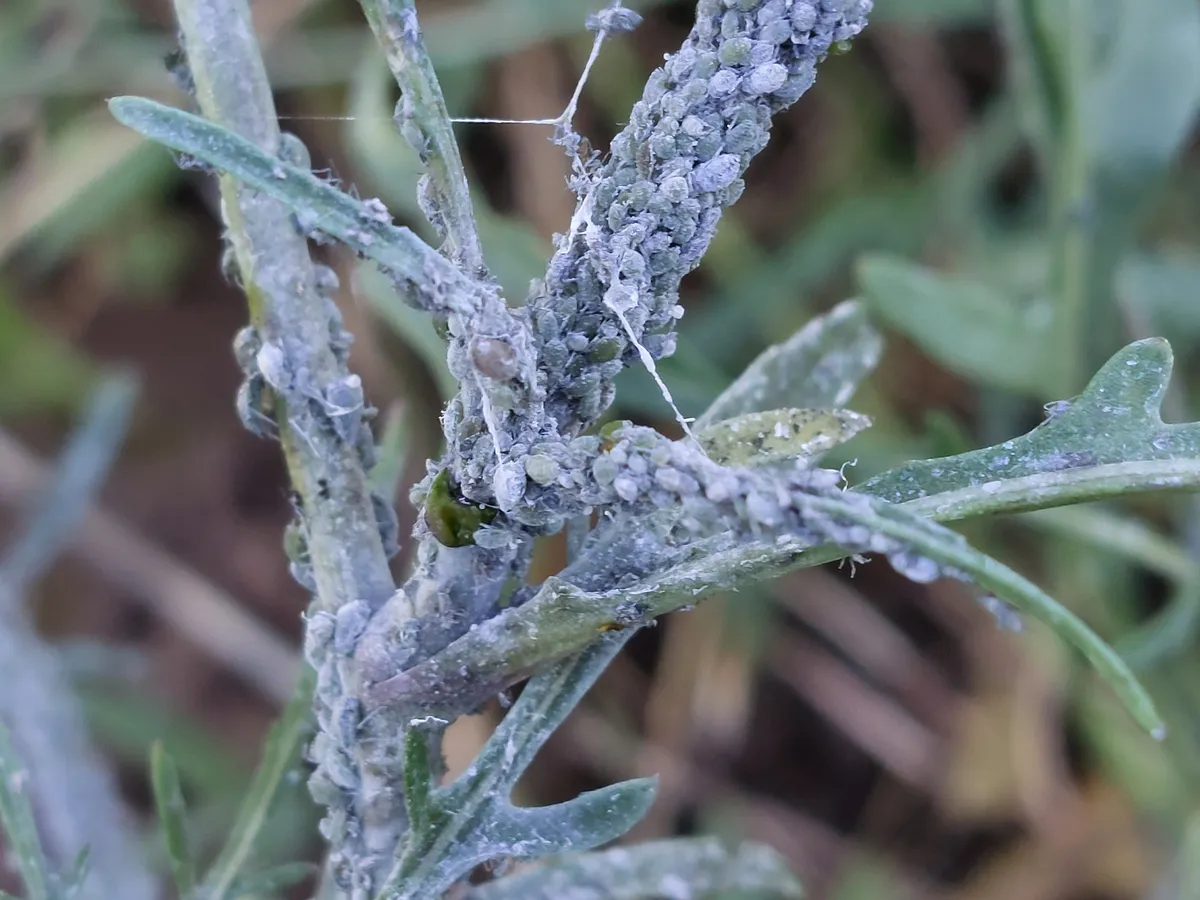
Crowds of small green, black or yellow insects packed round the tip of a shoot or a flower bud, sticky leaves below them, and perhaps a black film on the leaf beneath: that is an aphid colony. They are the easiest sap feeder to deal with, because they are soft, they are out in the open and they come off with water, but they breed faster than any of the others, so the job is to keep going until none are left.
What they look like
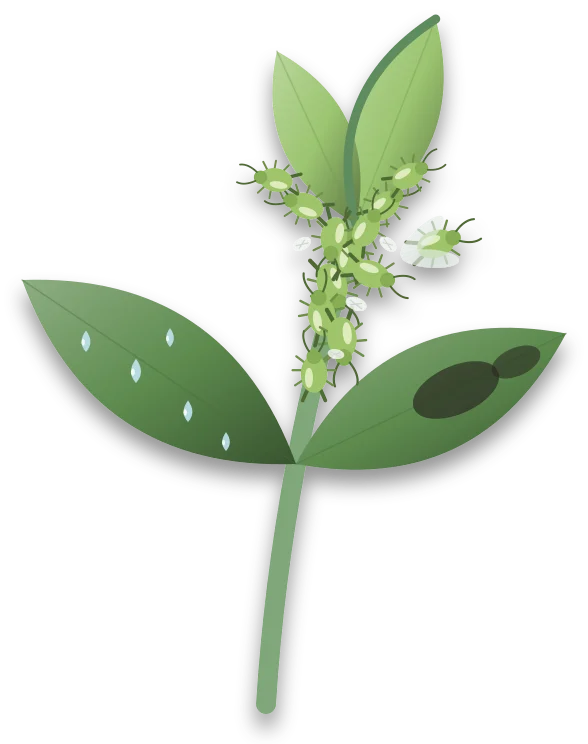
The RHS says aphids are small sap-sucking bugs, roughly 1 to 7 mm long, often called greenfly or blackfly, but they can also be yellow, pink, white or mottled. UC IPM describes them as small, soft-bodied and pear-shaped, with long legs and long antennae, and says most have a pair of tube-like cornicles at the rear. It says the cornicles distinguish aphids from all other insects. The University of Illinois Extension agrees on the pear shape and adds that they feed on sap and produce honeydew.
Most of a colony is wingless. The RHS says winged forms appear when there is overcrowding, deterioration in the host plant or seasonal change, and these fly to another plant. UC IPM says the young moult about four times as they grow, and the RHS says the white cast skins can accumulate on the upper surface of the leaves, a good clue when the insects are hidden.
Where they sit, and what they do
Colonies form on shoot tips, flower buds and the undersides of younger leaves, the RHS says, and the University of Illinois Extension says the same of new growth and leaf undersides. The result is stunted growth with curled or distorted leaves, according to the RHS, and UC IPM adds yellowing leaves and stunted shoots. Some aphids feed on roots. The RHS says death of the plant is very rare.
Honeydew, sooty mould and ants
Aphids excrete honeydew, which makes the leaves sticky and supports sooty mould. The RHS says the mould appears as a black or brown powder, is a tell-tale sign of an insect infestation, is harmless itself, and can be wiped off with a damp cloth. UC IPM says honeydew draws ants, and that ants protect aphids from their natural enemies. The RHS says ants will remove aphid predators.
How they get indoors, and how fast they breed
The RHS says aphids can infest houseplants all year, and that some stay active through the winter on indoor plants, where most outdoor species would have overwintered as eggs. They arrive on new plants, as the RHS says insects often do, and on plants that have spent the summer outdoors, so check both before they join the others.
UC IPM says females give birth to live young without mating, often as many as 12 a day, and that in warm weather a newborn can be a reproducing adult in seven to eight days. Each adult can produce up to 80 offspring in a week. That is how a few aphids become a colony within a couple of weeks. UC IPM also says high nitrogen favours aphids, so a heavy feed is a poor idea on an infested plant.
What they are often confused with
Whitefly, mealybug and scale. The RHS says some woolly aphids cover themselves with a white waxy secretion and can be mistaken for scale insects, mealybug or whitefly. If the white fluff sits in the joints and leaf bases, read the guides to mealybugs and scale insects.
Thrips. Thrips are slimmer and leave silvery patches with black dots, not a crowd of fat bugs. See the guide to thrips.
Aphid mummies. UC IPM says the skin of an aphid parasitised by a wasp turns crusty and golden brown. The guide to beneficial insects shows one.
The gentlest treatment first
Check the plant often enough to catch them early, the RHS says, so you can act before the damage has developed.
Finger and thumb. The RHS says to use finger and thumb to squash aphid colonies. It is the simplest option on a plant small enough to go over shoot by shoot.
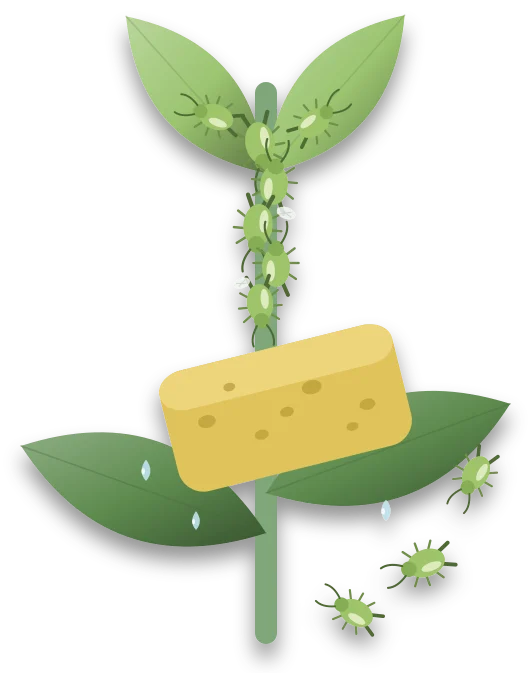
Wipe and wash. The University of Illinois Extension says to spray them off with water several times and wipe them off with a moist sponge or paper towel. UC IPM says a strong stream of water knocks aphids off sturdy plants and that most dislodged aphids cannot return, and UC IPM houseplants says to wash them off with a spray of water. Do it in the sink or the shower, at the start of the day so the leaves dry.
Cut off the worst. UC IPM says to remove heavily infested leaves and shoots, and that curled leaves shelter aphids from insecticides and natural enemies, so pruning them matters. UC IPM houseplants says to seal the cuttings in a bag and discard them.
Then keep checking. UC IPM says to look at plants at least twice a week during rapid growth, and the same rhythm suits a plant that is recovering. The log marks a regular moment to do it.
If washing is not enough
UC IPM houseplants says to consider insecticidal soap or horticultural oil, and to check the product label to make sure your plant species tolerates it. UC IPM says soaps, neem oil and horticultural oil kill only the aphids present on the day they are sprayed, so repeat treatments may be needed, that coverage must include the leaf undersides, and that you should test on a small area first and avoid water-stressed plants and temperatures above 32 °C. The RHS says plant oils and fatty acids are less harmful to ladybirds and other larger insects than other sprays.
The guide to dish soap on plants covers a homemade spray, the dilution and the patch test.
As a last resort for a serious infestation, UC IPM houseplants says to consider judicious use of a systemic soil-applied insecticide, and the University of Illinois Extension says systemic products are not typically labelled for food crops. The RHS says systemic pesticides are among the most environmentally damaging, and that it does not recommend pesticides in general. Read the label.
Natural enemies
The RHS says ladybirds, ground beetles, hoverflies, parasitoid wasps and earwigs eat aphids, and that some of these predators can be bought as biological controls for indoor plants. The guide to buying ladybirds for aphids sets out what the research found, and hoverfly and lacewing larvae shows the larvae that do much of the eating. UC IPM says purchased ladybirds disperse within days and are needed in high numbers.
Which plants
The RHS says most houseplants can be affected. The garden entries that name aphids are the ones where soft new growth is on offer: the nasturtium is the plant the entry says draws blackfly away from everything else, the pot marigold gets blackfly on its flower stems, green beans get aphids on the growing tips, and the laurustinus gets aphids that leave honeydew and sooty mould. The RHS names the pelargonium among plants where aphids can spread viruses, which matters for a geranium carried through winter indoors.
When to tolerate them, and when to give up
The RHS says it is usual to have some aphids in a healthy, balanced garden, and UC IPM says most established plants can tolerate aphid feeding and will outgrow the damage. That is a fair rule for a big plant with a few on the tips.
The case for giving up is viruses. The RHS says some aphids can transmit plant viruses, and that virus-affected plants should be destroyed to prevent the disease spreading to other plants. If a plant stays mottled, streaked or distorted after the aphids are gone, and new growth comes through the same way, the RHS advice is the one to follow.
Both hemispheres
Indoors aphids have no season, the RHS says; outdoors they are active in spring and summer. A plant that spends the summer outside is most at risk in the warm months of whichever hemisphere you are in, so check the shoot tips and flower buds before it comes in. Plants given a lush, nitrogen-heavy feed in spring grow the soft shoots aphids like, so feed lightly.