How to get rid of thrips
About 8 minutes to read. Published . By the House & Hedge team.
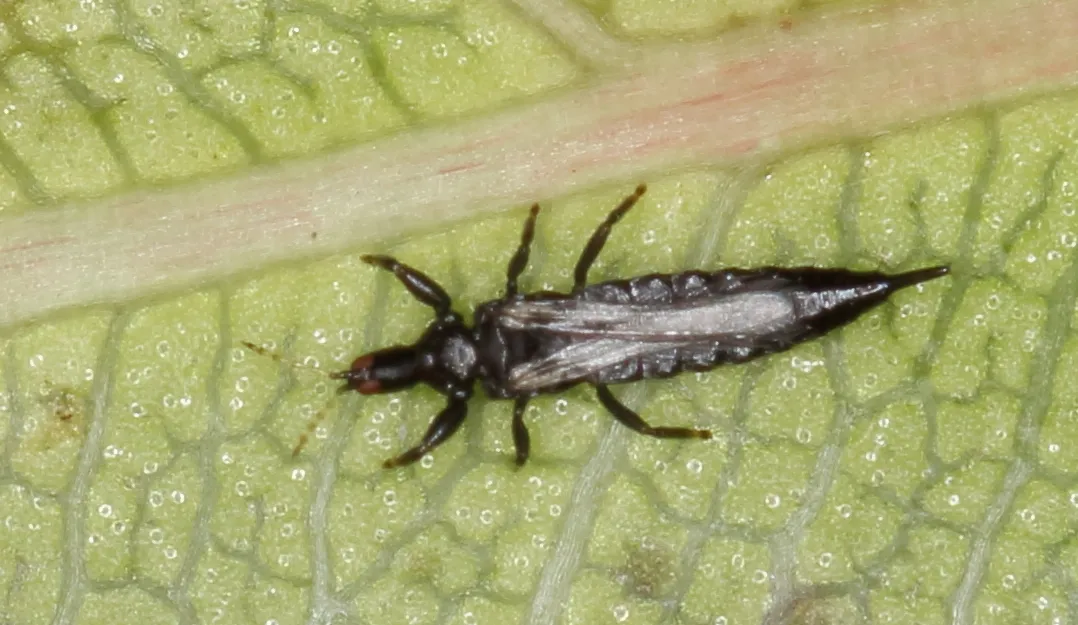
Thrips are the pest you see the damage of long before you see the insect. A leaf goes dull and then silvery in patches, with tiny black dots scattered over the silver, and a closer look may reveal slender dark specks the size of a comma. They are easy to confuse with spider mites, and they are slower to treat, because the part of their life cycle that matters happens where a spray cannot reach.
What the damage looks like
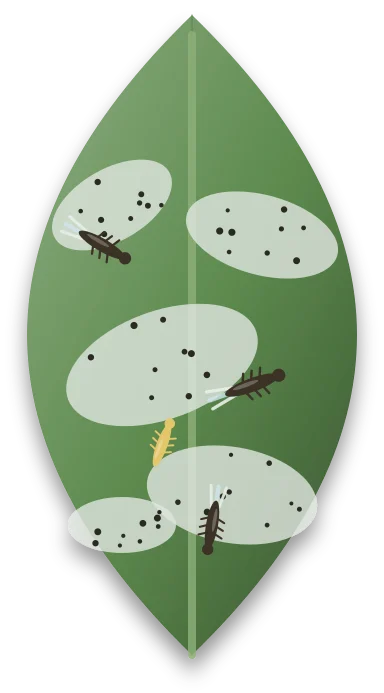
The RHS says affected leaves turn dull green and then develop a silvery-white discolouration on the upper surface, often dotted with tiny black excrement spots. Glasshouse thrips leave smaller brownish spots. UC IPM describes black, varnish-like flecks. Feeding on shoot tips and developing tissue distorts the growth, UC IPM mentions papery, curled or galled leaves and shoot tips and early leaf drop, and on flowers the RHS says petals show white flecking and heavy feeding can stop buds from opening.
What thrips look like, and how to see them
The RHS says adults are slender and up to 2 mm long, with two pairs of wings fringed with hairs that lie folded along the back at rest. Colour runs from yellowish-brown to blackish-brown. The nymphs are wingless and paler, creamy yellow. Glasshouse thrips have narrow dark brown bodies with an orange-tipped abdomen, and their nymphs are yellow-brown.
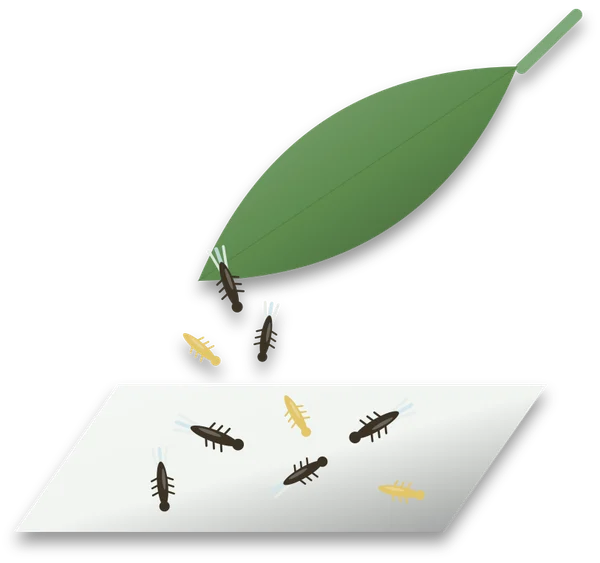
The test is the same as for mites. The RHS says to shake the foliage over white paper and examine what falls with a magnifying lens, and UC IPM says the same, adding that you can hang a blue or bright yellow sticky trap to detect flying thrips.
Which plants
The RHS says banded palm thrips are year-round pests of glasshouse and houseplants, especially tough-leaved ones such as figs, dracaenas, citrus, monsteras, scheffleras and palms. Western flower thrips affect streptocarpus, African violet, fuchsia, pelargonium and cyclamen, among others. UC IPM says Cuban laurel thrips attack the Indian laurel fig, Ficus microcarpa, rolling the shoot tips into pods and causing galls, and that pollen-feeding thrips can leave unsightly deposits on orchids and African violets and shorten the flowers’ life.
So these are the entries to look at first: the ginseng ficus, the monstera, the umbrella plant, the African violet, the cyclamen and the moth orchid.
Lookalikes
Spider mites make a fine pale stippling that UC IPM says is similar to thrips damage, and UC IPM tells you to check carefully before assuming mites. The difference to look for: mites leave webbing and pale cast skins on the undersides, thrips leave black droppings, and thrips are slender insects with fringed wings, not oval, eight-legged mites. The guide to spider mites has the white paper test for those.
Leafhoppers. The RHS glasshouse thrips page links to the glasshouse leafhopper as another cause of mottled leaves.
Care problems. UC IPM says harsh weather, inadequate plant care, pathogens and other invertebrates can cause similar-looking damage. A leaf that is simply pale, with no silvering, no black specks and nothing on the paper, may be a light or feeding problem rather than a pest. The diagnoser works through those.
Why one spray is not enough
The RHS says a female lays up to 100 eggs, one or two a day, on young leaves or in flower buds. The young feed as nymphs in two stages, and then the non-feeding pre-pupal and pupal stages take place in the soil or in sheltered spots on the plant. Under ideal conditions the whole life cycle takes 24 to 35 days, and glasshouse thrips breed all year. UC IPM says a generation can finish in as little as two weeks in warm weather, with up to about eight generations a year.
That is why spraying the leaves once rarely finishes the job: the pupae are not on the leaves. So plan to keep checking and treating for one or two life cycles, which is roughly a month or two.
What to do, gentlest first
Isolate the plant, and check any plant you buy. The RHS says to examine flowers carefully and to avoid plants showing thrips or pale petal flecking.
Cut off and bin the worst growth. UC IPM says to prune and destroy injured or infested tips on a few specimen plants, and that old, spent flowers can harbour thrips, so removing and disposing of them is sometimes recommended, although the benefit is unclear. UC IPM houseplants says to wash thrips off with water and dispose of infested plant parts.
Keep the plant steady. UC IPM says avoid overwatering or applying nitrogen fertiliser, which can increase thrips populations, and that rinsing dust off small plants helps conserve beneficial insects.
Hang a blue sticky trap. The RHS says blue traps above or among glasshouse plants catch thrips and show whether numbers are changing. Treat it as monitoring.
Spray with soap or oil. UC IPM lists horticultural oil or insecticidal soap for houseplants, and says that for thrips these give temporary control and must thoroughly cover buds and shoot tips, with the undersides of leaves sprayed for greenhouse thrips, and repeated while thrips and susceptible tissue are both present. The RHS says plant oils and pyrethrum kill a wide range of insects but last a very short time and may need repeating, and that insects hidden in distorted leaves may be unaffected. The guide to dish soap on plants covers a homemade spray and the patch test.
The RHS names biological controls, the predatory bug Orius laevigatus and predatory mites such as Amblyseius, and says they are sold for glasshouses. They are not a windowsill treatment.
Do not expect the damage to reverse. The RHS says leaves affected by thrips will not regain their green colour, and UC IPM says no pesticide will restore injured tissue and that pesticides often work only on new growth. Judge the plant by the next leaves.
When to give up on a plant
UC IPM says healthy woody plants usually tolerate thrips, although the damage can become unattractive, while herbaceous ornamentals and young plants suffer more. The RHS says to tolerate some damage, and that established shrubs usually survive extensive silvering. So a tough-leaved plant such as a monstera or fig with some silvered leaves is worth keeping. A flowering plant that keeps losing its buds is a different case.
None of the sources checked sets a rule for thrips. The RHS says in its indoor sap-feeder guide that it can be simpler to dispose of heavily affected plants than to eliminate the pests, and the RHS also says that onion and western flower thrips can transmit plant viruses, which is a reason to take heavy cases seriously. If new growth keeps coming through distorted and flecked after several rounds of treatment, the plant is a source for the others, and replacing it is reasonable.
Both hemispheres
Indoors, thrips have no season. The RHS says glasshouse thrips occur in heated glasshouses throughout the year, and banded palm thrips are year-round pests of houseplants. The RHS gives April to September for outdoors in Britain, which is the warm part of the year, and for a plant that spends its summer outside, that means the warm months wherever you live. Look at the plant before it comes back in, and keep the log as a reminder to check it.