How to get rid of scale insects
About 8 minutes to read. Published . By the House & Hedge team.
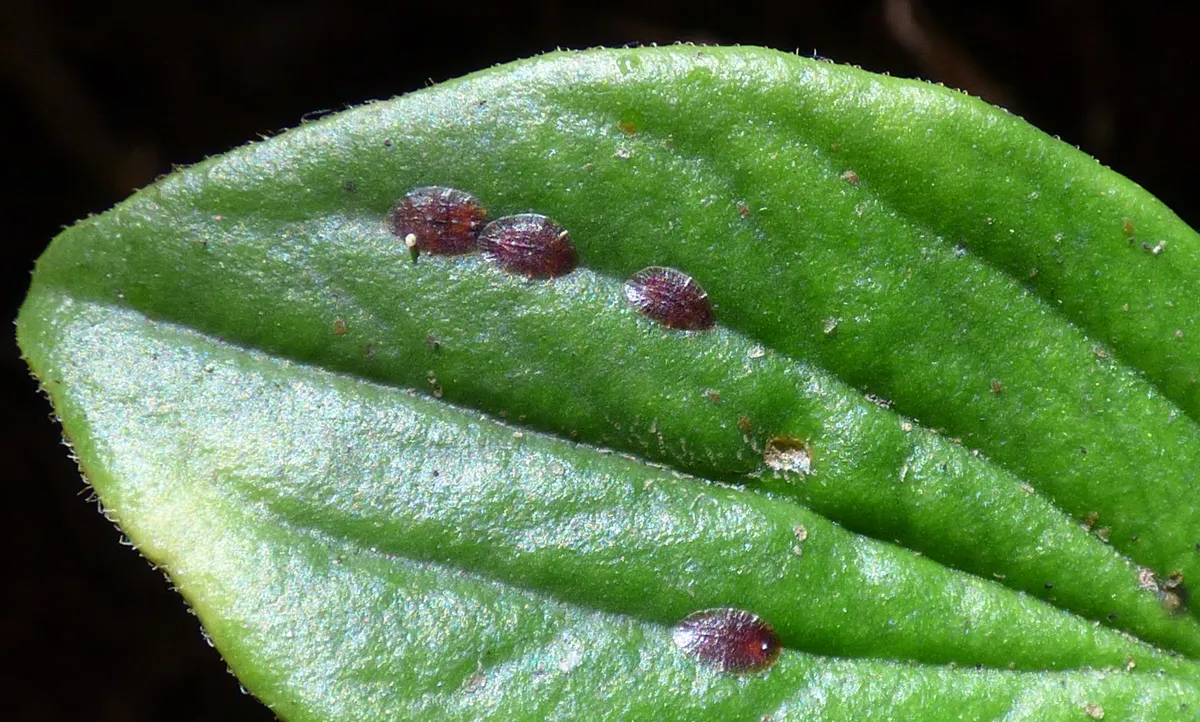
Small brown or grey bumps along a stem or the veins of a leaf, a sticky shine on the leaves below them, and sometimes a black film over the top: that is scale. The insects barely move, which makes them easy to mistake for part of the plant, and a large glossy leaf often shows the sticky residue long before you notice the insects.
What they are
A scale insect lives under a shell, or a waxy dome, that is part of its body. The University of Illinois Extension says the adult female is legless and immobile, with a waxy coating that looks like the scale of a fish or reptile, and that she lays her eggs under her body. The young, called crawlers, have legs and move about until they settle, then lose their legs when they moult. The RHS says adults are mostly 1 to 6 mm long.
There are two kinds, and the difference is useful. UC IPM describes them like this.
Soft scales are larger, up to about 6 mm, rounded and humped, with a smooth, cottony or waxy surface that is the insect’s own body wall, so if you flip one over the insect comes with it. They excrete abundant honeydew. Brown soft scale is the commonest houseplant species. The University of Maryland Extension describes the mature female as oval and light tan, yellow-green or yellow-brown, often mottled darker.
Armoured scales are small and flat, under about 3 mm, with a platelike cover that can usually be lifted off while the insect stays on the plant. They produce no honeydew. The University of Maryland Extension describes the fern scale, an armoured scale, as flat and pear- or oyster-shell-shaped, light to dark brown, with white males that give a plant a snowy look.
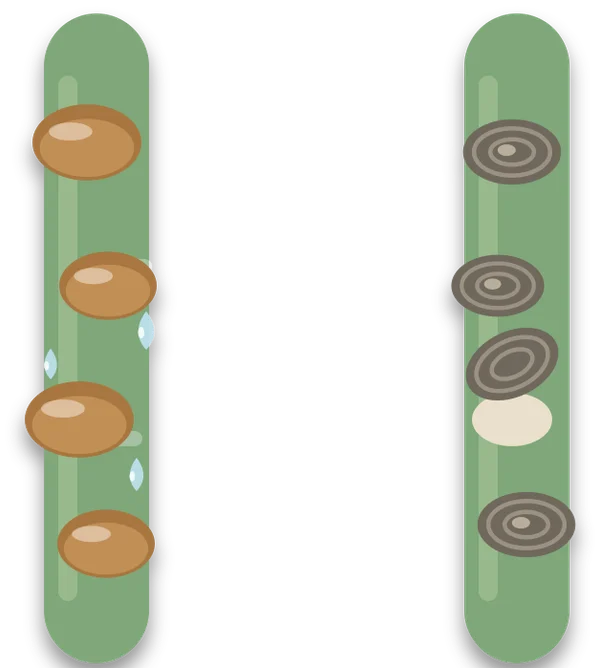
The RHS describes hemispherical scale, a glasshouse species, as dark brown, round and convex, up to 4 mm across.
Where they sit
On leaf undersides, especially along the midrib and main veins, according to the University of Illinois Extension, and along petioles and young stems, according to the University of Maryland Extension. On orchids they also hide under the leaf sheaths and in the crevices between emerging leaves. UC IPM warns that on ferns they are difficult to detect because they resemble clusters of spores, so turn a few fronds over before you assume the brown dots are normal.
The sticky film
Soft scales excrete honeydew, and the RHS says it collects on the upper leaf surfaces, where it can be colonised by sooty mould, a black or brown powder. The RHS says the mould does not attack the plant directly, but it is unsightly and can reduce vigour, and it is a sign that insects are present. The University of Maryland Extension says the main sign of soft scale is honeydew on the foliage or on surfaces under the plant, and that heavy honeydew can block new leaves from unfurling and leave them deformed. UC IPM says ants feed on honeydew and protect scales from their natural enemies.
Is it alive, and what else it might be
Scale should flake off under light pressure from a fingernail, a toothpick or a cotton swab, the University of Maryland Extension says. UC IPM says to check whether scales are alive before treating: dead or parasitised scales fail to exude fluid when squished.
Mineral crust is a chalky deposit with nothing under it. The guide on hard white or brown spots compares scale, crust and fungal spots in detail.
Mealybugs are soft, fluffy and mobile, where scale is stationary. The guide to mealybugs describes them. The RHS says the white waxy egg masses some scale insects lay can be mistaken for mealybug or woolly aphid.
Parasitised scale. The University of Maryland Extension says parasitised brown soft scale is often black and has small holes in the cover where the wasp left. These are working for you, so leave them alone.
Which plants
The RHS says several species are confined to houseplants and glasshouse plants. Its pages name oleander scale on dracaena, palms and ornamental asparagus, and hemispherical scale on ferns, cycads, ornamental asparagus and Stephanotis. UC IPM mentions ferns, and the University of Maryland Extension names orchids, citrus, rosemary, olive, coffee and bay laurel as indoor hosts of brown soft scale.
The entries that name scale as the pest to watch are the three figs, the rubber plant, the weeping fig and the ginseng ficus, and the moth orchid, where its entry says scale or mealybugs sit on the leaf undersides and flower stems. The Boston fern and the asparagus fern belong to the groups the RHS and UC IPM list as hosts.
Remove them by hand first
The University of Maryland Extension says physical removal lowers the population straight away and helps you spot any rebound. The University of Illinois Extension says to scrape them off with a fingernail or a piece of plastic such as a credit card. A cotton swab and a soft-bristled toothbrush also work. The sources all name soft tools, which is sensible, because a blade can cut the stem.
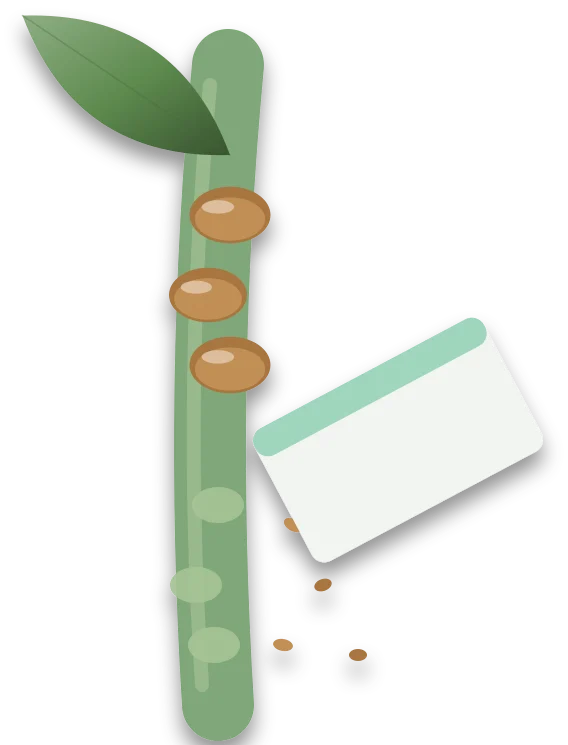
Wash the young off with water. UC IPM says to wash crawling juvenile stages off with water, and the University of Illinois Extension says repeated water sprays may help because scale are not firmly attached; wiping with a moist sponge also works. Wipe the honeydew and any sooty mould off the leaves with a damp cloth, as the University of Illinois Extension describes, which also tells you whether the stickiness comes back. UC IPM also says to discard infested plant parts, which on a small plant means cutting off a heavily encrusted shoot.
Oil or soap, and why the young stage matters
If scraping and washing do not clear the plant, UC IPM says horticultural oil or insecticidal soap labelled for your plant species work best when the scales are in the small immature nymph stage. The RHS says sprays mainly affect young scale, and dead scales can stay attached to the plant, which is another reason to scrape afterwards. The University of Maryland Extension says multiple applications are usually needed, with the plant checked after each, and gives no interval. It warns that ferns are sensitive to many pesticide ingredients, though horticultural oil can be tolerated if the plant stays shaded while the spray dries, and that products must be labelled for indoor use.
The guide to dish soap on plants covers a homemade soap spray and the patch test, which is worth doing on any plant before a full spray.
Systemic products, usually imidacloprid-based and labelled for indoor plants, work only on brown soft scale, the University of Maryland Extension says, and are not labelled for edible indoor plants such as fruits and herbs. The RHS lists systemic products among the most environmentally damaging, so they are the last step. For biological control, the RHS says a nematode, Steinernema feltiae, is sold for soft scale, with the caution that nematodes may affect non-target animals, so use it only for a specific problem.
How long to keep checking
Scale is slow to build and slow to clear. The University of Maryland Extension says one generation of brown soft scale takes about 60 days, with three to seven overlapping generations a year indoors, and fern scale about 95 days. So a plant that looks clear after a fortnight is not yet clear: scale you missed will mature, and crawlers settle within a day or two of emerging, as UC IPM says. Keep looking under the leaves and along the midribs for at least two months after the last live scale, which is one generation of brown soft scale. The log is a good place to mark a regular check.
When to give up on a plant
The RHS says to consider replacing severely affected plants. The University of Maryland Extension says heavily infested plants are best discarded, and the University of Illinois Extension says to get rid of the plant and replace it in severe cases. A large rubber plant with a few scales along one stem is worth keeping, because the RHS says well-tended healthy plants can tolerate light populations. One with every stem crusted and the leaves yellowing and dropping, which the University of Maryland Extension lists among the damage, is a different case, and it is a risk to the plants beside it. The diagnoser will help if you are not sure what you are looking at.
Both hemispheres
Indoors scale has no season. The RHS says that in greenhouses scale insects can breed continuously throughout the year, and the University of Maryland Extension says indoor generations overlap year-round. The only seasonal change is for plants that spend the summer outdoors, where the University of Maryland Extension says parasitoids may suppress brown soft scale, and where sprays not labelled for indoor use may be used outside. Check a plant before you bring it in at the end of its summer, whichever hemisphere that falls in.