How to get rid of mealybugs
About 8 minutes to read. Published . By the House & Hedge team.
White cotton-wool tufts in the angles of a plant, or leaves that feel sticky and then grow a dark film, are the usual way mealybugs announce themselves. They are one of the pests that really are hard to shift once they are established, so the sooner you act, and the gentler the first step, the better.
What they look like, and where they hide
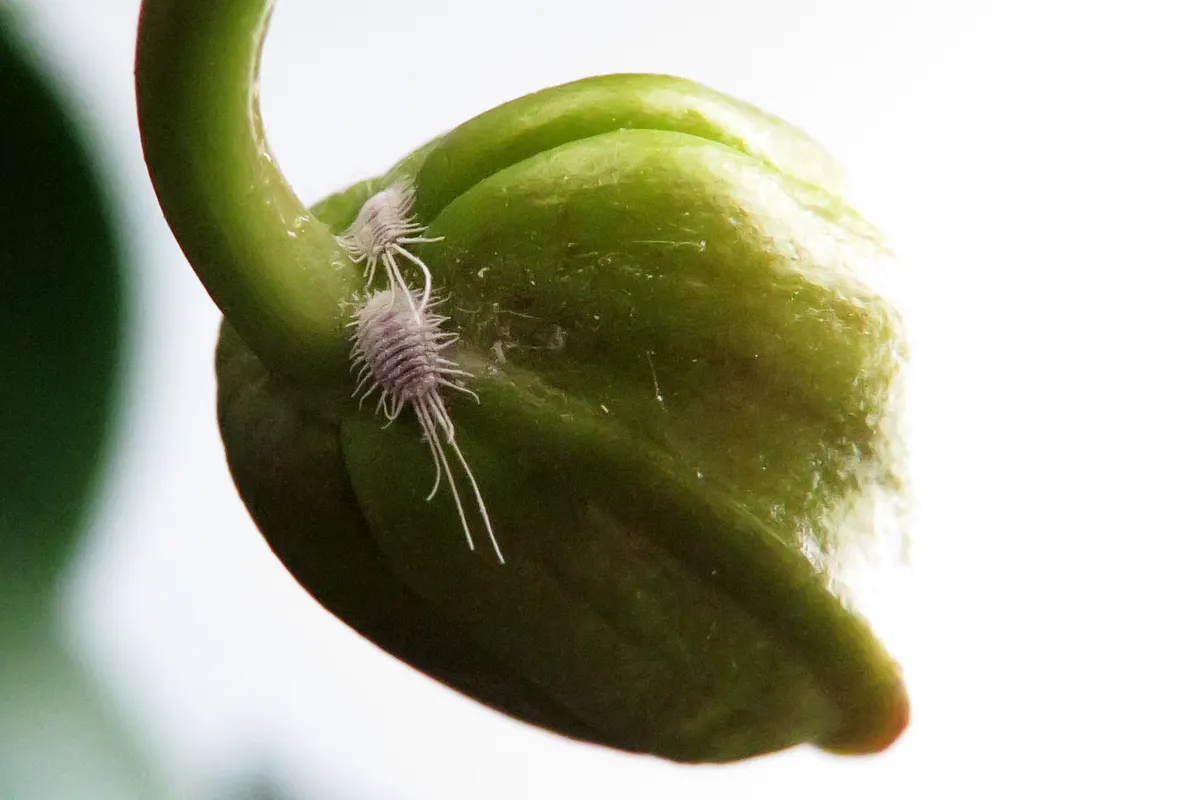
Adult females are flat, oval and up to 4 mm long, according to the RHS. They are often pinkish but look whitish because of a waxy white powder, with waxy filaments sticking out round the edge. The eggs are orange-pink, laid under a white waxy coating, and the young look like small adults. The University of Maryland Extension says the body tapers towards the tail, and some species have several tails.
The first sign is usually fluffy white wax in the leaf joints or in other sheltered places, with the insects or eggs underneath. The RHS says they cluster where they are hard to reach: in leaf axils, leaf sheaths, between twining stems and under loose bark. The University of Maryland Extension adds the undersides of leaves, flower stems and sometimes the outside of the pot.
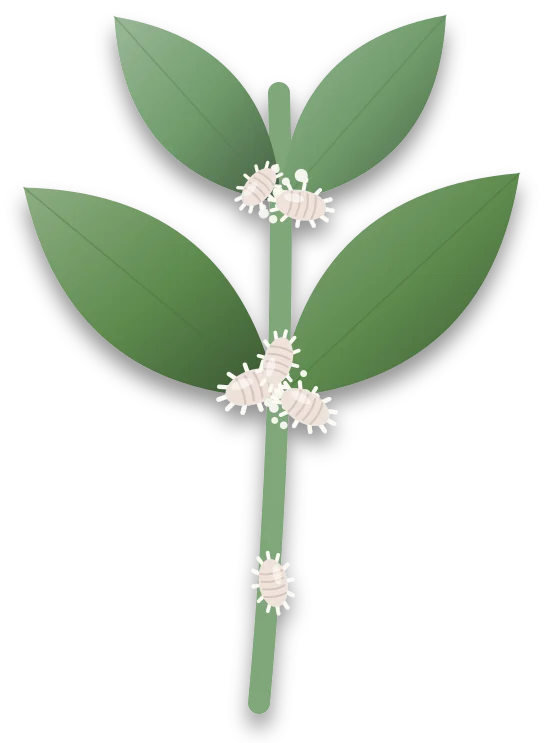
They suck sap, which can cause yellowing, stunting and early leaf drop, and they excrete honeydew. That makes the leaves sticky and supports sooty mould, which looks like a black or brown powder on the upper surfaces. The RHS says the mould does not attack the plant directly, but it is unsightly, can reduce vigour, and is a sign that insects are present.
Which plants they choose
The RHS names cacti and succulents, African violets, citrus, hoyas and orchids, especially Phalaenopsis, among the houseplants they favour. The University of Maryland Extension says the citrus mealybug especially likes soft-stemmed and succulent plants such as coleus, fuchsia, croton, jade and poinsettia, and also turns up on rosemary, citrus and bird of paradise.
These entries name them as the pest to watch: the jade plant, the echeveria, the hoya, the bird of paradise, string of pearls and the moth orchid. The hoya entry also points out that stickiness under a flowering hoya can be harmless nectar, while stickiness with no flowers means mealybugs.
Telling them from lookalikes
Scale insects also sit still, and the soft kinds also leave a sticky film, but they are shells or domes, not soft fluff, and they do not move. The guide to scale insects goes through the differences.
Mineral crust is a hard, chalky white deposit on the rim of a pot or on the compost. It does not move, and there are no insects under it. The guide on hard white or brown spots sets scale and crust side by side.
Woolly aphids and egg masses. The RHS says the white waxy egg masses of scale insects can be mistaken for mealybug or woolly aphid, and that woolly aphids produce white waxy fluff that can look like fungal growth. If the fluff is on new growth in a crowded colony, read the guide to aphids on houseplants.
Ladybird larvae. If you ever release the biological control, the RHS warns that the Cryptolaemus larvae look like large mealybugs, so check before you treat one.
Check new plants and keep them apart
The RHS says insects are often brought home on new plants, and advises isolating new plants for at least a month before they join a collection. The University of Wisconsin Extension says a week or so. Look in the leaf joints and under the leaves, and read what to do when a plant arrives.
Mealybugs favour lush, soft growth, so the University of Wisconsin Extension also advises against excess nitrogen feed.
The gentlest treatment first
Move the plant away from the others, and start with the mildest tools.
Wash them off. For a few small plants, the University of Wisconsin Extension says a moderately strong spray of warm water will dislodge most of the mealybugs, and UC IPM says to scrape or wash them off with water and dispose of the infested parts.
Dab with alcohol. The University of Maryland Extension says to dab each mealybug with a cotton swab dipped in household alcohol; treated insects turn light brown. UC IPM names 70 per cent or weaker isopropyl (rubbing) alcohol, says to test it on a small part of the plant one to two days beforehand, and warns that it is flammable. The University of Wisconsin Extension says it may take a day or two for damage to show. The University of Maryland Extension adds that alcohol on the leaves can damage them, so keep it on the insects.
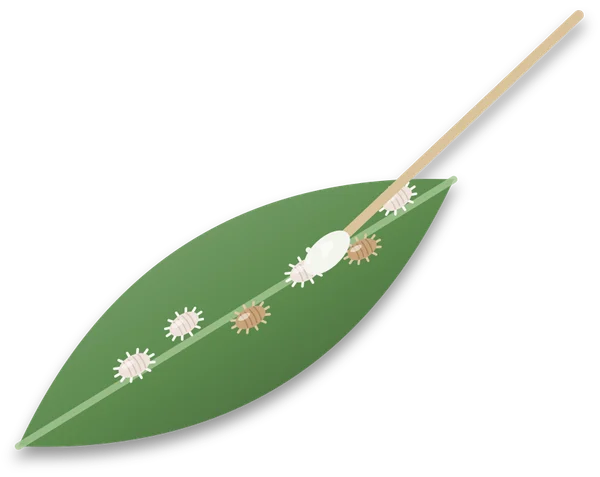
Prune, and bin the cuttings. The University of Wisconsin Extension says to prune heavily infested parts if that will not spoil the plant, and to dispose of the cuttings immediately, because mealybugs can survive on detached parts for as long as they stay moist.
When washing and swabbing are not enough
Next come insecticidal soap or horticultural oil, labelled for use on your plant. The sprays must reach the hidden mealybugs, and the University of Maryland Extension says several applications may be needed. The guide on dish soap on plants covers a homemade soap spray and the patch test. The RHS says plant oils and pyrethrum act physically and kill a wide range of insects, but they last a very short time and may need repeating, and that the waxy covering makes mealybugs hard to control with any insecticide.
The University of Maryland Extension also mentions a systemic indoor plant insecticide watered in around the roots, and UC IPM says to use pesticides only when other methods have failed. The RHS describes systemic products as among the most environmentally damaging, so treat them as the last step, read the label for your plant and country, and note that the University of Illinois Extension says systemic pesticides are not typically labelled for use on food crops.
Biological control exists. The RHS says the mealybug ladybird Cryptolaemus and certain parasitic wasps work only at relatively high temperatures, so they are likely to succeed only in the warmest months, from May to September in Britain, and the University of Wisconsin Extension says the beetle works slowly and may not clear a plant entirely. The University of Wisconsin Extension adds that most natural enemies are not practical for home use, and on a single plant on a windowsill they are rarely worth the trouble.
How often to check, and what to look for
Look at every watering, the University of Maryland Extension suggests, because retreatment may be needed. The University of Wisconsin Extension says washing rarely removes every pest, so recheck and repeat. The reason is where they sit: the University of Wisconsin Extension says the young wedge into stem crotches, leaf folds and other tight places that washing and sprays cannot reach, so some survive each round. The log is a useful place to keep each plant’s watering rhythm, which gives you a regular moment to look.
Root mealybugs are the hidden case. The RHS says Rhizoecus species are covered in white wax and live on roots, and the University of Wisconsin Extension says small white cottony masses around the drainage holes can mean the roots are infested, and that a plant with yellowed or wilting foliage and no other cause may need to come out of its pot for a look. The University of Wisconsin Extension says discarding a severely infested plant is often the most practical option, especially for root infestations.
When to give up on a plant
The RHS says it can be simpler to dispose of heavily affected plants than to eliminate mealybugs. The University of Maryland Extension says heavily infested plants should be discarded, and UC IPM says that if the infestation is heavy or does not respond to treatment, the best solution may be to dispose of the plant before more plants become infested, and notes that control of mealybugs may be very difficult. Take that seriously, because a lone plant is worth less than the rest of your collection.
If you want to save something from a plant you are giving up on, inspect every node of any cutting first, and see the guide to propagating from cuttings for the method.
Both hemispheres
Mealybugs are active all year on houseplants, the RHS says, and breeding slows in winter but continues. Nymphs can finish development in about a month in midsummer, which is whenever midsummer falls where you live. So there is no safe season to stop looking. The warmer your room, the faster they breed, and a plant that spends the summer outdoors should be checked before it comes back in.